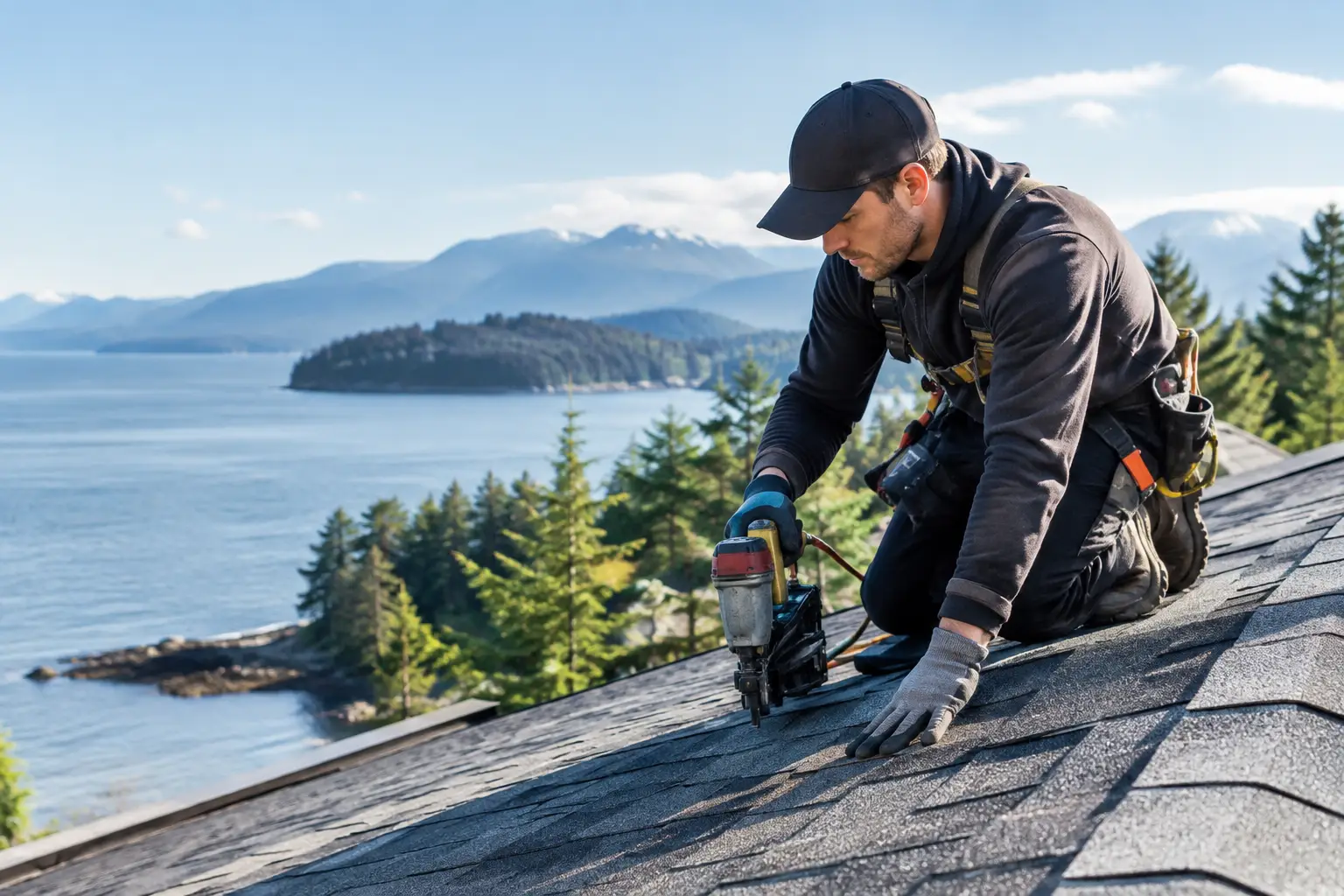
A Vancouver Island roof installation has to do more than look good from the street. It must manage long stretches of rain, wind-driven water, damp mornings, moss pressure, occasional snow, and, in coastal areas, salt-laden air. The shingles or metal panels matter, but the real performance of a roof comes from the complete system beneath and around them.
For homeowners replacing an aging roof or planning a major renovation, the right decisions are usually made before the first bundle of material reaches the driveway. Material selection, ventilation, flashing, drainage, and installation timing all affect how well the finished roof protects the home over time.
Start With the Roof System, Not Just the Surface
It is easy to compare roofing quotes by product name, colour, and price per square foot. Those details are relevant, but they do not tell the whole story. A roof is a layered weather barrier. If one critical layer is overlooked, water can find its way into roof decking, insulation, wall assemblies, and living spaces even when the visible roofing material is still in good condition.
A quality installation begins with a careful assessment of the existing roof. This includes checking the condition of the sheathing, identifying soft areas, reviewing roof slope, locating previous leak points, and examining transitions around chimneys, skylights, vents, valleys, and dormers. These areas receive concentrated water flow and need precise detailing.
The system typically includes roof decking, an underlayment suited to local moisture conditions, flashing, drip edge, ventilation components, and the finished roofing material. Each piece must work with the others. A premium shingle installed over compromised decking or poorly detailed flashing is not a premium roof.
Choose Materials for Vancouver Island Conditions
There is no single best roofing material for every home. The right choice depends on roof pitch, exposure, budget, architectural style, nearby trees, and how long you expect to remain in the property. What works well in a sheltered neighbourhood may not be the best fit for a wind-exposed coastal site.
Asphalt shingles offer proven value
Architectural asphalt shingles remain a practical choice for many homes. They offer dependable weather protection, a broad range of colours, and a finished appearance that suits many Vancouver Island properties. They are also well suited to complex rooflines with hips, valleys, and multiple penetrations.
The trade-off is that shingle performance depends heavily on correct nailing, adequate attic ventilation, and careful flashing. In heavily shaded locations, regular maintenance is also needed to manage moss and debris before they hold moisture against the roof surface.
Metal roofing suits some exposed properties
Metal roofing can be an excellent option for homeowners seeking long service life, clean lines, and strong performance in wet conditions. Properly installed metal sheds water quickly and can be particularly appealing on modern homes, cabins, and roofs with simple, consistent slopes.
It also requires experienced detailing. Metal expands and contracts with temperature changes, and penetrations must be flashed to accommodate movement. The upfront investment is often higher than asphalt shingles, so the value makes the most sense when the material, roof design, and long-term ownership plans align.
Roof slope changes the conversation
Low-slope sections need special attention. Standard shingles are designed for specific slopes and may not be appropriate where water drains slowly. A low-slope roof may require a membrane system or a different waterproofing approach, particularly around additions, porches, and transitions between roof sections.
A contractor should explain where the roof design calls for a different material rather than treating every surface as though it has the same drainage demands.
Flashing Is Where Workmanship Shows
Most serious roof leaks do not begin in the middle of an open roof field. They begin at the details: a valley, sidewall, chimney, skylight, vent pipe, or the point where two roof planes meet. These areas are where careful craftsmanship has the greatest impact.
Flashing directs water away from vulnerable openings and onto the roof surface where it can drain properly. It should not be treated as a quick patch hidden beneath shingles. Correct flashing is integrated with the roofing system in layers, so water continues outward even if wind drives rain under the outer surface.
Chimneys and skylights deserve particular attention because they interrupt the natural flow of water. Step flashing at walls, properly formed valley metal, sealed pipe boots, and well-finished counterflashing are not cosmetic extras. They are essential parts of long-term protection.
Ventilation Protects More Than the Attic
A roof can be installed perfectly and still have a shortened lifespan if the attic below it cannot manage heat and moisture. Vancouver Island homes often deal with high outdoor humidity, while indoor activities such as cooking, showering, and laundry add more moisture to the building.
Proper ventilation helps move moist air out of the attic while allowing fresh air to enter through intake openings, commonly at the soffits. Exhaust ventilation near the roof peak supports airflow across the underside of the roof deck. The exact approach depends on the roof design and insulation layout, but the goal remains the same: avoid trapped moisture and excessive heat.
Poor ventilation can contribute to condensation, mould, damp insulation, premature aging of roofing materials, and in winter conditions, ice-related issues near roof edges. It is not always visible from outside, which is why it should be reviewed as part of the installation plan rather than after a problem appears.
Plan Drainage and Roof Edges Carefully
Rain is part of life on the coast, so water needs a clear path from roof to ground. Gutters, downspouts, drip edges, and roof valleys all influence how effectively that water is managed.
A new roof is a good opportunity to inspect gutters for slope, capacity, leaking joints, and secure attachment. Overflowing gutters can soak fascia boards, siding, and foundations. Homes under large evergreens may need more frequent cleaning or gutter protection, but no product eliminates the need for periodic checks.
Drip edge is another small component with a large role. Installed correctly at roof edges, it guides water into the gutter and helps protect the underlying wood from repeated wetting. The finished edge should look clean, but its purpose is fundamentally practical.
What a Professional Installation Process Should Include
Clear communication is part of dependable project execution. Before work begins, homeowners should understand the scope of removal, anticipated repairs, selected materials, ventilation plan, site protection measures, and cleanup expectations.
During installation, the crew should protect landscaping and exterior surfaces as reasonably as site conditions allow. Old materials need to be removed safely, and the exposed roof deck should be inspected before new materials cover it. If rot or damaged sheathing is discovered, it should be documented and addressed rather than concealed.
A quality-focused installation also accounts for weather. Roofing crews can work in changing conditions, but there are limits. Installing materials on wet decking or rushing critical details ahead of heavy rain can create avoidable risk. A realistic schedule that respects weather conditions is better than a fast schedule that compromises the roof system.
At DryTek, the focus is on expert roofing solutions that are built for Vancouver Island weather, with close attention to the details homeowners may never see but rely on every day.
Care After Your New Roof Is Installed
A new roof still benefits from simple, regular care. Keep gutters and valleys clear of leaves and needles, remove branches that rub against the roof, and watch for moss growth in shaded areas. Avoid pressure washing or aggressive scraping, which can damage roofing surfaces and shorten their life.
After major storms, look from the ground for displaced shingles, damaged flashing, or loose gutter sections. If you notice a ceiling stain, do not assume the issue is directly above it. Water can travel along framing before it becomes visible indoors, so prompt assessment is the safer choice.
The best roof installation feels uneventful once it is complete. It should complement the home, direct water where it belongs, and give you confidence when the next stretch of coastal weather moves in.
Leave a Reply