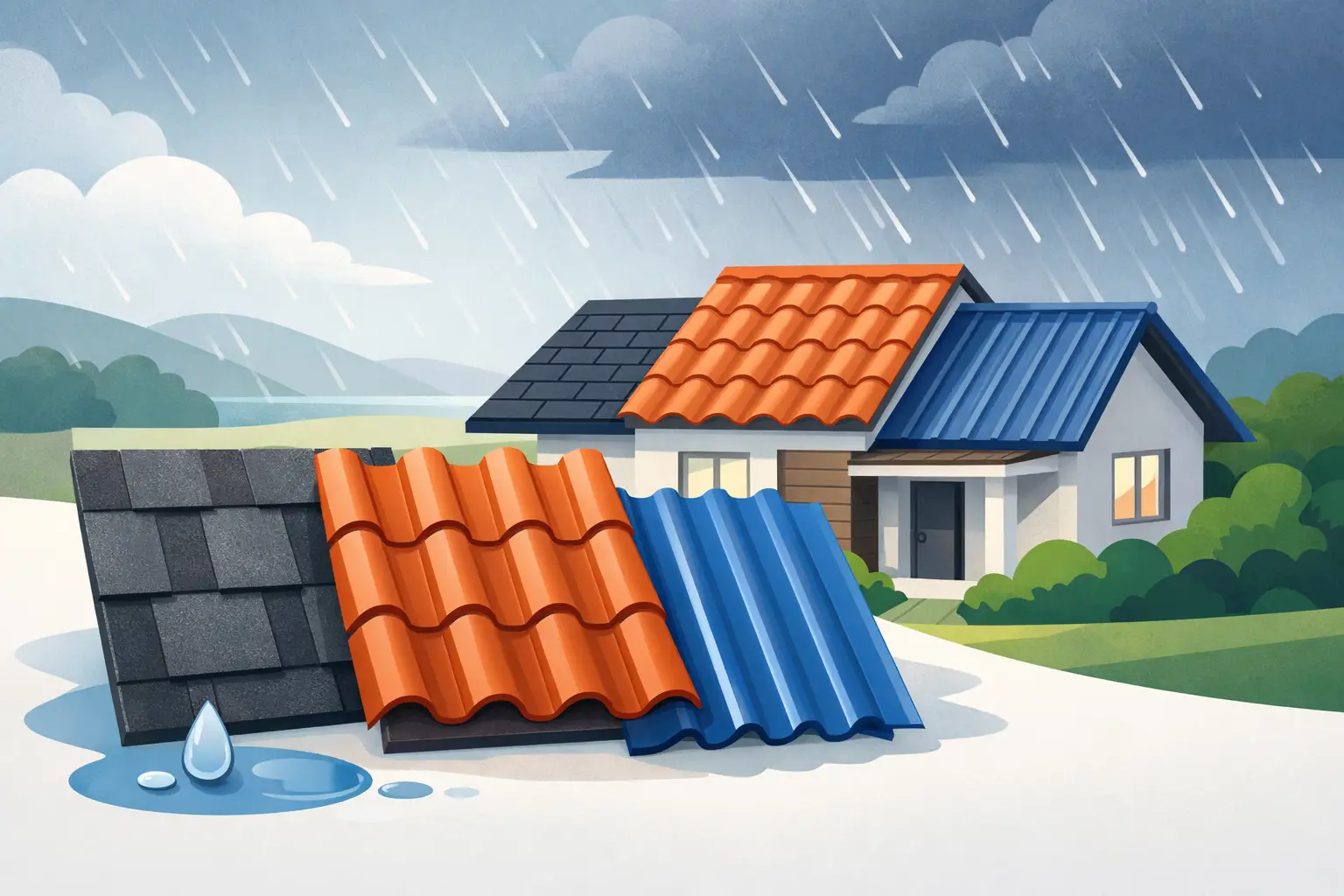
A roof can look perfectly fine in July and start showing its weaknesses by the first stretch of heavy fall rain. That is why choosing the best roofing materials for rain is not just about appearance or upfront cost. For homeowners in wet coastal climates, it is about how well a roof sheds water, resists moisture damage, and holds up year after year without constant repair.
Rain puts different demands on a roof than heat or snow. In a dry climate, a material might perform well for decades with minimal trouble. In a place with long wet seasons, that same roof can struggle if the installation details, slope, ventilation, or drainage are not right. Material matters, but so does how the entire roofing system is built.
What makes the best roofing materials for rain?
The best roofing materials for rain do three things well. First, they move water off the roof quickly. Second, they resist water intrusion at joints, edges, fasteners, and penetrations. Third, they stay stable despite repeated exposure to moisture, temperature swings, moss growth, and coastal wear.
That means the right choice is rarely just the thickest or most expensive product. A good rain-ready roof needs proper underlayment, flashing, ventilation, and workmanship to match. Even a premium material can fail early if those details are handled poorly.
Roof slope also matters. Some materials perform best on steeper roofs where water runs off fast. Others are better suited to lower slopes. If you are comparing roofing options, the shape and pitch of your roof should be part of the conversation from the start.
Asphalt shingles remain the practical standard
For many homeowners, asphalt shingles are still the most practical option for a rainy climate. They are cost-effective, widely available, and when installed properly, they offer dependable protection against regular rainfall. Architectural shingles in particular tend to perform better than basic 3-tab products because they are thicker, more durable, and generally more resistant to wind-driven rain.
The strength of asphalt is balance. It gives you solid weather protection at a more accessible price point than metal, slate, or tile. Repairs are also straightforward if a section is damaged.
The trade-off is lifespan and moisture exposure. In persistently wet conditions, lower-grade shingles can age faster, especially if the roof has poor ventilation or overhanging trees that trap moisture. Algae staining and moss growth can also become an issue. For many homes, asphalt is a smart choice, but product quality and installation details matter a great deal.
Metal roofing performs exceptionally well in heavy rain
If your top priority is long-term water shedding, metal roofing is one of the strongest options available. Rain moves off metal quickly, and the surface does not absorb moisture the way some other materials can. For homes exposed to repeated storms, coastal weather, and long rainy seasons, metal has real performance advantages.
Standing seam metal roofs are especially effective because they use raised seams and concealed fasteners, which reduces common leak points. Metal is also highly durable and tends to resist moss growth better than rougher roofing surfaces.
There are a few trade-offs. Metal roofing usually costs more upfront than asphalt. Rain noise is another concern homeowners sometimes raise, although proper roof assembly and attic insulation can reduce that significantly. Appearance is also more specific. Some homeowners love the clean, crisp look, while others prefer a more traditional finish.
Cedar shakes and shingles have curb appeal, but need caution
Cedar roofs have a natural look that suits many homes beautifully, especially in coastal and wooded settings. They can perform well in wet weather when installed correctly and maintained properly. Cedar also offers natural insulation value and a distinctive appearance that many manufactured products cannot fully replicate.
That said, cedar is not the easiest answer for rainy conditions. Wood is still an organic material, and in climates with prolonged moisture, it can be vulnerable to moss, rot, splitting, and weathering if maintenance is neglected. It generally requires more attention over time than asphalt or metal.
For homeowners who want cedar, the decision should be based on a realistic understanding of upkeep. It can be a strong visual choice, but it is not the most maintenance-friendly option for every household.
Synthetic roofing offers a useful middle ground
Synthetic roofing products are becoming more common, and for good reason. Many are designed to mimic the look of cedar, slate, or tile while offering better moisture resistance and lower maintenance. In rainy regions, that combination can be appealing.
High-quality synthetic shingles or tiles are often lighter than natural materials, easier to install on many homes, and less prone to cracking or water-related deterioration. They can also provide a premium appearance without the structural demands of heavier roofing products.
The main caution is product quality. Synthetic roofing is a broad category, and performance varies between manufacturers. Some products are excellent. Others are less proven over the long term. If you are considering this route, it is worth focusing on established materials with a strong performance record in wet climates.
Slate and tile resist water, but they are not for every home
Slate and clay or concrete tile are highly durable roofing materials that can stand up well to rain. They do not absorb water the way wood does, and they offer impressive longevity when installed correctly. On paper, they are among the strongest roofing materials available.
But there are practical limitations. These systems are heavy, and not every home is built to support them without structural reinforcement. They are also more expensive to install and repair. In some cases, the roof design or local architectural style may not suit them particularly well.
For the average homeowner looking for the best roofing materials for rain, slate and tile are usually premium niche choices rather than the default recommendation. They can be excellent, but only when the house, budget, and design all line up.
Rain performance depends on more than the roofing material
Homeowners often focus on surface material first, but many roof leaks start at transitions, not in the middle of the field. Valleys, skylights, chimneys, vents, flashing edges, and gutter lines are where water problems often begin. That is why a well-built roof system matters more than a product brochure.
Underlayment is one of the biggest factors. In wet regions, upgraded underlayment can add meaningful protection beneath the visible roof covering. Flashing details also need to be precise, especially around roof penetrations and wall intersections.
Ventilation matters too. A roof that stays damp longer is more vulnerable to mould, rot, and premature material wear. Good airflow helps regulate moisture in the attic and supports the long-term health of the roofing system.
How to choose the right roof for a wet climate
For most homeowners, the right choice comes down to budget, maintenance tolerance, roof design, and how long they plan to stay in the home. If you want dependable performance at a reasonable price, architectural asphalt shingles are often the practical answer. If you want longer service life and excellent rain shedding, metal roofing deserves serious consideration.
If appearance is a major priority, cedar or synthetic products may make sense, but only if the maintenance expectations and product quality are clear. If you are investing in a high-end custom home, slate or tile could be worth exploring, provided the structure can support the load.
This is also where local experience matters. A roof that performs well in a dry inland market may not be the best fit for Vancouver Island weather. Coastal rain, humidity, wind exposure, and organic growth create a different set of demands. Quality craftsmanship and weather-appropriate building decisions make a visible difference over time.
The best roofing material is the one installed properly
There is no single perfect roof for every home. There is, however, a clear difference between a roof chosen for local conditions and installed with care, and one selected mainly by price. In rainy climates, shortcuts tend to reveal themselves quickly.
At DryTek, that is why the conversation is never just about picking a material. It is about building a roofing system that protects the home properly, looks right, and stands up to real weather. If your roof is nearing the end of its life or showing signs of moisture trouble, the best next step is to look at the whole system before the next heavy stretch of rain does it for you.
Leave a Reply