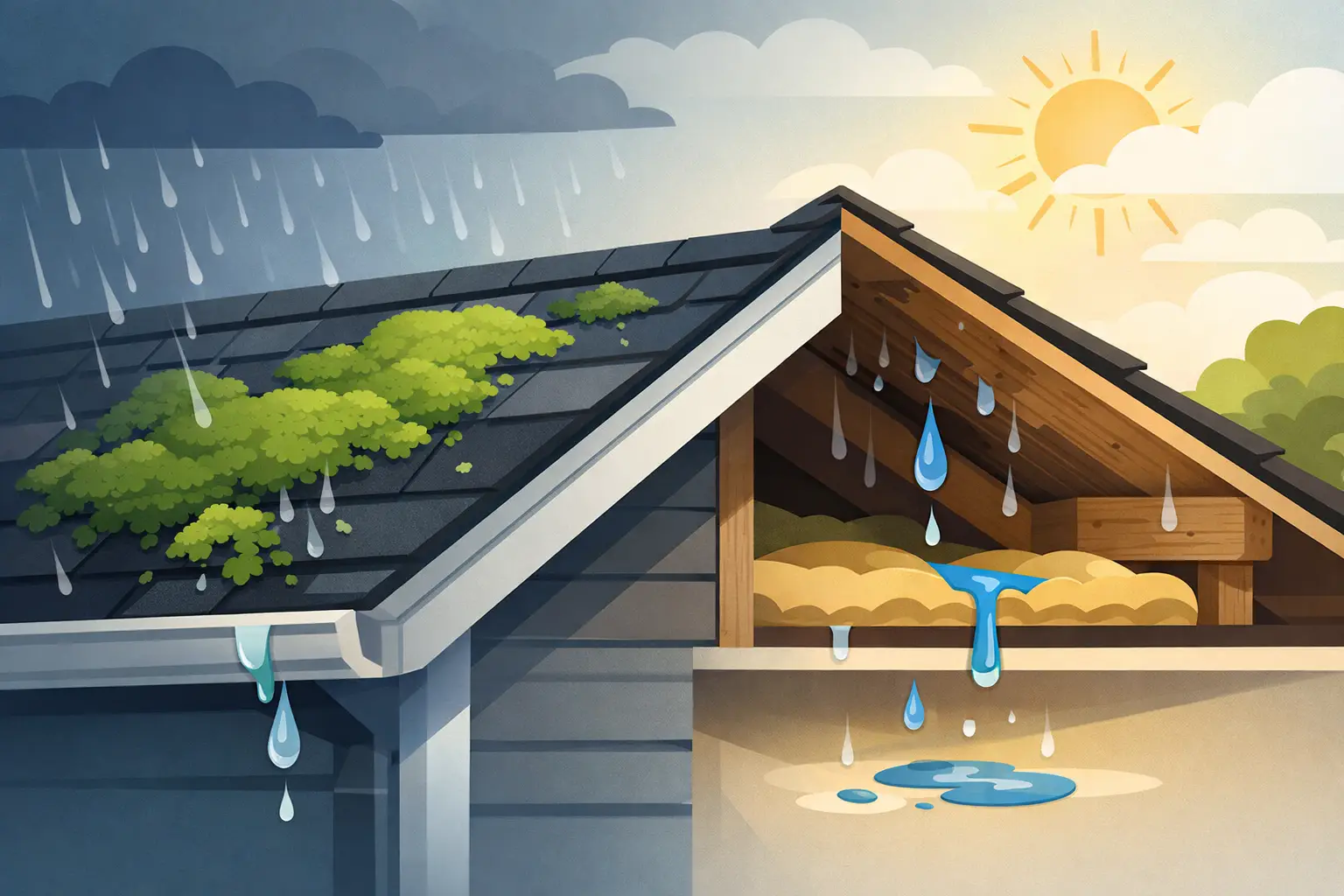
You do not usually notice roof moss the day it starts causing trouble. It shows up gradually – a green patch along a shaded slope, a thicker strip near the eaves, then a roof that never seems to dry properly after rain. If you are wondering, can roof moss cause leaks, the short answer is yes. Not every mossy roof is leaking right now, but moss creates the exact conditions that make leaks more likely over time.
That matters more in wet coastal climates, where roofs deal with frequent rain, shade, and long periods of dampness. Moss is not just a cosmetic issue. It can hold moisture against roofing materials, interfere with water drainage, and shorten the life of the roof itself.
Can roof moss cause leaks if the roof still looks intact?
Yes, because leaks do not always start with a dramatic failure. In many cases, they begin with small changes in how the roof sheds water. Moss grows in clusters that act like a sponge. Instead of letting the roof surface dry between storms, it keeps moisture sitting where it should not.
On asphalt shingles, that constant moisture can wear down the protective granules faster and accelerate aging. Moss can also grow under the lower edges of shingles as it thickens. When that happens, it can lift them slightly and create a path for wind-driven rain or backed-up water to get underneath. A roof can look mostly fine from the ground and still be developing weak points.
The older the roof, the greater the concern. A newer roof with light surface moss may not have immediate leakage, but an aging roof with heavy moss growth is at much higher risk. Flashing details, exposed nail heads, and valleys become more vulnerable when moss keeps those areas wet.
Why moss is harder on roofs than many homeowners expect
A lot of homeowners assume moss is harmless because it is soft. The problem is not that moss is abrasive. The problem is that it changes the roof environment in ways roofing materials are not designed for.
Roofs are built to shed water quickly. Moss does the opposite. It slows drainage, retains water, and keeps materials damp for longer. In colder periods, that trapped moisture can also contribute to freeze-thaw stress. Even where winters are milder, repeated wetting and drying still wears roofing components down.
There is also the issue of debris. Moss often grows where needles, leaves, and sediment collect. Those areas already tend to hold moisture. Once moss takes hold, it can make that buildup worse and block proper runoff. That is especially common in valleys and near roof-to-wall transitions, where water management matters most.
For homes on Vancouver Island, shade from trees and prolonged damp weather make this more than a one-season issue. Roofs here need to dry efficiently. Anything that keeps them wet longer is working against their design.
How moss actually leads to leaks
The simplest answer to can roof moss cause leaks is that it creates opportunity for water intrusion. It does that in a few different ways, and sometimes more than one is happening at once.
The first is moisture retention. Moss stores water and keeps the roof surface damp. Over time, that accelerates shingle wear and weakens vulnerable spots.
The second is shingle displacement. As moss thickens, it can push up shingle edges or grow between courses. Even a slight lift can let wind-driven rain get where it should not.
The third is drainage interference. Moss and debris can slow water flow toward gutters, which increases the chance of ponding or backup in lower roof sections.
The fourth is hidden deterioration. Moss can cover cracked shingles, soft spots, damaged flashing, or failing sealant. By the time a stain appears inside, the roof issue has often been developing for a while.
This is why homeowners sometimes hear that moss does not cause leaks directly. In a narrow sense, that is true – moss itself is not a hole. But in practical roofing terms, it contributes to the chain of events that leads to leaks, rot, and premature roof repair.
Signs moss may already be causing problems
You do not need to wait for water dripping from the ceiling to take moss seriously. There are earlier warning signs that the roof is under stress.
Inside the home, you may notice a ceiling stain, peeling paint near exterior walls, a musty smell in the attic, or damp insulation. Outside, shingles may look curled, uneven, or excessively dark in mossy areas. Gutters may also fill with loose granules or moss fragments, which can be a sign the roof surface is deteriorating.
Another red flag is moss concentrated in one recurring area, especially below overhanging branches or along a north-facing slope. That often points to a persistent moisture problem. If the same section of roof stays wet long after the rest has dried, it deserves closer inspection.
Can roof moss cause leaks on all roof types?
It can, but the risk varies by material and roof condition.
Asphalt shingle roofs are the most common concern because moss can lift shingle tabs and speed up granule loss. Cedar roofs have their own issues, since retained moisture can contribute to rot and splitting. Metal roofs tend to resist moss-related leaks better because they shed water efficiently and offer fewer places for growth to take hold, but fastener points, seams, and transitions can still be affected if debris and moss accumulate around them.
Roof pitch also matters. Lower-slope sections drain more slowly, so moss has more opportunity to stay wet and spread. Shaded areas, overhanging trees, and blocked gutters all make the problem worse regardless of roof type.
That is why there is no one-size-fits-all answer. A light patch of moss on a well-maintained newer roof is not the same as thick, established moss on an older roof with tired flashing and years of coastal exposure.
Should you remove moss yourself?
Sometimes, but careful judgment matters. The biggest mistake homeowners make is being too aggressive. Pressure washing, scraping hard, or walking carelessly on a mossy roof can damage shingles and create the very leak risk you are trying to prevent.
Gentle treatment is safer than force. In many cases, professional moss removal is the better option because the roof can be assessed at the same time. That matters. Removing the moss is only half the job if underlying damage has already started.
There is also a timing issue. If you remove heavy moss from a roof that is already compromised, hidden problems may become obvious afterward. That is not a reason to leave the moss in place. It is a reason to approach the work properly, with a plan for repairs if needed.
Preventing moss from coming back
If moss has appeared once, the roof conditions likely still favour it. Prevention usually comes down to reducing moisture and improving maintenance.
Keeping gutters clear helps water move off the roof as intended. Trimming back branches can improve sunlight and airflow. Regular roof inspections catch small issues before moss turns them into bigger ones. In some cases, preventative treatments may also be appropriate, depending on the roof material and surrounding conditions.
The most effective long-term approach is to keep the roof draining, drying, and free of buildup. Quality craftsmanship matters here because roofs fail at details first. Valleys, flashing transitions, pipe penetrations, and edge conditions need to stay clean and sound if the whole system is going to perform properly.
When it is time to call a roofing professional
If the moss is widespread, if the roof is older, or if you are seeing any interior signs of moisture, it is time for a proper inspection. The same goes for roofs with visible shingle lifting, sagging areas, or recurring moss growth in one section.
A good inspection should answer more than whether moss is present. It should tell you whether the roof is still protecting the home properly, where the weak points are, and whether you need cleaning, repair, or larger replacement planning. That is the difference between surface maintenance and actually protecting the structure.
For homeowners who want expert roofing and siding solutions built for Vancouver Island weather, a careful, workmanship-focused approach makes all the difference. DryTek’s kind of quality craftsmanship is what prevents small exterior issues from becoming expensive interior ones.
Moss does not always mean a roof is leaking today. But it does mean the roof is staying wetter than it should, and that is never something to ignore. The best time to deal with it is before water finds a way inside.

Leave a Reply