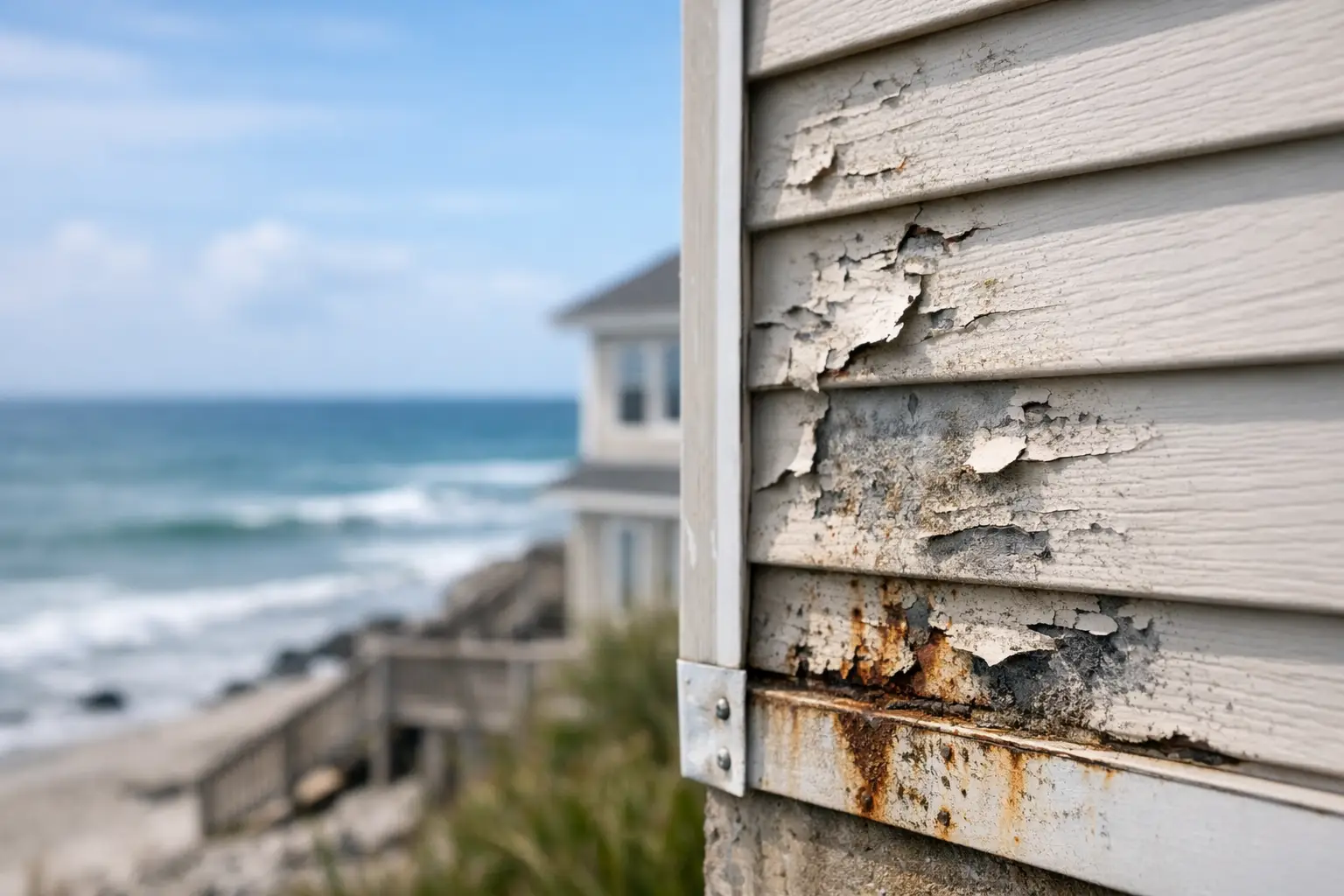
A home near the water gets more than a view. It also receives a steady coating of salt, moisture, windblown grit, and rain. Over time, salt air damage to siding can show up as fading, staining, corrosion around fasteners, failing caulking, and moisture finding its way behind the exterior finish.
For Vancouver Island homeowners, this is not a reason to avoid coastal living or assume that every exterior will fail early. It is a reason to choose materials carefully, maintain them consistently, and address small defects before they become repairs involving sheathing, insulation, or framing.
Why Coastal Air Is Hard on Siding
Salt itself does not usually eat through siding in the way homeowners imagine. The larger issue is that salt particles settle on exterior surfaces and hold moisture against them. That extended dampness creates better conditions for corrosion, mildew growth, finish breakdown, and water entry at vulnerable joints.
Wind matters too. On an exposed property, salt spray and abrasive debris can reach areas that would otherwise stay relatively protected, including upper walls, soffits, trim, window surrounds, and the siding beneath roof edges. Homes closest to the shoreline generally need more frequent attention, but inland properties can still be affected when prevailing winds carry marine air through the neighbourhood.
The siding itself is only one part of the system. Fasteners, flashing, trim, caulking, vents, and transitions around windows and doors must all perform together. A durable siding product cannot compensate for poor installation details or neglected sealant.
Early Signs of Salt Air Damage to Siding
Salt-related wear is often gradual. By the time a board is soft, a panel is loose, or paint is peeling in broad sections, the problem may have been developing for several seasons. Regular visual checks help homeowners spot changes while repairs are still contained.
Look closely for chalky or uneven colour, especially on walls facing the water or prevailing wind. Fading alone is usually an appearance issue, but a finish that has become dull, brittle, or powdery may no longer shed moisture as intended. Streaking beneath metal components can point to corrosion, while orange or dark marks around nails and screws deserve prompt attention.
Pay attention to caulking as well. Cracked, shrunken, or detached sealant around windows, doors, trim boards, and service penetrations creates a direct path for driven rain. In a coastal climate, water rarely enters in dramatic amounts at first. It works through small openings repeatedly, then becomes trapped where drying is slow.
Other warning signs include lifted siding edges, open joints, blistered paint, recurring mildew, soft spots near the bottom of walls, and interior staining around windows. These symptoms do not always have the same cause, but they should be assessed rather than covered up with a quick coat of paint.
Material Choice Makes a Real Difference
No siding material is maintenance-free on the coast. The right choice depends on exposure, budget, architectural style, and the condition of the existing wall assembly. What matters most is selecting a product and installation method suited to local weather rather than choosing solely by initial price.
Vinyl siding
Quality vinyl siding resists rot and does not corrode, making it a practical option for many homes. However, salt residue can still leave it looking dull or stained, and strong winds can exploit loose panels or poorly secured trim. Vinyl also expands and contracts with temperature changes, so it must be installed with the correct spacing and fastening technique. Panels nailed too tightly can warp, buckle, or pull at corners.
Fibre cement siding
Fibre cement is a strong option for coastal properties because it is non-combustible, resists rot and insects, and holds paint well when properly finished. Its performance depends heavily on installation quality. Cut edges, fastener locations, flashings, and clearances from grade must be handled carefully. If paint or sealant is allowed to fail at exposed edges, moisture can affect the material and surrounding wall components.
Wood siding
Wood offers warmth and character that many homeowners value, particularly on traditional or custom-built homes. It also requires the most disciplined maintenance in salt air. A high-quality coating system, proper ventilation, careful detailing, and timely repainting are essential. Wood can perform beautifully in a coastal setting, but it is not the low-maintenance choice.
Metal siding and details
Metal siding, trim, and flashings can be highly durable, but the type of metal and coating matter. Salt exposure accelerates corrosion where coatings are scratched, cut edges are untreated, or incompatible metals touch. Aluminium, galvanized steel, and stainless steel all have different strengths and limitations. A contractor should specify compatible fasteners and flashings rather than treating every metal component as interchangeable.
Cleaning Without Damaging the Exterior
Routine washing removes salt film before it can hold moisture against the siding and trim. For many coastal homes, a gentle rinse in spring and again after the stormiest part of the season is a sensible baseline. Highly exposed homes may benefit from more frequent rinsing, particularly after periods of strong onshore wind.
Use a garden hose and low-pressure water, working from the top down. For grime or mildew, use a siding-safe cleaner according to its directions and rinse thoroughly. Avoid aggressive scrubbing on painted finishes, and do not direct water upward beneath lap siding, trim, vents, or window flashings.
Pressure washing is not automatically wrong, but it is often used too aggressively. High pressure can strip paint, force water behind siding, damage vinyl panels, and disturb caulking. If pressure washing is being considered, the siding type, age, condition, and water direction all need to be considered first. A gentle cleaning method is usually the safer choice.
Protect the Weak Points, Not Just the Wall Surface
Most moisture problems begin at transitions, not in the middle of an intact siding board. Window heads, door trims, deck attachments, exterior fixtures, hose bibs, vent penetrations, and the meeting point between roof and wall all deserve close inspection.
Keep soil, mulch, firewood, and planters away from the bottom edge of siding. This improves drainage, reduces splashback, and allows the wall to dry. Trim shrubs and climbing plants back as well. Vegetation pressed against siding traps moisture and hides early damage from view.
Gutters and downspouts are part of siding protection. Overflowing gutters can repeatedly soak a wall, while a missing downspout extension can splash water and debris against the lower courses. Salt air may be the background condition, but poor drainage often turns minor wear into a larger problem.
When Repair Is Better Than Replacement
Localised damage does not always mean the whole exterior needs to be replaced. A few failed boards, corroded fasteners, open trim joints, or deteriorated caulking can often be repaired if the underlying wall remains dry and sound. The key is finding the cause, not simply replacing the visible piece.
Replacement becomes more practical when damage is widespread, multiple elevations show moisture issues, the siding is nearing the end of its service life, or hidden deterioration is suspected behind the cladding. This is also an opportunity to improve flashings, weather-resistive barriers, ventilation details, and insulation where the wall is being opened.
A proper assessment should distinguish between cosmetic wear and a building-envelope concern. Paint failure may call for preparation and recoating. Soft sheathing, persistent leaks, or corroded structural connections require a more thorough repair plan. The difference affects both cost and long-term performance.
Build for Exposure, Maintain for Longevity
Coastal siding lasts best when the material, finish, fasteners, flashing, and installation details are treated as one weather-protection system. That level of workmanship is especially valuable on Vancouver Island, where rain, wind, and salt exposure can test every exterior joint.
Walk around your home after the next wet, windy season and look beyond the obvious wall surface. A loose trim piece, a failing bead of caulking, or a rust mark around a fastener may be a small correction today. Addressing it early helps keep your siding looking finished, your walls dry, and your home protected for the years ahead.
Leave a Reply