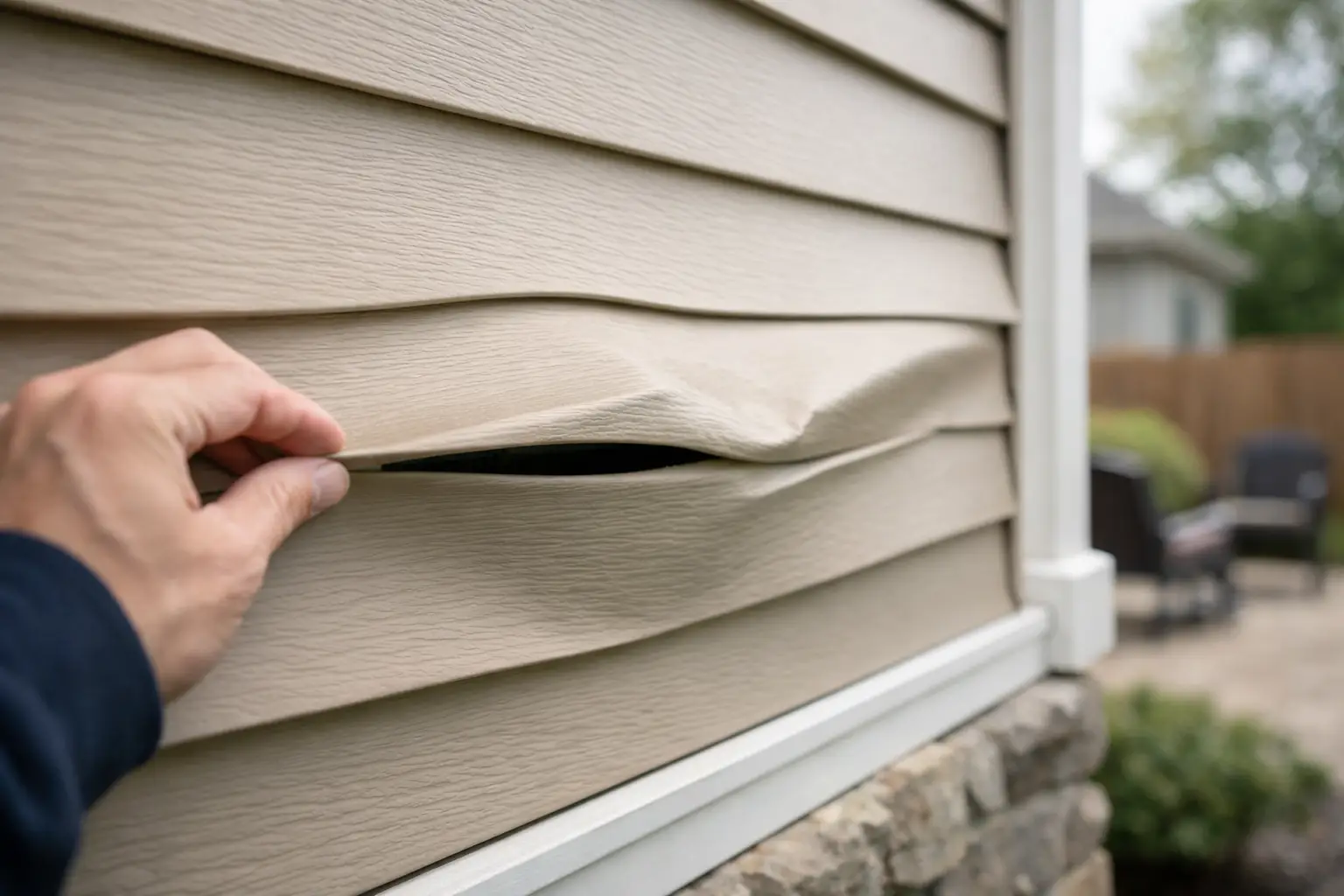
If you stepped outside and noticed a section of siding pushing outward, rippling, or looking uneven, your first question is usually simple: why is my siding buckling? The short answer is that siding almost never buckles without a reason. Something underneath, around it, or in the installation itself is forcing it out of place.
Buckling siding is not just a cosmetic issue. It can be a sign of moisture intrusion, poor fastening, heat distortion, or movement in the wall assembly. Left alone, those problems can lead to more expensive repairs, especially in coastal climates where wind-driven rain and long periods of moisture put exterior materials under steady pressure.
Why is my siding buckling in the first place?
In most cases, siding buckles because it cannot move the way it was designed to, or because the surface behind it has changed. Some siding products expand and contract with temperature shifts. Others depend on a flat, stable substrate and proper fastening to stay straight. When that balance is off, the panels or boards start to wave, bulge, or lift.
The most common cause is installation error. If fasteners are driven too tightly, the siding can become pinned in place. That may not show up right away, but over time normal expansion can create visible warping. This is especially common with vinyl siding, which needs room to move. A clean-looking install on day one can turn into obvious buckling after a hot spell or a seasonal temperature swing.
Moisture is another major factor. If water gets behind the siding and the sheathing or framing starts to swell, the face of the wall can push outward. Wood-based materials are particularly vulnerable to this. Even fibre cement or vinyl siding can look distorted if the wall behind it is no longer flat.
Heat exposure can also be the culprit. Reflected sunlight from nearby windows, especially low-E glass, can create concentrated heat on a section of vinyl siding. In that case, the siding may appear melted, warped, or uneven in one isolated area. That pattern usually points to heat distortion rather than general installation failure.
Then there is structural movement. Homes settle. Framing can shift. If the wall itself moves, the siding may show the symptoms first. This is less common than fastening or moisture issues, but it does happen, particularly around additions, older homes, and transition points where different materials meet.
Common causes of siding buckling
Improper fastening
Siding should be secure, but not locked down so tightly that it cannot respond to weather changes. Vinyl siding, in particular, requires correct nailing technique. Nails should sit properly in the slot, and they should not be driven flush so hard that the panel is trapped.
When that happens, expansion has nowhere to go. The panel starts to bow between fastening points, and what looks like random warping is actually material stress. In many cases, this kind of buckling appears in warmer weather and looks less severe when temperatures cool down.
Moisture behind the siding
Water intrusion is the concern homeowners should take seriously. If flashing details are weak, seams are not properly managed, or the weather barrier has failed, moisture can work its way behind the siding. Once the materials underneath absorb that moisture, they can swell, soften, or deteriorate.
You might notice staining, soft spots, peeling paint near trim, or mould around joints. Sometimes the siding is the first visible clue. The panel or board looks puffed out, but the real issue is happening beneath the surface.
In Vancouver Island conditions, where repeated wetting is a reality, moisture-related buckling is never something to ignore.
Heat warping
Not all buckling comes from water. Vinyl siding can deform when exposed to excessive heat, and reflected sunlight is a known cause. If the damage is concentrated on one wall or one distinct patch, this is worth considering.
Heat warping often creates a softened, wavy appearance rather than a broad wall bulge. It may be worst on south- or west-facing elevations, especially where neighbouring windows or glass railings reflect sunlight.
Poor substrate or uneven wall surface
Siding is only as straight as the surface beneath it. If the sheathing is damaged, framing is out of plane, or previous repair work left an uneven base, the finished siding can telegraph those imperfections.
This may not be true buckling in the strictest sense, but to a homeowner it looks the same: the siding does not sit flat, and the wall line appears distorted. The fix in these situations often involves more than replacing exterior panels. The underlying assembly has to be corrected.
Age and material breakdown
Older siding can lose its stability over time. Fastener holes can widen, boards can absorb years of moisture cycling, and repeated expansion and contraction can weaken the material. At a certain point, isolated repair becomes less reliable.
This depends on the product. Some types of siding hold up well for decades when installed properly. Others become brittle, loose, or prone to movement as they age. If the buckling is part of a wider pattern of wear, replacement may be the better long-term choice.
How to tell whether the problem is minor or serious
Some siding issues are localized and manageable. Others point to conditions that affect the building envelope. The difference matters.
If the buckling is limited to a small section and there are no signs of water damage, the issue may be related to fastening, heat, or one damaged panel. That can often be repaired without major disruption.
If you see multiple areas of distortion, swelling around trim, soft sheathing, mildew, interior moisture staining, or siding pulling away near windows and doors, the problem is more likely tied to water entry or substrate failure. At that stage, surface-level repairs may only hide the issue for a short time.
A simple visual check helps. Look for ripples that change with the weather, bulges that feel soft or spongy, gaps at joints, and discolouration near seams. Also pay attention to whether the distortion is random or concentrated in one area. Patterns tell a lot.
Can buckling siding be repaired, or does it need replacement?
It depends on the cause.
If the issue is improper installation on an otherwise sound wall, a targeted repair may be enough. That could mean removing and reinstalling a section correctly, adjusting fasteners, or replacing a few damaged panels.
If the siding has warped from heat, the affected material usually needs replacement. The harder part is preventing it from happening again. That may involve addressing the reflective source, not just swapping out the siding.
If moisture has reached the sheathing or framing, repairs need to go deeper. The damaged siding comes off, the wall assembly is inspected, wet or deteriorated materials are replaced, and the water management details are rebuilt properly. That includes flashing, trim transitions, and the weather-resistant barrier.
When siding is older, brittle, mismatched, or failing in several areas, full replacement often makes more sense than repeated patchwork. A proper replacement gives you the chance to correct installation issues, improve weather protection, and restore the appearance of the home in one coordinated project.
What homeowners should do next
Start by resisting the urge to treat buckling as a cosmetic nuisance. If siding is moving, there is a reason. The smartest next step is to identify whether the problem is material movement, heat exposure, trapped moisture, or something structural.
Take clear photos from different angles and note when you first noticed the issue. If the distortion looks worse on warm days, that is useful information. If it showed up after heavy rain or near a roof or window detail, that matters too.
A professional inspection is the quickest way to separate a straightforward repair from a hidden envelope problem. For homeowners dealing with wet coastal conditions, that clarity is valuable. A small section of buckled siding can sometimes be fixed cleanly. It can also be the first visible sign that water has been getting where it should not.
Quality siding work is not just about what looks straight from the street. It is about proper fastening, sound wall prep, accurate flashing, and materials installed to perform over time. That is the difference between a repair that lasts and one that has to be redone.
If you are asking why is my siding buckling, the good news is that the answer is usually findable – and fixable. The key is catching the cause early, before a warped panel turns into a larger exterior repair.
Leave a Reply