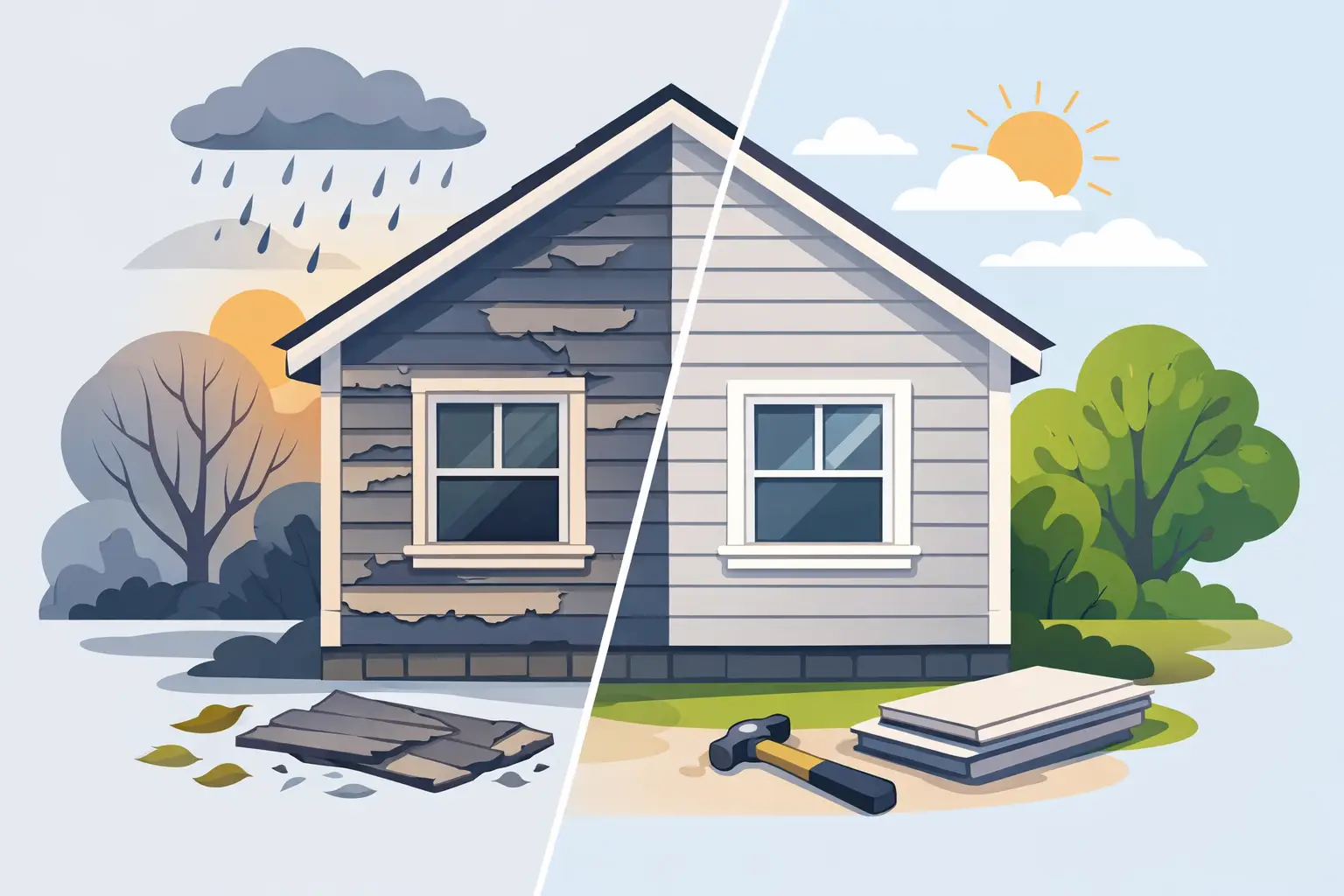
A lot of siding problems look minor from the ground until the wall underneath starts paying the price. If you are asking when should siding be replaced, the right answer is usually not based on age alone. It comes down to whether your siding is still keeping out moisture, holding its shape, and protecting the structure the way it should.
For homeowners, that line between repair and replacement matters. A small isolated issue can often be fixed. But once damage is widespread, recurring, or tied to hidden moisture, patchwork repairs stop being cost-effective. Good siding is not just about appearance. It is part of your home’s weather barrier, and on the coast that job gets tested hard.
When should siding be replaced instead of repaired?
The simplest rule is this: replace siding when the material is no longer reliably protecting the home, or when repairs would only buy a short amount of time. That can happen because of age, water exposure, poor installation, impact damage, or long-term neglect.
A single cracked board after a storm is one thing. Repeated swelling, soft spots, loose panels, peeling paint that keeps coming back, or signs of rot around trim and joints tell a different story. At that point, the question is less about cosmetics and more about what is happening behind the surface.
Replacement also makes more sense when the existing siding has reached the end of its service life and parts are failing in multiple areas. If one section is repaired this year and another section opens up next winter, you are spending money without solving the real issue.
The clearest signs your siding is near the end
Some warning signs are obvious. Others are easier to miss unless you know what to look for.
Warping, buckling, or panels pulling away from the wall usually means the siding is no longer stable. In some cases, this comes from age or heat movement. In others, it points to trapped moisture or improper fastening. Either way, siding that does not sit properly against the home cannot do its job well.
Soft areas, swelling, or visible rot are stronger indicators that replacement may be necessary. Once wood-based materials start breaking down, the damage often extends beyond what you can see from outside. If the wall assembly has been exposed to repeated moisture, replacing only the visible finish may leave a bigger problem in place.
Cracks, holes, and broken edges also matter, especially when they show up in multiple areas. One damaged piece can be swapped out. A pattern of brittle, aging material across several elevations usually means the siding system is wearing out.
Frequent repainting can be another clue. If paint peels, blisters, or fails much sooner than expected, the issue may not be the coating. It may be moisture moving through damaged or deteriorated siding. A fresh paint job can improve appearance for a while, but it will not correct failing materials underneath.
Fading on its own is usually more cosmetic than structural. Still, if fading is paired with chalking, cracking, or surface breakdown, it may be part of a broader aging problem.
Moisture changes the equation
On homes exposed to regular rain, damp air, and seasonal storms, moisture is often the deciding factor. Siding does not need to be falling off the wall to be considered failed. If water is getting where it should not, replacement may be the safer move.
Watch for mould, mildew, or staining that keeps returning even after cleaning. Interior signs matter too. Peeling paint inside, musty smells, or unexplained moisture near exterior walls can point to a problem with the cladding system outside.
This is especially relevant in Vancouver Island conditions, where long wet periods can expose weaknesses in older siding or in installations that were not detailed properly around windows, corners, and penetrations. In a drier climate, some materials may limp along for longer. In coastal conditions, water management has to be taken seriously.
Age matters, but only to a point
Homeowners often want a number: how many years should siding last? That depends heavily on the material, the quality of installation, maintenance habits, and local exposure.
Vinyl siding may last a few decades if it was installed correctly and has not become brittle or loose. Wood siding can also last a long time, but only with consistent upkeep and prompt attention to moisture issues. Fibre cement is known for durability, though it still depends on proper detailing, clearances, and finishing.
The important point is that siding does not expire on schedule. Two homes built the same year can be in very different condition depending on sun exposure, drainage, maintenance, and workmanship. Age should prompt inspection, not automatic replacement.
Repairs still make sense in some cases
Not every problem calls for a full replacement. If damage is clearly limited to one area and the rest of the siding is in solid shape, a targeted repair can be the practical choice.
That might include a few storm-damaged panels, a localized impact crack, or one section affected by a past leak that has already been corrected. If matching materials are available and the wall behind the siding is sound, repair can extend the life of the system without overcommitting your budget.
The trade-off is consistency. On older homes, repaired areas may not match perfectly because of fading or discontinued profiles. There is also the question of what the rest of the siding will do next. A repair is worthwhile when it addresses an isolated problem. It is less worthwhile when it is really a delay tactic for a siding system that is generally worn out.
Why installation quality matters so much
Sometimes siding needs replacing earlier than expected not because the product was poor, but because the installation was. Improper flashing, weak joint detailing, wrong fastener placement, poor spacing, and inadequate weather barrier work can all shorten the life of an exterior.
This is one reason professional assessment matters. What looks like old siding may actually be a moisture management problem. If replacement is needed, the value is not just in new material. It is in correcting the details that protect the home long term.
That includes trim transitions, window and door integration, ventilation where required, and finishing work that does not leave weak points behind. Quality craftsmanship shows up most in the details homeowners rarely see after the project is complete.
Is replacement worth it before severe damage shows up?
In some cases, yes. Waiting until siding is visibly failing everywhere can lead to more costly structural repairs. If inspections show ongoing moisture entry, hidden rot, or widespread deterioration, earlier replacement can protect the wall assembly and reduce bigger repair costs later.
There is also the practical side of planning. Replacing siding on your own timeline gives you more control over material choices, scheduling, and budget. Emergency work after water damage or storm exposure usually gives you less flexibility.
For many homeowners, curb appeal is part of the decision too. That should not be dismissed. New siding can improve the look of a home significantly, but the real value comes when appearance and protection are upgraded together.
What a homeowner should do next
If you are unsure whether your siding needs repair or full replacement, start with a close inspection from someone who works on exteriors every day. Surface symptoms only tell part of the story. The goal is to find out whether the issue is isolated, whether moisture has reached the substrate, and whether the current siding still has dependable years left in it.
A good assessment should look at more than the face of the material. It should consider vulnerable areas like lower walls, joints, trim, window perimeters, and any sections that take the worst weather exposure. You want an honest answer, not a rushed sales pitch.
If replacement is recommended, ask why. Is it the material itself, the extent of damage, repeated moisture exposure, or poor original detailing? Clear reasoning matters because it helps you understand the value of the work being proposed.
For homeowners who want durable results, this is where a contractor’s standards make a difference. DryTek approaches siding as a protective system, not just a finish layer, with workmanship built around long-term performance and clean final detail.
Siding rarely fails all at once. More often, it gives you warnings first. Paying attention to those signs early can spare you from much larger repairs later, and help you invest in an exterior that is built to hold up when the weather turns.
Leave a Reply