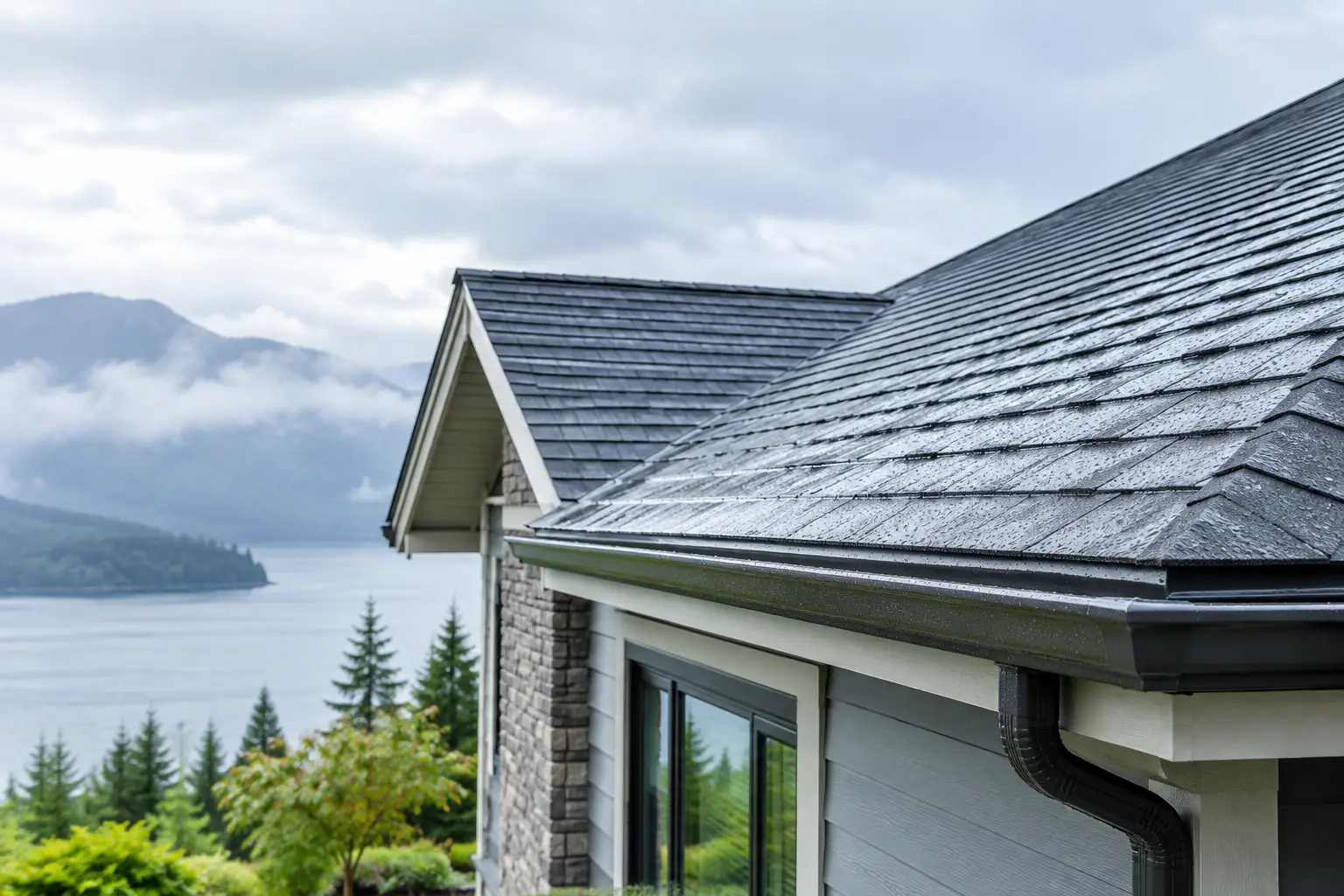
A roof in a rainy coastal climate rarely fails all at once. Water finds the small weakness first: a tired valley, a lifted shingle edge, a poorly sealed vent, or debris holding moisture at the gutter line. The most useful roofing trends for wet climates are not about chasing a new look. They are about building a roof system that sheds water quickly, dries properly, and stays dependable through repeated wet seasons.
For Vancouver Island homeowners, that means looking beyond the field of shingles. Material selection matters, but so do slope, flashing, ventilation, drainage, and the quality of installation at every transition. A good-looking roof should also be built to manage the conditions it faces.
Roofing Trends for Wet Climates: Drainage First
The strongest shift in wet-climate roofing is a simple one: drainage is being treated as a design priority, not an afterthought. Rain should move off the roof efficiently, away from vulnerable seams, and into a gutter system sized and maintained for local rainfall.
This has renewed attention on roof geometry. Clean, well-planned slopes generally shed water better than complicated layouts filled with intersecting planes, tight valleys, and decorative details. That does not mean every home needs a plain roofline. It means that every valley, dormer, skylight, and roof-to-wall connection needs a clear water-management plan before installation begins.
Valleys deserve particular care because they collect runoff from multiple roof sections. In wet climates, contractors increasingly use high-performance underlayment and ice-and-water membrane protection in these areas, along eaves, and around penetrations. These concealed layers are not the finish homeowners see, but they can make the difference when wind-driven rain reaches beneath the outer roofing material.
Gutters are part of the roofing system as well. Overflowing gutters can saturate fascia boards, stain siding, undermine soffits, and direct water toward the foundation. Wider gutters, properly placed downspouts, and gutter guards suited to the surrounding tree cover are practical upgrades when a roof replacement is underway. Guards are not maintenance-free, especially near fir needles and moss, but they can reduce buildup when chosen and installed correctly.
Materials Built to Dry, Shed, and Endure
Architectural asphalt shingles remain a common choice for residential roofs because they provide reliable coverage, a wide range of colours, and a sensible balance of cost and performance. Current products often feature heavier construction, improved wind ratings, and algae-resistant granules. For many pitched roofs, a quality architectural shingle installed with the right underlayment and ventilation is a sound solution.
The trade-off is that shingles are not immune to persistent dampness. Shaded roof areas can still develop moss or algae, and debris left on the surface can hold moisture against the roof. Homeowners should be wary of aggressive pressure washing, which can strip protective granules and shorten shingle life. Gentle maintenance and regular inspection are better long-term habits.
Metal roofing continues to gain attention in wet regions for good reason. Its smooth surface sheds rain, needles, and light debris effectively, and a properly detailed metal roof can offer a long service life. Standing-seam systems also have fewer exposed fasteners than some other metal profiles, reducing potential entry points for water.
However, metal is not automatically the best choice for every property. It carries a higher upfront cost, requires experienced detailing around penetrations and transitions, and may need snow-management planning in areas where snow load is a factor. Rain noise is also a concern for some homeowners, though proper insulation and attic assembly greatly affect how noticeable it is indoors.
Synthetic composite roofing has also become more appealing for homeowners who want the character of cedar shake or slate without the same maintenance demands. These products can resist moisture, splitting, and rot better than natural wood materials. Their performance varies by manufacturer and installation method, so the product warranty, local availability, roof structure, and installer experience should all be part of the decision.
Natural cedar still has visual appeal, particularly on West Coast-style homes, but it requires a realistic maintenance commitment. In a persistently damp setting, cedar must be able to dry between rain events. Shade, overhanging branches, poor airflow, and debris accumulation can accelerate deterioration. It can be an excellent material in the right application, but it is not a fit-and-forget roof.
Better Ventilation Is Becoming Standard Practice
A wet-climate roof has to manage moisture from both directions. Rain falls from above, while warm indoor air can carry moisture into the attic from below. When that moist air condenses on the underside of roof sheathing, it can contribute to mould, wood deterioration, insulation problems, and premature roofing failure.
That is why balanced attic ventilation remains one of the most valuable upgrades in a roofing project. Intake ventilation at the soffits and exhaust ventilation near the ridge help move warm, humid air out of the attic. The goal is not simply to add more vents. The intake and exhaust need to work together, and insulation or previous renovations must not block airflow at the eaves.
Ventilation is especially worth reviewing when a home has recurring moss growth, frosty nails in the attic, peeling paint around soffits, or a roof that seems to age faster than expected. These symptoms do not always point to one cause, but they justify a closer look at the full roof and attic assembly.
Flashing and Details Are Getting the Attention They Deserve
The most durable roof material can still leak if the details are rushed. Modern wet-climate roofing places greater emphasis on properly integrated flashing at chimneys, walls, skylights, plumbing vents, and roof valleys. These are the locations where water changes direction, concentrates, or meets another building material.
Step flashing, counterflashing, pipe boots, drip edge, and wall transitions should be installed as part of a layered water-shedding system. Caulking has a role, but it should not be the primary defence against a poorly detailed transition. Sealants age. Correct overlaps, compatible materials, and secure mechanical installation provide more dependable protection.
This detail-focused approach matters during roof repairs too. Replacing a few damaged shingles may solve a localized issue, but recurring leaks around a chimney or skylight often signal a flashing problem rather than a shingle problem. A proper assessment should identify the source before work begins, rather than covering the symptom with another layer of sealant.
Low-Maintenance Does Not Mean No Maintenance
Homeowners are increasingly choosing roofing systems that reduce ongoing work, but no roof is completely maintenance-free in a coastal climate. The practical trend is proactive care: inspect the roof after major storms, keep gutters and valleys clear, trim branches that scrape the surface, and address small defects before they become interior damage.
Moss control also requires judgement. A little discolouration is different from thick moss lifting shingle edges and trapping water. Treatment should be suited to the roofing material and applied carefully to protect surrounding landscaping. If a roof has widespread moss alongside missing granules, curled shingles, or soft areas, cleaning alone may not be the right answer.
A professional inspection is particularly valuable before buying a home, planning solar installation, or starting exterior upgrades such as siding replacement. Roofing, siding, gutters, and ventilation meet at critical edges of the home. Coordinating those details can prevent the costly rework that happens when each component is treated as a separate project.
Choosing the Right Trend for Your Home
The right roof depends on more than annual rainfall. Roof pitch, tree cover, exposure to wind, attic conditions, architectural style, budget, and the condition of the existing deck all affect the best solution. A metal roof may be ideal for one home, while a high-quality architectural shingle system with upgraded underlayment and ventilation may be the better investment for another.
For homeowners on Vancouver Island, the most lasting trend is quality craftsmanship applied to the entire assembly. DryTek approaches roofing with that standard in mind: durable materials, careful preparation, and clean finishing where water is most likely to test the work. When rain is part of the landscape, the roof over your home should be built with the same level of respect.
Leave a Reply