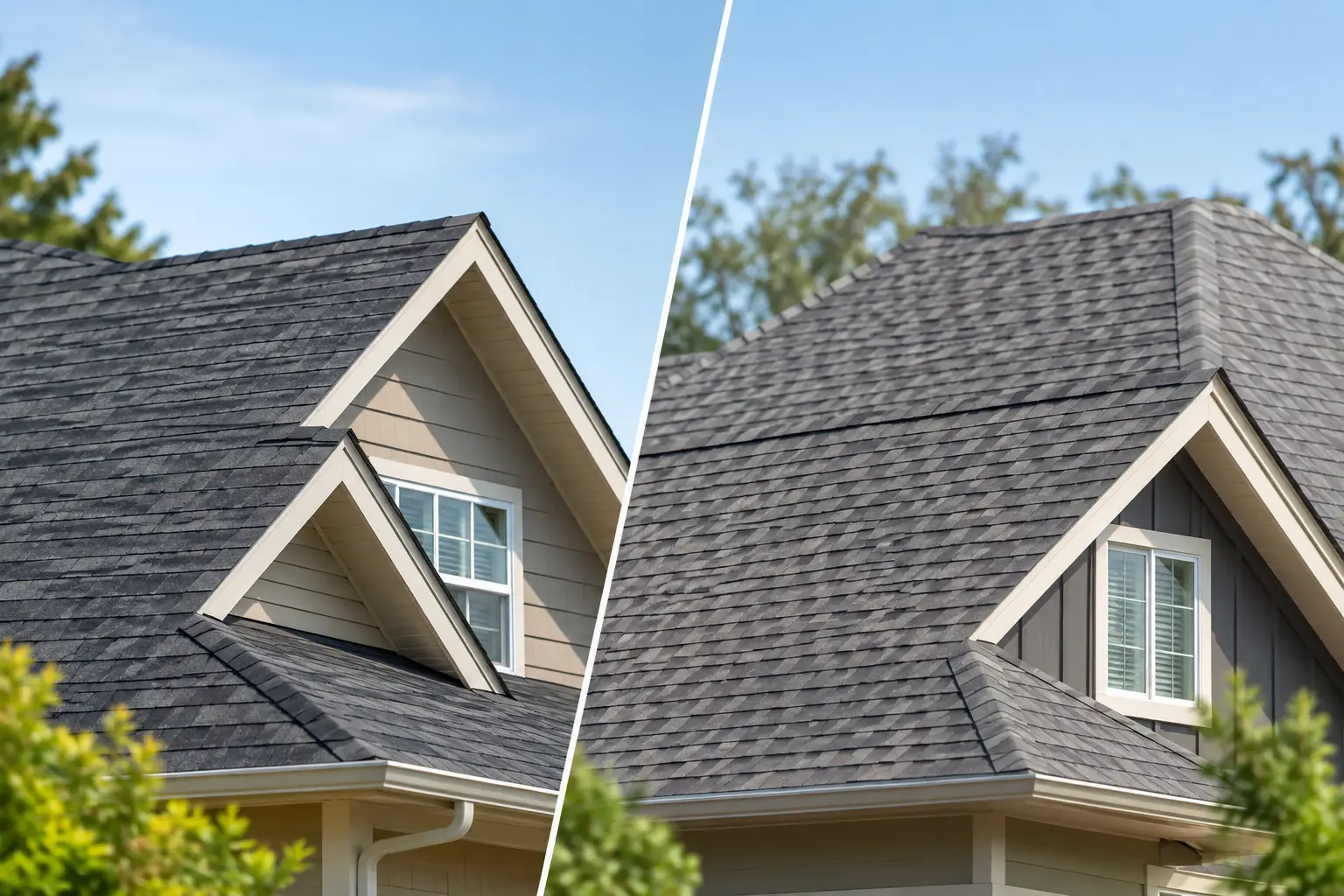
A shingle roof on Vancouver Island needs to do more than look good from the street. It must manage months of rain, wind-driven weather, damp shade, and the wear that comes with a coastal climate. In a GAF Timberline versus Malarkey Vista comparison, both are credible architectural asphalt shingle choices, but they take different approaches to durability, installation, and long-term appearance.
The right choice is rarely just the shingle with the best brochure feature. Roof pitch, ventilation, exposure, existing deck condition, colour selection, budget, and installation quality all matter. A well-installed roof system will outperform a premium shingle installed over hidden problems or finished carelessly around penetrations and edges.
GAF Timberline Versus Malarkey Vista at a Glance
GAF Timberline is one of the most recognized architectural shingle families in North America. Timberline HDZ is commonly selected for its dimensional appearance, broad colour range, and installation-focused design features. It is a familiar option for homeowners who want a traditional laminated shingle roof with a clean, consistent finish.
Malarkey Vista is also an architectural shingle, but it is known for using a modified asphalt blend that incorporates rubberized asphalt. That material approach is intended to improve flexibility and resilience. Vista shingles are often considered by homeowners who place extra value on impact performance, granule technology, and a product built with a different asphalt formulation than a conventional shingle.
Neither product is automatically better for every home. Timberline may be the natural fit where colour selection, established availability, and a classic architectural profile lead the decision. Vista can be particularly compelling where homeowners want the potential benefits of a rubberized asphalt shingle and are willing to compare initial cost against material characteristics.
Weather Performance for Coastal Homes
Rain itself does not usually damage a properly installed asphalt shingle roof. The greater concern is repeated wetting, wind, moss-friendly shade, and the small installation details that decide whether water stays outside the building envelope. Underlayment, eave protection, flashing, ventilation, and proper fastening are as important as the shingle visible from the driveway.
Timberline HDZ shingles use a laminated construction to create depth and improve the roof’s visual texture. The line also includes installation alignment and nailing-zone features designed to help roofers place shingles accurately and efficiently. Those details can support a consistent installation, provided the crew follows the required fastening pattern and local code requirements.
Malarkey Vista’s rubberized asphalt formulation is a notable differentiator. Asphalt shingles naturally expand and contract as temperatures change, and flexibility can be valuable during handling and over a roof’s service life. Vista is also associated with a wider nailing area, which can help installers place fasteners correctly when the work is performed with care.
For wind resistance, homeowners should compare the rating of the exact product and system being proposed, not just the name on the shingle bundle. Wind ratings can depend on the shingle model, number of fasteners, deck attachment, roof geometry, and whether the installation follows the manufacturer’s enhanced-wind requirements. A coastal roof with exposed ridges or an open waterfront setting deserves a more detailed review than a sheltered home in a mature neighbourhood.
Granules, Algae, and Long-Term Appearance
Granules protect asphalt shingles from ultraviolet exposure and create the colour blend that defines the roof’s appearance. Over time, some normal granule loss is expected, particularly after installation and as a roof ages. Excessive loss, however, can point to a product concern or a roof that has reached the end of its useful life.
GAF Timberline gives homeowners many familiar colour options, including blends that work well with siding, stone, painted trim, and natural coastal palettes. Its dimensional shadow lines can give a standard roof a more substantial appearance without moving to a heavier premium material.
Malarkey Vista colours tend to have a similarly architectural look, while the product is also known for granules designed to reduce the formation of algae staining. This may be attractive in damp, shaded locations where dark streaking can affect curb appeal. Still, no shingle should be treated as maintenance-free in a heavily treed setting. Keeping valleys, gutters, and roof edges clear of debris helps reduce prolonged moisture exposure, whatever shingle is installed.
Colour deserves more attention than many homeowners give it. A dark roof can look striking but may show pollen, salt residue, or organic debris differently than a medium-tone blend. A lighter or variegated colour can soften a large roof plane and better suit some homes. The best sample is one viewed outdoors against the existing exterior, not under showroom lighting.
Cost Is More Than the Price per Bundle
A GAF Timberline roof and a Malarkey Vista roof can differ in material pricing, but roof replacement quotes should be evaluated as complete systems. The lower number is not necessarily the better value if it leaves out underlayment upgrades, drip edge, wall and chimney flashing, venting corrections, deck repairs, or proper disposal.
Timberline is often a practical choice for homeowners seeking a widely used architectural shingle with a strong visual result and controlled project cost. Malarkey Vista may carry a higher material cost in some markets, reflecting its formulation and product features. Actual pricing can also move with local supply, roof complexity, access, and the amount of detail work required.
The project variables that most affect the final investment are usually roof size, pitch, number of valleys, skylights, chimneys, plumbing vents, old roof removal, and damaged sheathing. A simple gable roof and a cut-up roof with multiple transitions should never be priced or planned as though they are the same job.
A detailed quote should state the shingle model and colour, underlayment type, flashing scope, ventilation plan, number of layers being removed, allowance for deck repairs, and warranty terms. Clear scope protects the homeowner from assumptions that become expensive once work has started.
Warranty Comparison Requires Careful Reading
Both manufacturers offer warranty programs, but coverage, registration requirements, enhanced protection, transfer terms, and eligible installation methods can vary by product and change over time. The headline length of a warranty is not the only measure that matters.
Ask what is covered during the non-prorated period, whether labour coverage is included, what components must be installed to qualify for upgraded protection, and which exclusions apply. Also confirm that the exact shingle proposed is approved for the installation conditions on your home.
Warranty protection does not replace workmanship. A manufacturer warranty is intended to address qualifying material defects. It will not correct poor flashing, inadequate ventilation, improperly driven fasteners, or water entering through a detail that was never finished properly. That is why choosing a contractor with a disciplined installation process matters as much as selecting a reputable shingle brand.
Which Shingle Is Right for Your Home?
Choose GAF Timberline when you want a proven, widely recognized architectural shingle, a broad range of traditional roof colours, and a polished dimensional look that fits many home styles. It is a sensible option when the overall roof system is well specified and the installation team has experience with the product.
Consider Malarkey Vista when the rubberized asphalt formulation, enhanced granule technology, and installation-oriented design are priorities. It may be a strong fit for homeowners looking for a shingle that approaches durability through material composition as well as conventional laminated construction.
The deciding factor may be simpler than a feature comparison. If one product is available in the colour you genuinely prefer, is specified with the right underlayment and flashing, and will be installed by a crew that treats roof details properly, that is meaningful value. Product performance starts with manufacturing, but it is proven on the roof.
For Vancouver Island homes, DryTek recommends starting with an on-site assessment rather than choosing from colour boards alone. The roof’s exposure, slope, ventilation, drainage, and existing condition should guide the recommendation. A roof earns its value quietly, through every storm it keeps outside and every detail that stays sound long after installation day.
Leave a Reply