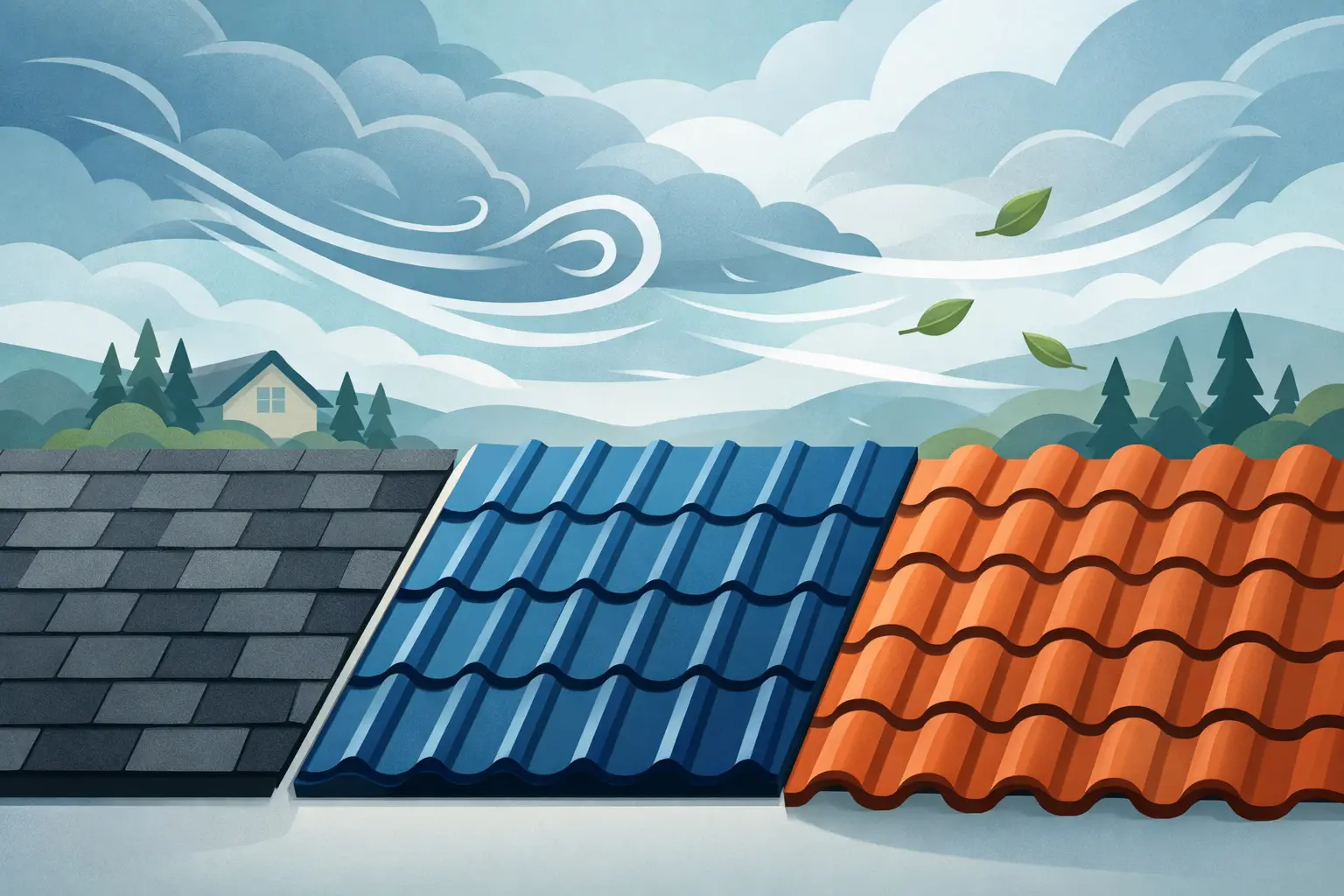
A roof rarely fails all at once. More often, a windstorm lifts one edge, loosens a few fasteners, and creates just enough movement for water to start finding its way in. That is why homeowners researching the best roofing materials for wind are usually asking a bigger question: which roof will actually stay put when the weather turns rough?
The answer depends on more than the product label. Wind resistance comes from a combination of material strength, fastening method, roof shape, slope, edge detailing, and installation quality. A good material can underperform if it is poorly installed. A well-installed system, on the other hand, gives your home a much better chance in exposed and storm-prone conditions.
What matters most in the best roofing materials for wind
When wind hits a house, the roof does not feel one uniform force. Corners, ridges, eaves, and overhangs take the most pressure. Uplift happens when air pushes against the roof surface and tries to pull sections loose. That is why wind ratings matter, but they are not the full story.
Homeowners should pay attention to how a roofing system is attached, how its edges are finished, and whether the material is suited to the local climate. In coastal regions, wind often arrives with rain and salt air. That combination can expose weaknesses faster than dry inland conditions. A roof that performs well in brochures still needs to be built for real weather.
Asphalt shingles: practical, common, and highly variable
Asphalt shingles are still one of the most common roofing choices for residential homes, and for good reason. They are cost-effective, widely available, and can look clean and attractive on many home styles. But wind performance varies a lot between basic three-tab shingles and higher-grade architectural shingles.
Three-tab shingles are typically the weakest option in windy conditions. They are lighter, flatter, and more likely to be damaged or lifted as they age. Architectural shingles are thicker and generally offer better wind ratings, often with improved sealant strips and stronger overall construction.
For many homeowners, architectural asphalt shingles strike a good balance between cost and performance. That said, they are still more vulnerable than some premium materials if installation shortcuts are taken. Nailing pattern, starter strip placement, ridge cap installation, and proper attic ventilation all influence how well the roof holds together over time.
If budget is a major concern, upgraded asphalt shingles can be a reasonable choice. If maximum wind resistance is the goal, they may not be the top option.
Metal roofing: one of the strongest options for high wind
Metal roofing is often one of the best answers when homeowners ask about the best roofing materials for wind. Properly installed metal panels can deliver excellent resistance to uplift, and they tend to perform well in driving rain too.
Standing seam metal is especially strong because of its interlocking design and concealed fasteners. That matters. Exposed fastener systems can still perform well, but the fasteners themselves become a more active part of the weather defence. Over time, movement, expansion, and gasket wear can create maintenance concerns.
Metal also offers another advantage in coastal environments: it sheds water efficiently and is less likely to absorb moisture. The trade-off is cost. Metal roofing usually comes with a higher upfront investment than asphalt. It can also be noisier during heavy rain if the assembly beneath it is not properly designed, although modern residential systems often reduce that issue significantly.
For homes in open, windy areas, especially where storms hit hard and often, metal is a serious contender.
Composite and synthetic roofing: strong performance with design flexibility
Composite roofing products are designed to mimic materials like slate or cedar while offering lower weight and, in many cases, better impact and wind resistance. These products can be a strong option for homeowners who want a high-end look without the structural demands of natural materials.
The biggest benefit here is consistency. Good synthetic products are manufactured to uniform standards, which can help reduce weak points. Many also come with strong wind ratings when installed to specification.
Still, not all composites are equal. Lower-quality products may not age well under UV exposure or repeated weather cycling. This is one category where product selection really matters. A dependable installer should be able to explain which brands and profiles are worth considering and which ones are better left alone.
For homeowners focused on curb appeal and durability, composite roofing can make a lot of sense, especially when natural wood or slate would be less practical.
Cedar shakes and shingles: attractive, but not the strongest wind choice
Cedar has a distinct appearance that many homeowners love. It suits certain architectural styles beautifully and has long been used in coastal communities. But when wind resistance is the priority, cedar is usually not the first recommendation.
Natural wood can split, dry out, curl, and loosen over time, especially without consistent maintenance. In wet coastal climates, it also faces added pressure from moisture, moss, and general weathering. That does not mean cedar always performs poorly. A well-installed cedar roof can last and look great with proper care. It simply demands more attention and carries more variables than many modern systems.
If the goal is low maintenance and strong wind performance, there are usually better options available.
Concrete and clay tiles: durable, but weight and attachment matter
Tile roofs are known for longevity, and some systems can perform well in wind when properly installed. But tile is complicated. Individual pieces are heavy, brittle, and vulnerable if fastening methods are not appropriate for local wind exposure.
In some cases, the tile itself survives while underlayment or edge components become the weak point. In others, individual tiles can crack or dislodge during severe wind events. Roof structure also matters because not every home is designed to carry the added load of concrete or clay.
Tile can be an excellent roofing material in the right climate and on the right house, but for many residential homes in coastal BC, it is not always the most practical fit.
Why installation quality matters as much as the material
A wind-resistant roof is a system, not just a surface. Underlayment, decking condition, flashing, ridge treatment, starter courses, and edge metal all play a role. If one of those details is weak, the entire roof becomes more vulnerable.
This is where quality craftsmanship matters. Wind usually attacks the perimeter first, so details at the eaves, rakes, valleys, and ridge cannot be treated as minor finishing work. They are part of the roof’s defence.
That is also why the best contractor is not simply the one offering the lowest quote. A cheaper installation may leave out key steps that are not obvious from the ground but make a real difference in bad weather. DryTek approaches roofing the way it should be approached – as a protective system built for Vancouver Island weather, with careful attention to the details that keep water and wind from turning a small issue into a major repair.
Best roofing materials for wind in coastal conditions
For homes exposed to coastal weather, the strongest choices are usually standing seam metal roofing, high-quality architectural asphalt shingles, and selected composite roofing systems. Each has its place.
Standing seam metal is often the top performer for wind resistance and long-term durability. Architectural shingles are more budget-friendly and can be a solid option when installed properly with the right accessories. Composite roofing fills the middle ground for homeowners who want upgraded appearance and dependable weather performance.
The right choice depends on your budget, the age and design of the home, the slope of the roof, and how exposed the property is to open wind. A sheltered suburban lot may not need the same roofing strategy as a home on a ridge or near the water.
How homeowners should make the final decision
Start by thinking beyond the material sample. Ask how the roof will be fastened, what wind rating the full system carries, whether the roof deck needs repair, and how vulnerable areas will be detailed. Ask about manufacturer requirements too, because even a strong product can lose its intended performance if it is not installed to spec.
It also helps to think long term. Paying less today for a roof that needs repeated repairs after windstorms is rarely a savings. A better roof system may cost more upfront but provide better protection, fewer call-backs, and a cleaner appearance over time.
If your current roof has already lost shingles, shown lifted edges, or developed recurring leaks after storms, that is usually a sign to look deeper than patchwork fixes. The material matters, but the build matters just as much.
A roof should do more than cover a house. It should hold its line when the weather gets loud, protect the structure underneath, and give you one less thing to worry about when the next storm rolls in.
Leave a Reply