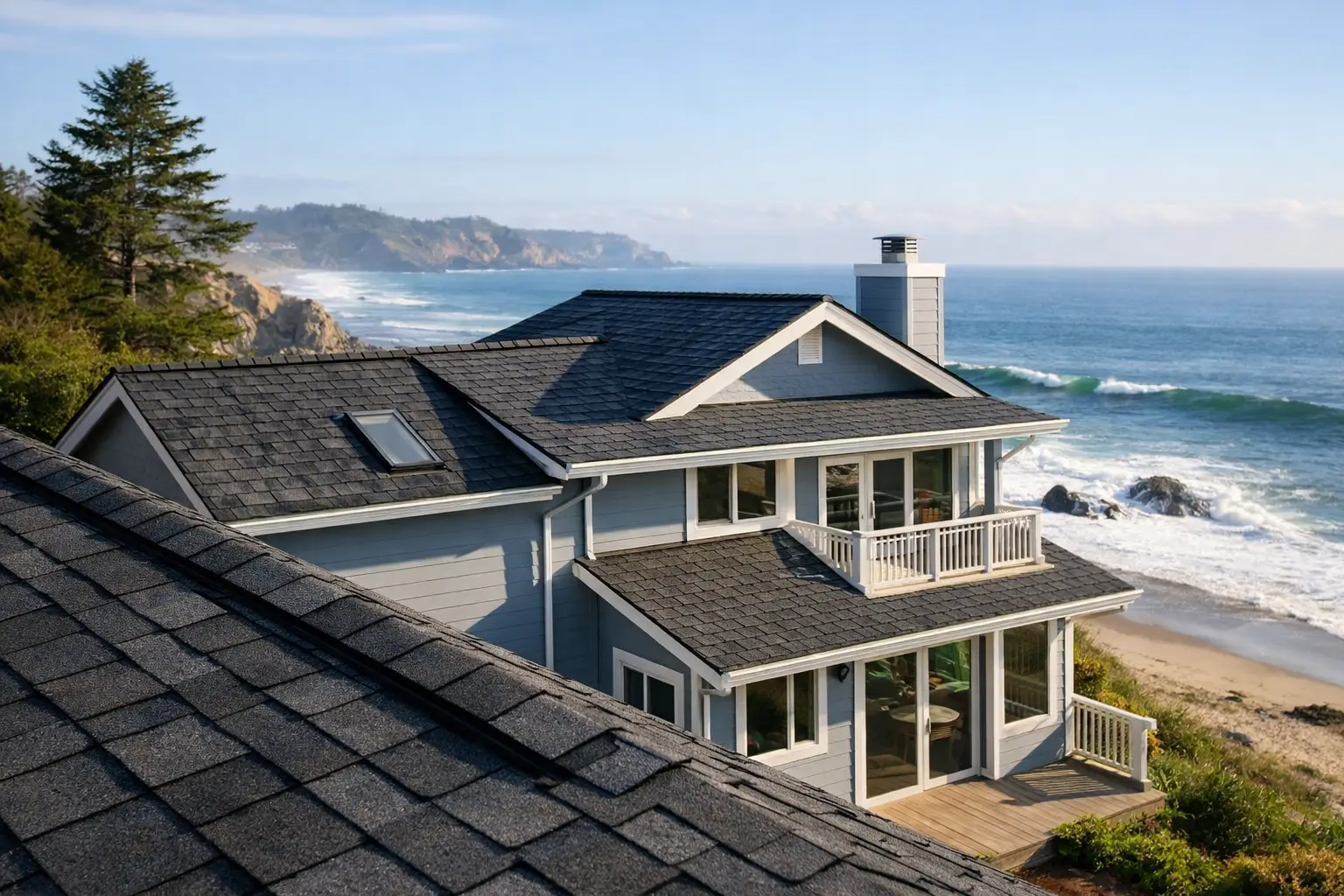
A roof can look clean and nearly new from the street while its real test happens during a week of wind-driven rain. That is the lens for this Malarkey Vista shingle review. For homeowners on Vancouver Island, a shingle needs to do more than add curb appeal. It needs to manage persistent moisture, resist coastal weather, and be installed with careful attention to the details that keep water out.
Malarkey Vista is an architectural laminate shingle positioned above basic three-tab products and below the manufacturer’s heaviest premium options. It is a strong consideration for homeowners who want a dimensional roof with dependable weather performance, but do not necessarily need the highest impact rating or the boldest designer profile available.
What the Malarkey Vista Shingle Is Designed to Do
Vista is a laminated asphalt shingle. Its layered construction creates the shadow lines and thicker visual profile most homeowners expect from a modern residential roof. Compared with an entry-level three-tab shingle, it offers a more substantial appearance and generally better resistance to wind uplift when the full roofing system is installed correctly.
The product also uses modified asphalt technology intended to improve flexibility and durability over conventional asphalt shingles. That matters in a coastal climate, where repeated wetting, temperature changes, and seasonal wind put ongoing stress on a roof assembly.
Product specifications, warranty terms, and approved installation methods can change by market and production line. A contractor should always confirm the current Canadian product documentation before recommending a specific shingle, especially when wind coverage or enhanced warranty requirements are part of the decision.
Where Vista Performs Well
A practical balance of durability and appearance
Vista’s strongest selling point is balance. It is not a bargain-basement shingle, nor is it priced as a top-tier luxury roofing product. It provides a dimensional look that suits many Vancouver Island homes, from newer suburban builds to older homes receiving a full exterior refresh.
The colour blends tend to have enough variation to avoid a flat, uniform roof plane. This is useful when pairing the roof with fibre cement, wood, or vinyl siding, where the roof colour can either pull the exterior together or make it feel mismatched. A good sample review in natural outdoor light is worthwhile. Coastal overcast can make a colour read quite differently than it does under showroom lighting.
Better resistance to algae staining
Vista shingles are commonly specified with algae-resistant granule technology. This can help limit the dark streaking caused by airborne algae, a familiar concern in damp climates.
There is an important distinction here: algae resistance is not the same as moss prevention. Moss grows where organic debris, shade, and moisture remain on the roof surface. Even a quality algae-resistant shingle can develop moss if overhanging branches drop needles, gutters overflow, or the roof is rarely cleared. Regular roof and gutter maintenance still matters.
Designed with wind in mind
Wind performance is one reason architectural shingles are often preferred over basic three-tab options. However, the shingle itself is only one part of that performance. Correct fastener placement, the specified number of nails, starter shingles, sealing strips, flashing, ridge caps, and ventilation all contribute to how a roof handles a storm.
On exposed properties near the water or on elevated terrain, installation details deserve as much attention as the product label. A shingle installed outside the manufacturer’s instructions can compromise both performance and warranty eligibility.
Trade-Offs Homeowners Should Consider
No shingle is the best choice for every roof. Vista has clear strengths, but there are situations where another material or product level may make more sense.
First, it is still an asphalt shingle. It does not have the expected service life of properly installed metal roofing, and it will not deliver the same crisp architectural profile as a standing-seam metal roof. For a homeowner planning a long-term, low-maintenance exterior renovation, comparing those options can be sensible, even if asphalt remains the more cost-effective choice upfront.
Second, Vista may not be the right fit for a home where the main priority is maximum impact resistance. Areas with frequent hail exposure can justify stepping up to a shingle with a higher impact rating, provided it is available and approved for the project. Hail is less central to many Vancouver Island roofing decisions than rain and wind, but it can still be relevant depending on location and insurance considerations.
Third, architectural shingles are only as reliable as the roof deck beneath them. If old sheathing is soft, ventilation is poor, or flashing around chimneys and wall transitions has failed, a new shingle layer will not solve the underlying issue. A proper reroof should begin with an assessment of the whole roof system, not just a colour selection.
The Installation Details That Matter Most
A quality shingle roof is a system. The visible shingles are the finish layer, but the water-management details below and around them determine whether the home stays protected.
For a Vista installation, the contractor should inspect decking condition, replace compromised material, and use underlayment suited to the roof design and local weather exposure. Vulnerable areas such as eaves, valleys, roof-to-wall transitions, skylights, plumbing vents, and chimneys need particular care. These are not places to rush or reuse damaged materials simply because they are less visible from the ground.
Ventilation also deserves attention. An attic that traps excess heat and moisture can shorten the life of roofing materials and contribute to condensation problems. The right approach depends on the home’s layout, insulation, existing intake and exhaust ventilation, and whether enclosed roof cavities are present. There is no one-size-fits-all ventilation fix.
At DryTek, this is why roof recommendations begin with the condition of the existing assembly. A carefully installed mid-to-upper-range shingle can be a better investment than a premium shingle placed over unresolved deck, flashing, or ventilation issues.
Cost Expectations for a Vista Roof
Vista will usually cost more than an entry-level asphalt shingle, reflecting its laminated construction, visual depth, and enhanced material features. The complete project price, however, is driven by far more than the shingle selected.
Roof size, pitch, accessibility, tear-off requirements, disposal, deck repairs, skylights, chimneys, valleys, ventilation upgrades, and flashing replacement can all materially affect the quote. A simple gable roof and a steep, cut-up roof with multiple penetrations should not be expected to cost the same per square foot.
When comparing estimates, look beyond the bottom-line number. Confirm the exact shingle product and colour, whether old roofing is being removed, what underlayment is included, how flashing will be handled, whether deck repairs are allowed for, and what cleanup is included. A detailed scope makes it easier to compare workmanship standards rather than comparing vague allowances.
Is Malarkey Vista a Good Choice for Vancouver Island?
For many homes, yes. Vista is well suited to homeowners seeking a dimensional asphalt shingle that offers a meaningful step up from basic roofing without moving into the highest-priced asphalt category. Its algae-resistant features, layered appearance, and modified asphalt construction align well with the practical demands of a wet coastal environment.
That said, site conditions should guide the final choice. A heavily shaded roof beneath mature trees may need a disciplined maintenance plan. An exposed waterfront property may require special attention to wind-rated installation details. A home with recurring attic moisture needs diagnosis before any new roofing goes on.
Colour choice should also be practical, not purely aesthetic. Medium and darker blends often complement West Coast exteriors and can hide minor surface debris better than very light colours. Yet the best colour is the one that works with the home’s siding, trim, surrounding light, and long-term maintenance expectations.
The Bottom Line on Vista Shingles
Malarkey Vista is a credible, well-rounded architectural shingle for homeowners who want good weather protection, a dimensional finish, and a sensible middle ground in cost. It is not a substitute for proper flashing, sound decking, ventilation, and regular maintenance. Those details decide whether a roof merely looks finished or performs properly when the weather turns.
Before choosing any shingle, ask for an on-site assessment, review real samples outdoors, and make sure the quote explains the full roof system. A roof built for Vancouver Island weather should be selected with the same care used to install it.
Leave a Reply