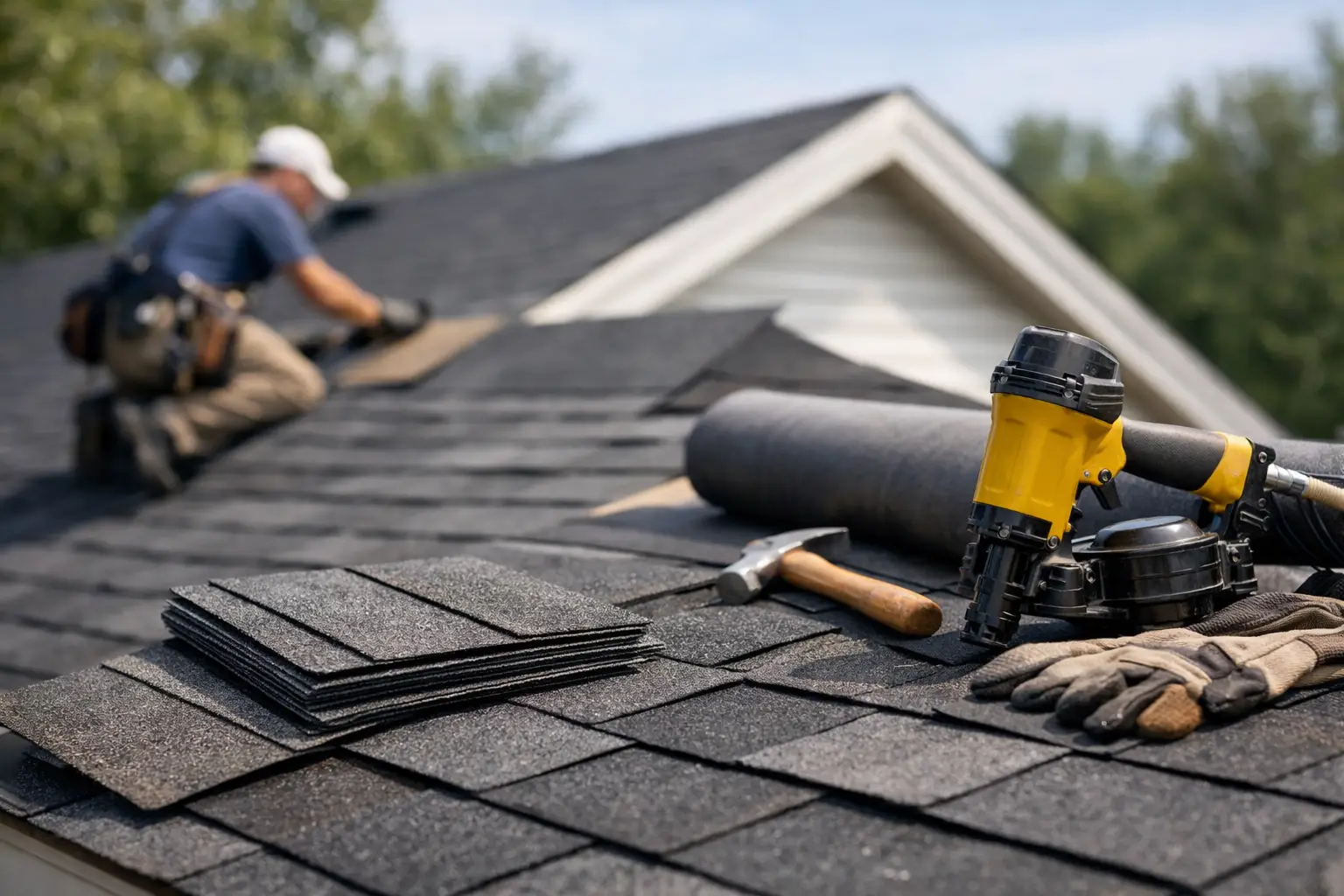
A roof can look perfectly acceptable from the driveway while its weakest details are already being tested by wind-driven rain, trapped moisture, and recurring moss growth. This GAF Timberline HDZ review looks beyond colour samples and marketing claims to help homeowners assess whether this architectural shingle is a practical fit for a long-lasting roof.
What Is GAF Timberline HDZ?
GAF Timberline HDZ is an architectural asphalt shingle. Architectural shingles are thicker and more dimensional than older three-tab products, giving the roof a layered appearance while generally offering better durability and wind performance.
The HDZ line is built around GAF’s LayerLock technology, which is designed to improve shingle alignment and help create a more consistent nailing area during installation. It also uses the company’s StrikeZone nailing area, intended to make correct fastening easier for trained crews. Those features matter because a shingle roof is only as reliable as the way its components are installed.
For many homeowners, Timberline HDZ sits in the popular middle ground: more substantial and attractive than entry-level shingles, without the higher cost of premium designer asphalt, cedar, metal, or synthetic roofing systems.
GAF Timberline HDZ Review: The Main Strengths
The strongest argument for Timberline HDZ is not one headline feature. It is the combination of a familiar architectural-shingle profile, broad colour selection, a well-developed accessory system, and installation-focused design.
A cleaner, more dimensional roofline
Timberline HDZ shingles create shadow lines that give a roof more depth than flat three-tab shingles. This can make a meaningful difference on homes with prominent roof slopes, front-facing gables, or a simple exterior that needs more visual definition.
Colour choice also deserves more attention than it often receives. A roof covers a large portion of the home, and the wrong blend can make siding, trim, stone, or landscaping look disconnected. Neutral greys, weathered browns, and blended charcoal tones tend to work well with many Vancouver Island homes, but the final choice should be viewed outside in natural light rather than selected from a small indoor sample.
Installation features that support accuracy
LayerLock and StrikeZone are useful features for roofing crews because they are intended to improve shingle placement and fastening consistency. That does not replace workmanship. It gives a qualified installer a better system to work with.
A correctly driven nail must land in the designated area and sit flush, not cut into the shingle and not sit proud above it. Improper nailing can reduce wind resistance, affect sealing, and create warranty issues. On a large roof, small installation errors repeated hundreds of times can become a major concern.
Wind performance potential
Timberline HDZ products can be installed to qualify for enhanced wind coverage, subject to the specified installation method and warranty terms. GAF commonly promotes wind coverage up to 130 mph on qualifying installations, but homeowners should confirm the exact product, fastening pattern, deck condition, and warranty requirements for their project.
For coastal properties, the practical question is not whether a shingle has an impressive wind number on paper. It is whether the whole roof assembly is prepared for local exposure. Starter strips, properly secured ridge caps, correct flashing, sealed penetrations, and sound roof decking all contribute to storm performance.
Algae resistance is helpful, but not a moss solution
Many Timberline HDZ options include algae-resistant granules designed to limit the dark streaking caused by airborne algae. That can help the roof retain a cleaner appearance over time, particularly in humid climates.
However, algae resistance should not be confused with complete protection against moss. On the wet coast, shaded roof planes beneath trees can still develop moss, lichen, and debris buildup. Keeping gutters clear, trimming back overhanging branches where appropriate, and arranging periodic roof inspections remain sensible maintenance steps.
Where Timberline HDZ May Fall Short
A fair review needs to account for the limits of the material. Timberline HDZ is an asphalt shingle, and asphalt has trade-offs compared with longer-life roofing options.
It is not the best choice for every roof geometry. Very low-slope sections may require a different roofing system, depending on the slope and local code requirements. Complex roofs with many valleys, skylights, transitions, or wall intersections also demand more labour and more meticulous waterproofing details. The shingle itself cannot compensate for poor flashing design.
Asphalt shingles can also be more vulnerable to premature aging when attic ventilation is inadequate. Heat and moisture trapped below the roof deck can affect shingle performance and contribute to condensation concerns. Before replacing shingles, a careful contractor should assess intake ventilation, exhaust ventilation, insulation conditions, and any signs of moisture at the deck.
Homeowners comparing Timberline HDZ with metal should also be realistic about lifespan and maintenance expectations. A properly installed asphalt roof offers good value, repairability, and curb appeal. Metal may offer a longer service life in some applications, but it comes with a higher initial investment, different noise considerations, and its own installation requirements. The better choice depends on budget, roof design, long-term plans, and the home’s architectural style.
The Details That Matter More Than the Shingle Brand
Choosing Timberline HDZ is only one part of specifying a roof. A dependable replacement should be considered as a complete system, from the deck outward.
The roof deck must be dry, solid, and properly fastened. Damaged plywood or oriented strand board should be addressed before new roofing goes on. Installing new shingles over concealed deck problems only delays the repair and makes future work more expensive.
Underlayment selection is equally important. Areas vulnerable to water backup, such as eaves, valleys, and transitions, need appropriate protection based on roof design, exposure, and code. Metal flashing at chimneys, sidewalls, valleys, plumbing vents, and other penetrations must be installed to shed water properly. These are common failure points because they rely on precise sequencing, not just quality materials.
Ventilation should also be planned as a system. Air needs a path in and a path out. Adding ridge vent without sufficient intake at the soffits may not provide the intended result. Every home is different, especially older homes that have been renovated in stages, so assumptions should be avoided.
Is Timberline HDZ a Good Fit for Vancouver Island?
For many homes in the region, Timberline HDZ can be a sensible roofing choice when it is installed over a properly prepared deck with suitable underlayment, flashing, and ventilation. It delivers the familiar appearance homeowners expect from an architectural shingle while offering features designed to support accurate installation and wind performance.
It is especially worth considering for homeowners who want a balanced roof replacement: a noticeable curb-appeal upgrade, dependable everyday weather protection, and a material that does not push the project into premium-roofing price territory.
The fit becomes less straightforward if the home has persistent moss from deep shade, a low-slope roof section, extensive ventilation deficiencies, or a highly exposed location. In those cases, the right answer may still include Timberline HDZ, but it may also require additional preparation or a different material on certain areas of the roof.
Questions to Ask Before Choosing Timberline HDZ
Ask your contractor which exact Timberline HDZ colour and product profile is being proposed, how the roof will be ventilated, and what underlayment will be used at eaves, valleys, and penetrations. You should also ask how damaged decking is handled if it is discovered during tear-off, what flashing will be replaced, and what installation method is required for the stated wind and warranty coverage.
Clear answers are a good sign. Roofing estimates should identify the system components and scope of work, not simply list a shingle brand and a square-foot price.
A well-installed Timberline HDZ roof can be an attractive, practical investment, but the best result starts with an honest assessment of the home beneath it. Choose the material after the roof’s slope, drainage, ventilation, exposure, and repair needs have been properly evaluated, then make sure the installation details receive the same attention as the shingles themselves.
Leave a Reply