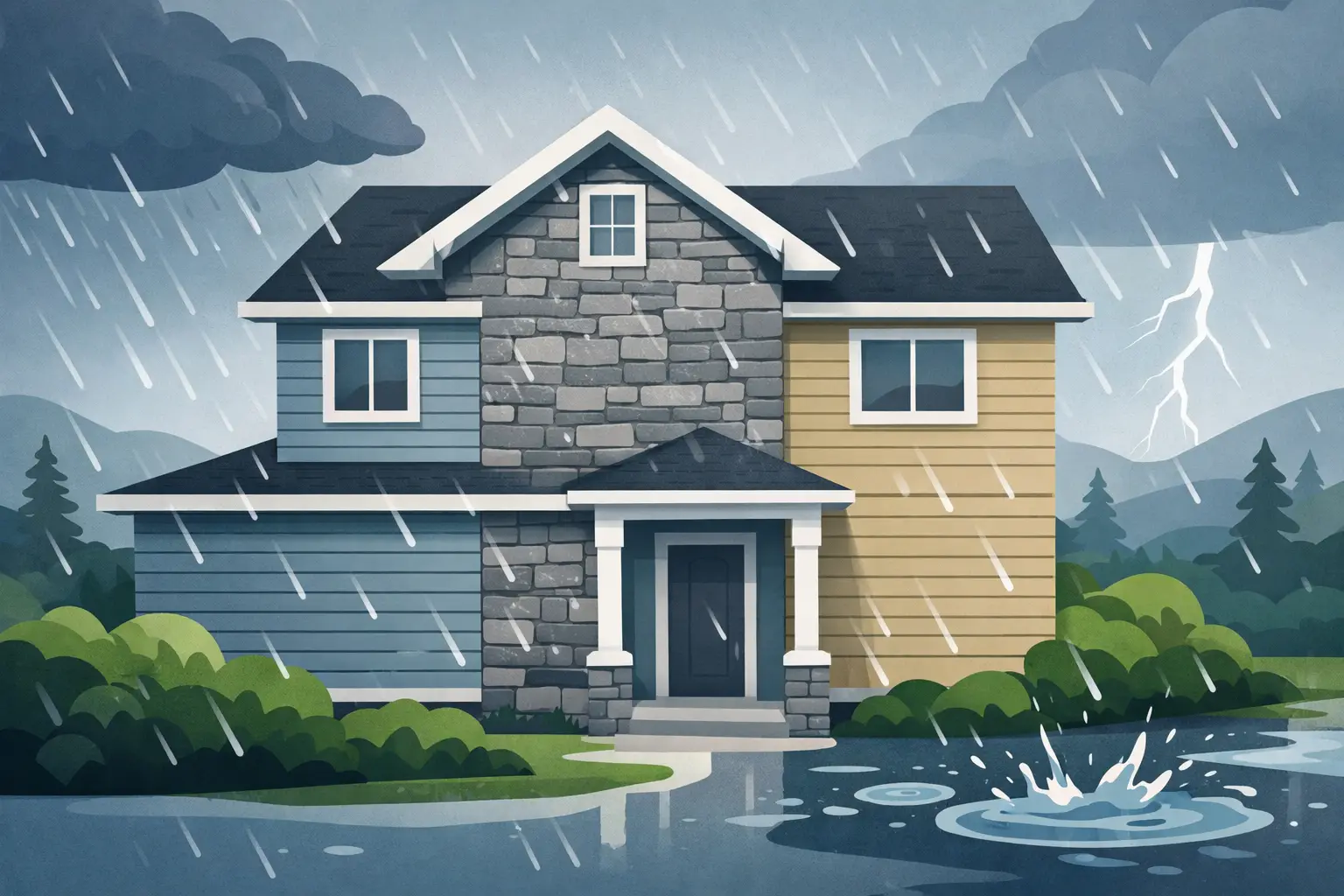
If you have watched rain sit on your exterior for days at a time, you already know the real question is not just what looks good. It is what siding holds up best in rain without swelling, rotting, staining, or turning into a maintenance problem a few seasons later.
For wet coastal homes, siding performance comes down to more than the face of the material. Water resistance matters, but so do installation details, joint treatment, ventilation, flashing, and how the wall system dries out after repeated exposure. A good-looking product can still fail if it is the wrong fit for the climate or installed without the right moisture management behind it.
What siding holds up best in rain depends on the whole wall
Homeowners often want a single winner, but there is no perfect siding for every house. Some materials resist direct rain better. Others handle long-term moisture cycling more reliably. Some are low maintenance but can crack or warp under certain conditions. Others are durable but need more upkeep to stay that way.
In wet conditions, the best-performing siding is usually the one that does three things well. It sheds water quickly, does not absorb much moisture, and works as part of a properly detailed wall assembly. That last part is where many problems start. Even excellent siding can struggle if water gets trapped behind it.
For most homes exposed to frequent rain, fibre cement and quality vinyl tend to be the most practical top-tier choices. Metal can also perform very well in the right design. Wood and engineered wood can work, but they demand more attention and better ongoing maintenance.
Fibre cement is one of the strongest choices for rainy climates
If the priority is long-term durability with a solid, finished look, fibre cement is often near the top of the list. It handles wet weather well because it does not rot like wood, it is not attractive to insects, and it stands up to repeated rain exposure when installed correctly.
That said, fibre cement is not magic. It is water resistant, not waterproof. Cut edges, joints, caulking, clearances from roofs and grade, and proper flashing all matter. If those details are sloppy, water can still get where it should not. When the workmanship is precise, fibre cement offers a dependable balance of appearance, durability, and stability.
It also suits homeowners who want a more substantial look than basic vinyl. Profiles and textures can mimic painted wood more convincingly, which helps if curb appeal matters as much as weather protection.
The trade-off is cost. Fibre cement generally costs more to install than vinyl, and it is heavier and more labour-intensive. It may also need repainting over time, depending on the product and finish.
Vinyl siding performs well in rain when the system is built properly
Vinyl gets overlooked by some homeowners because it is seen as the budget option, but that is not the full story. In rainy conditions, vinyl can perform very well because it does not absorb water and it does not rot. For many homes, especially where low maintenance is a priority, it remains a very practical choice.
The key is understanding what vinyl is and what it is not. Vinyl is designed to shed water, not to create a sealed wall. Water can get behind it, which is why the weather barrier, flashings, and drainage plane behind the siding are critical. If those parts are done right, vinyl can hold up well for years in wet conditions.
Its main weaknesses are different from fibre cement. Lower-quality vinyl can fade, become brittle over time, or move more with temperature changes. In exposed areas, impact resistance can also be a concern. Still, for homeowners who want affordability, low upkeep, and strong rain performance, good vinyl siding is hard to dismiss.
Metal siding handles rain extremely well but is not right for every home
Metal siding, especially aluminum or steel systems designed for residential use, is excellent at shedding rain. It does not absorb water, it resists rot, and it can last a very long time with relatively little maintenance.
Where metal gets more complicated is in design preference, detailing, and cost. Some homeowners love the clean lines and modern look. Others find it too industrial for the style of their home. It can also be noisier under certain conditions, although proper wall construction reduces that issue.
In coastal environments, product selection matters. Not all metal finishes perform equally well near salt air, and corrosion resistance needs to be part of the conversation. With the right material and detailing, metal is one of the most rain-tolerant options available.
Wood siding can work, but rain exposes every weak point
Wood has timeless appeal, but if your first concern is moisture resistance, it is not the easiest answer to what siding holds up best in rain. Wood can perform well when it is carefully maintained, properly painted or stained, and installed with a strong drainage strategy. But it is more vulnerable to moisture than the top low-maintenance alternatives.
Rain does not just hit wood once and disappear. It soaks, dries, expands, contracts, and repeats that cycle year after year. That is where peeling finishes, swelling, cracking, and rot can start. End cuts, bottom edges, and joints are particularly vulnerable.
None of this means wood should be ruled out. It means it suits homeowners who are willing to stay ahead of maintenance. If that level of upkeep does not fit your plans, another material is usually the safer long-term choice.
Engineered wood sits in the middle
Engineered wood siding is designed to offer the look of wood with better moisture resistance and more dimensional stability. Some products perform well in rainy climates, especially when installed according to manufacturer requirements and kept properly finished.
Still, this category varies a lot by brand and product line. That is the challenge. One engineered wood product may hold up well, while another may have a shorter track record or stricter installation limits. Homeowners considering it should pay close attention to warranty terms, edge sealing requirements, maintenance expectations, and the installer’s familiarity with the product.
It can be a good middle-ground option, but it is usually not the first recommendation when maximum rain resilience is the top priority.
What matters just as much as the siding itself
When homeowners compare materials, they often focus on the visible surface. In practice, the hidden details often matter more. A rainy climate puts pressure on every transition point around windows, doors, rooflines, corners, decks, and penetrations.
A well-built siding system should include proper flashing, a reliable weather-resistant barrier, correct fastening, clean clearances from the ground and roofing, and a way for incidental moisture to drain and dry. Without that, even premium siding can trap moisture where you cannot see it until the damage is expensive.
That is why quality craftsmanship matters so much. The best product on paper will not protect a home if the finishing details are rushed.
Best siding for wet coastal homes
For many homes in places with persistent rain, including parts of Vancouver Island, the best overall choice is often fibre cement if the budget supports it and the installation is done properly. It offers strong moisture performance, a refined appearance, and long-term durability.
Vinyl is a close contender for homeowners who want strong rain resistance with lower maintenance and a lower upfront cost. It is especially sensible when paired with good wall detailing and quality installation.
Metal is excellent where the home design suits it and the product is selected for the environment. Wood and engineered wood can still be valid choices, but they are more dependent on maintenance and product-specific details.
If you are trying to decide, the better question may not be which siding is best in general. It is which siding is best for your house, your exposure, your maintenance expectations, and the way the installation will actually be executed.
A reliable siding decision should account for wall orientation, tree cover, overhang depth, wind-driven rain exposure, and how much upkeep you want to take on over the next ten to twenty years. That is where expert roofing and siding solutions make a real difference. DryTek approaches these projects with the same focus homeowners expect from quality craftsmanship – material fit, correct detailing, and a finish built for Vancouver Island weather.
The right siding should do its job quietly. It should keep water moving off the house, keep moisture from lingering where it should not, and still look right years after the project is finished. That is the standard worth building to.
Leave a Reply