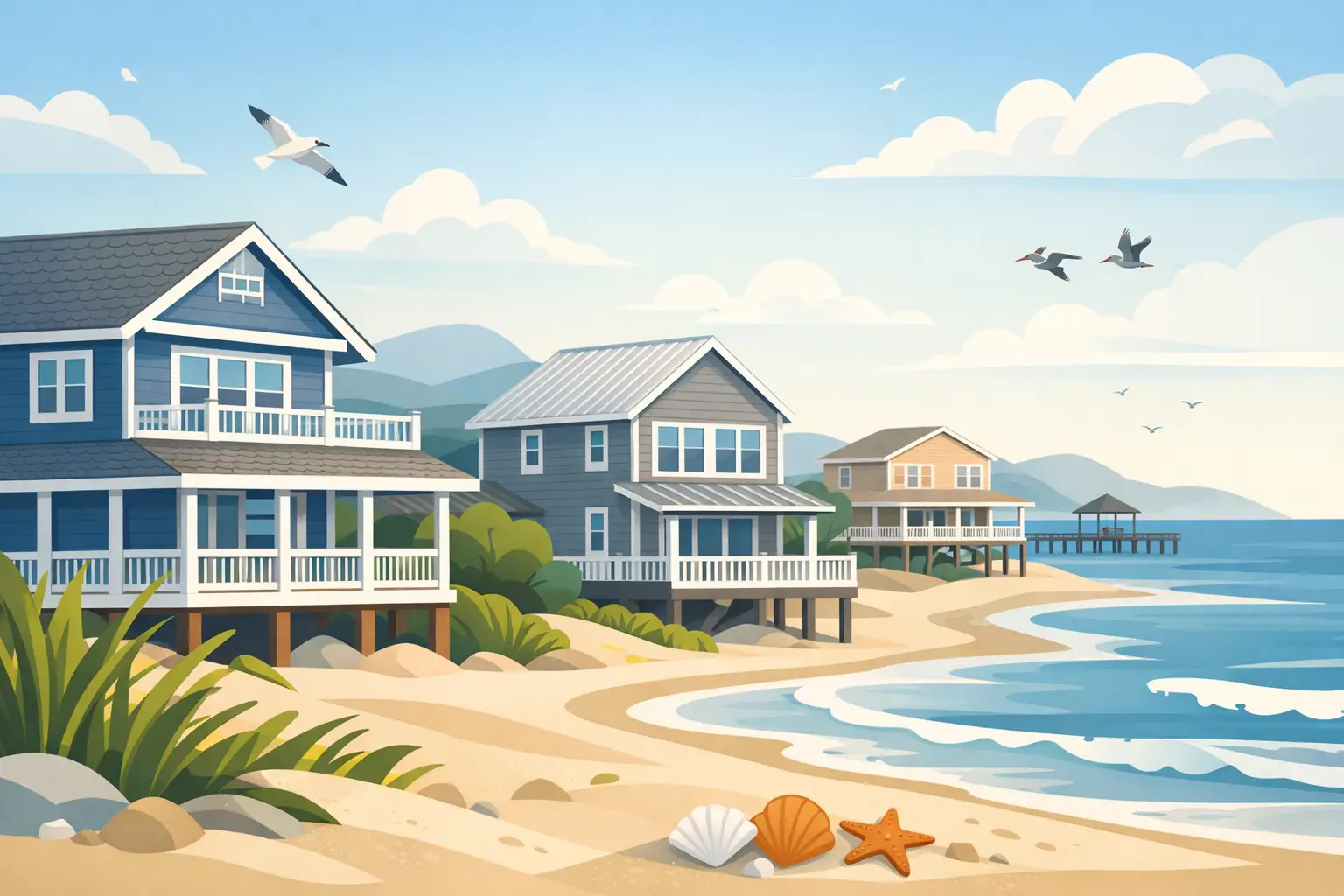
Salt air has a way of finding every weak point on a house. Add wind-driven rain, long damp seasons, and strong UV exposure, and siding stops being just a design choice. For many homeowners, the question is simple: what is the best siding for coastal homes when you need something that looks good, holds up, and does not become a maintenance problem a few years in?
The honest answer is that there is no single best product for every coastal property. The right choice depends on how exposed your home is, how much maintenance you are willing to take on, and whether your priority is upfront cost, long-term durability, or a specific look. On the coast, good siding is never just about the board itself. It is also about proper detailing, flashing, fastening, ventilation, and installation that is built for wet conditions.
What coastal weather does to siding
Coastal homes face a tougher environment than inland properties. Moisture is the obvious issue, but it is not the only one. Salt carried in the air can accelerate corrosion on fasteners and trim components. Wind can push rain behind poorly installed panels or joints. Repeated wet-dry cycles can cause swelling, paint breakdown, and early wear on materials that are not suited to the environment.
That is why the best siding for coastal homes needs to do more than resist rain on the surface. It should handle moisture management as part of the full wall system, stand up to wind exposure, and keep its finish with reasonable upkeep. If a product looks great in a showroom but struggles once installed near the ocean, it is not the right fit.
Best siding for coastal homes: the strongest options
Fibre cement siding
Fibre cement is one of the most dependable choices for coastal conditions. It is resistant to rot, insects, and fire, and it handles moisture far better than traditional wood products. It also offers a clean, substantial appearance that works on both modern and traditional homes.
For many coastal homeowners, fibre cement hits the balance well. It is durable, relatively low maintenance, and available in a wide range of profiles and factory finishes. It does cost more than basic vinyl, and installation matters a great deal. Poor cutting, improper clearances, or rushed fastening can shorten its lifespan. When installed with care, though, it performs very well in wet and windy environments.
Its main trade-off is weight and labour. Fibre cement is heavier and more demanding to install than lighter materials, which means workmanship matters even more. That is not necessarily a drawback if the goal is long-term value, but it is part of the budget conversation.
Vinyl siding
Vinyl remains popular because it is affordable, low maintenance, and widely available. For some homes, it can be a practical option near the coast, especially when the budget is tight and the product quality is good. It does not rot, and it never needs painting, which appeals to homeowners who want a simpler maintenance schedule.
That said, not all vinyl siding performs the same way. Lower-grade products can crack, warp, or look loose over time, especially in exposed locations. Strong winds can also be an issue if panels are not installed properly. In coastal applications, vinyl is often best when used on homes with moderate exposure rather than the harshest waterfront conditions.
Appearance is another consideration. Vinyl has improved significantly, but some homeowners still prefer the more solid look of fibre cement or real wood. If cost control is the main driver, vinyl can be a reasonable choice. If durability and finish quality are the top priorities, there are stronger options.
Engineered wood siding
Engineered wood siding is designed to offer the look of wood with better resistance to moisture and decay. Depending on the product, it can be lighter and easier to install than fibre cement while still delivering a more premium look than standard vinyl.
This category can work well in coastal markets, but product selection matters. Some engineered wood products perform better than others, and all of them rely on careful installation, proper sealing, and disciplined maintenance of cut ends and joints. Homeowners who want warmth and character without going to full natural wood often find this to be a good middle ground.
It is not the most forgiving material if details are skipped. In a damp climate, small installation mistakes can become expensive repairs later. That does not make it a poor option. It just means it should be chosen with a clear understanding of the upkeep and the importance of quality craftsmanship.
Natural wood siding
Wood siding has undeniable curb appeal. Cedar in particular suits many coastal homes and can age beautifully when maintained properly. For homeowners who care deeply about natural character, wood remains attractive.
The trade-off is maintenance. On the coast, wood is under constant pressure from moisture, sun, and organic growth. Paints and stains need regular attention, and neglected areas can deteriorate faster than many people expect. Wood can absolutely perform, but it asks more from the homeowner.
For that reason, wood is rarely the simplest answer to the best siding for coastal homes. It is more often the right answer for someone who values the look enough to commit to ongoing care. If low maintenance is your goal, there are better choices.
Metal siding
Metal siding, usually aluminum or steel, can be an excellent performer in coastal conditions when specified correctly. It is durable, modern-looking, and resistant to pests and rot. Certain profiles also shed water very effectively.
The main caution is corrosion resistance. Near the ocean, material type, coating quality, and fastening details matter a great deal. The wrong fasteners or poor edge protection can create problems over time. Metal can also dent and may not suit every architectural style.
For contemporary homes or accent areas, metal can be a strong option. For full-house applications, it depends on the look you want and the quality of the system being installed.
The material is only half the job
Homeowners often compare siding boards as if the product alone determines performance. On coastal homes, that is not how failures usually happen. Problems often start at transitions, penetrations, trim details, window perimeters, and poorly managed drainage paths.
A well-built siding system includes the weather-resistive barrier behind it, proper flashings, rainscreen space where appropriate, corrosion-resistant fasteners, and clean finishing at every joint. In wet coastal regions, these details are not upgrades. They are part of doing the job properly.
This is where experienced installers make a real difference. A premium product installed poorly can fail long before a more modest product installed with precision. Homeowners comparing quotes should keep that in mind. Lower pricing can sometimes reflect thinner scope, fewer prep steps, or weaker detailing where it matters most.
How to choose the right siding for your home
If your home sits in a highly exposed coastal location with regular wind-driven rain, fibre cement is often one of the safest long-term investments. It offers strong durability, good visual versatility, and solid performance with manageable upkeep.
If budget is the deciding factor, a higher-quality vinyl product may make sense, especially on less exposed homes. It can keep maintenance low and improve curb appeal without pushing the project into a much higher price range.
If appearance comes first and you are willing to maintain it, wood or engineered wood may be worth considering. These options can deliver warmth and architectural character that manufactured materials sometimes struggle to match.
For homes with modern design lines, metal may be the right fit in full or in part, provided the system is selected and installed with coastal exposure in mind.
For many homeowners on Vancouver Island, the most reliable path is not choosing the flashiest product. It is choosing a siding system that suits the house, the site, and the level of maintenance you realistically want to handle over the next 10 to 20 years.
A practical recommendation for coastal homeowners
If you want a clear, practical answer, fibre cement is often the best all-around siding for coastal homes. It performs well in wet conditions, stands up to changing weather, offers strong curb appeal, and does not demand constant upkeep. It is not the cheapest option, but it often delivers better long-term value than materials that need more frequent repair or replacement.
Vinyl can still be a sensible budget choice, and wood can still be the right aesthetic choice. But if the goal is broad reliability in a coastal climate, fibre cement is hard to beat when installed by a contractor who understands moisture management and finishing details.
A siding project should leave your home better protected, not just better looking. That is the standard DryTek builds to, because on the coast, the details are what hold up first. Choose the material that fits your home, but make sure the installation is built for the weather you actually live in.
Leave a Reply