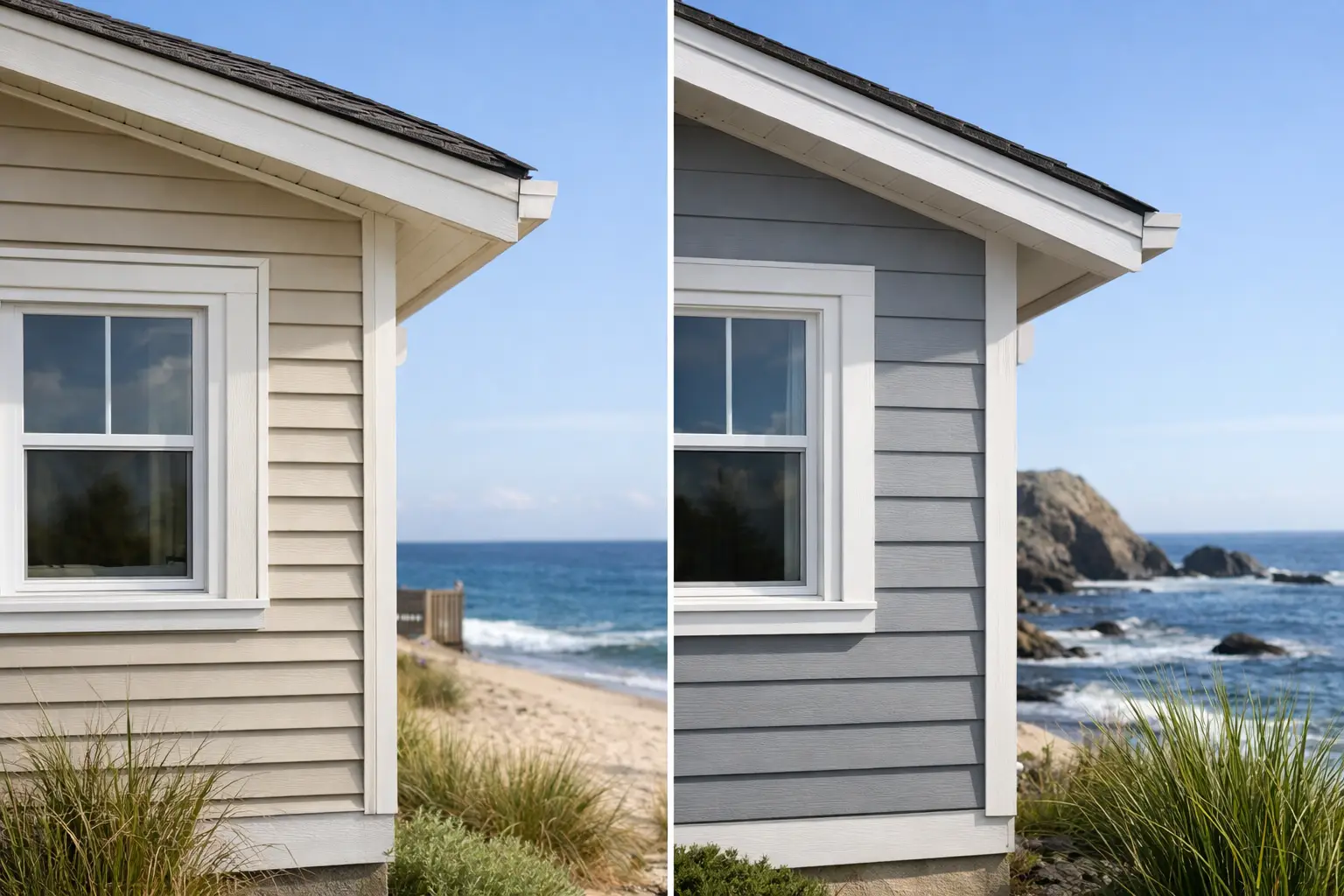
A siding decision is rarely just about colour. On Vancouver Island, an exterior must handle long wet seasons, wind-driven rain, temperature swings, and the occasional hard impact from everyday life. When homeowners compare vinyl siding vs hardie board, the right answer depends on the condition of the home, the budget, the desired finish, and how much long-term maintenance they are prepared to take on.
Both materials can protect a home well when they are properly installed. The difference is in how they look, how they respond to weather, and how much precision is required to get lasting results.
What Is Vinyl Siding?
Vinyl siding is a lightweight cladding made from PVC. It is manufactured in long panels that overlap and lock together, creating a clean, low-maintenance exterior. It is available in a wide range of colours, profiles, and textures, including styles that resemble traditional lap siding or shakes.
For many homeowners, vinyl’s main appeal is its lower upfront cost and simple upkeep. It does not need routine painting, and normal dirt can usually be cleaned with a gentle wash. Because it is a lighter material, installation can also be quicker than more labour-intensive siding systems.
Vinyl is designed to expand and contract with changing temperatures. That means it must be installed with the correct clearances and fastening methods. Panels that are nailed too tightly or installed without proper detailing can warp, buckle, or look uneven over time.
What Is Hardie Board?
Hardie Board is a commonly used name for fibre cement siding, including products made by James Hardie. It is composed of cement, sand, cellulose fibres, and water, then formed into siding boards, panels, shingles, and trim.
Fibre cement is valued for its solid appearance and ability to closely resemble painted wood. It comes in a broad selection of profiles, from modern panel systems to traditional horizontal lap siding. For homeowners looking for a more substantial finish or a custom colour palette, it offers considerable design flexibility.
Unlike vinyl, fibre cement is not maintenance-free. Pre-finished products can hold their colour well, but caulking, trim, and painted surfaces should still be checked periodically. Proper installation is also essential, particularly around cut edges, flashing, clearances, and penetrations where water management matters most.
Vinyl Siding vs Hardie Board: The Key Differences
The strongest comparison is not simply which product is better. It is which product suits the home and the expectations of the homeowner.
Appearance and curb appeal
Hardie Board generally provides a more refined, architectural appearance. Its thicker profile, clean edges, and painted finish can create the look of traditional wood siding without the same susceptibility to rot. It is often a strong fit for homeowners renovating an older property, building a custom exterior, or aiming for a higher-end finish.
Vinyl has improved significantly in appearance, and quality products can look crisp and attractive from the street. However, its thinner profile and visible seams may not deliver the same level of detail as fibre cement. On a straightforward exterior renovation where value and low maintenance are priorities, that may be a reasonable trade-off.
Moisture and coastal weather performance
Neither siding material should be treated as the home’s only defence against water. The real protection comes from the complete wall system: weather-resistive barrier, flashing, drainage plane, proper trim details, ventilation where required, and correctly installed siding.
Vinyl itself does not absorb moisture, which is helpful in a rainy climate. However, because it is installed with overlapping panels, wind-driven rain can reach behind the cladding. The underlying weather barrier and flashing must be properly installed to manage that water.
Fibre cement also performs well in wet conditions when it is installed to manufacturer requirements. It will not rot like wood, but it is not immune to problems caused by poor detailing. Cut edges need appropriate treatment, joints need correct spacing, and siding must be kept clear of roofs, decks, grade, and other surfaces that can hold moisture.
For Vancouver Island homes, workmanship matters as much as the siding choice. A premium product cannot compensate for missing flashing or careless finishing.
Durability and impact resistance
Fibre cement is a rigid, dense material. It stands up well to everyday bumps, flying debris, and changes in weather. It is also non-combustible, which may be an important consideration for homes near wooded areas or for homeowners who want added fire resistance in their exterior materials.
Vinyl is flexible and can handle minor movement without cracking. Yet it can crack or dent under a hard impact, especially in cold weather. Dark colours may also absorb more heat, which can increase movement and make proper installation details even more important.
Both materials can deliver a long service life, but neither is indestructible. A well-built exterior includes durable trim details, properly integrated vents, sealed penetrations, and careful transitions at windows, doors, and rooflines.
Maintenance requirements
Vinyl is the lower-maintenance option. It does not require painting, though it should be cleaned periodically to remove dirt, algae, and coastal grime. Homeowners should also inspect it for damaged panels, loose pieces, or gaps around fixtures and trim.
Hardie Board requires more attention over its life. Painted siding will eventually need repainting, and caulking should be reviewed as part of regular exterior maintenance. The benefit is that homeowners can refresh the colour and appearance rather than replacing the full siding system simply because their style has changed.
For a rental property, a busy household, or a homeowner looking to minimize ongoing upkeep, vinyl can be very practical. For those willing to maintain a more tailored finish, fibre cement often rewards that effort with stronger visual impact.
Cost and installation
Vinyl siding usually has a lower material and installation cost than Hardie Board. It is lighter, easier to cut, and generally faster to install. This can make it an appealing choice when replacing a large exterior area or working within a fixed renovation budget.
Hardie Board costs more because the material is heavier and the installation is more demanding. Each board must be handled, cut, fastened, flashed, and finished with care. Labour costs can also rise when a home has many corners, gables, windows, trim details, or difficult access.
The lowest initial price is not always the best value. If the home needs repairs to sheathing, framing, windows, or water-management details, those items should be addressed before new siding goes on. Covering a hidden problem with new cladding only delays a more expensive repair.
How to Choose the Right Siding for Your Home
Choose vinyl siding when you want a cost-conscious exterior with minimal maintenance, dependable weather protection, and a clean, straightforward look. It is particularly suitable when the existing home style does not require heavy trim or a custom painted finish.
Choose Hardie Board when appearance, material weight, fire resistance, and design flexibility are central priorities. It is often the stronger choice for a full exterior transformation, especially when paired with quality trim, thoughtful colour selection, and detailed finishing.
It is also possible to combine materials. Fibre cement may be used on prominent front elevations, gables, or high-impact architectural areas, while vinyl is installed on less visible sections to manage cost. The important part is making sure transitions are properly detailed and the final exterior looks intentional.
Installation Details That Protect the Investment
Siding replacement is an opportunity to inspect what sits behind the old cladding. Before installation begins, a qualified contractor should look for signs of moisture damage, deteriorated sheathing, failed flashing, soft trim, and poorly sealed openings.
The installation should then account for drainage, ventilation, and clearances. Windows and doors need correctly integrated flashing. Roof-to-wall intersections need proper kick-out flashing. Siding should not be installed tight against roofing, concrete, soil, or deck surfaces where it can hold moisture or wick water.
These details are not decorative extras. They are what help the siding system perform through years of rain and coastal exposure. DryTek approaches exterior work with that full-system mindset, because a polished finish only matters when the structure beneath it is protected as well.
A good siding choice should make the home feel more secure every time the rain starts. Look beyond the sample board, ask how the wall will manage water, and choose the material and installation standard that fit the home you plan to live in for years.
Leave a Reply