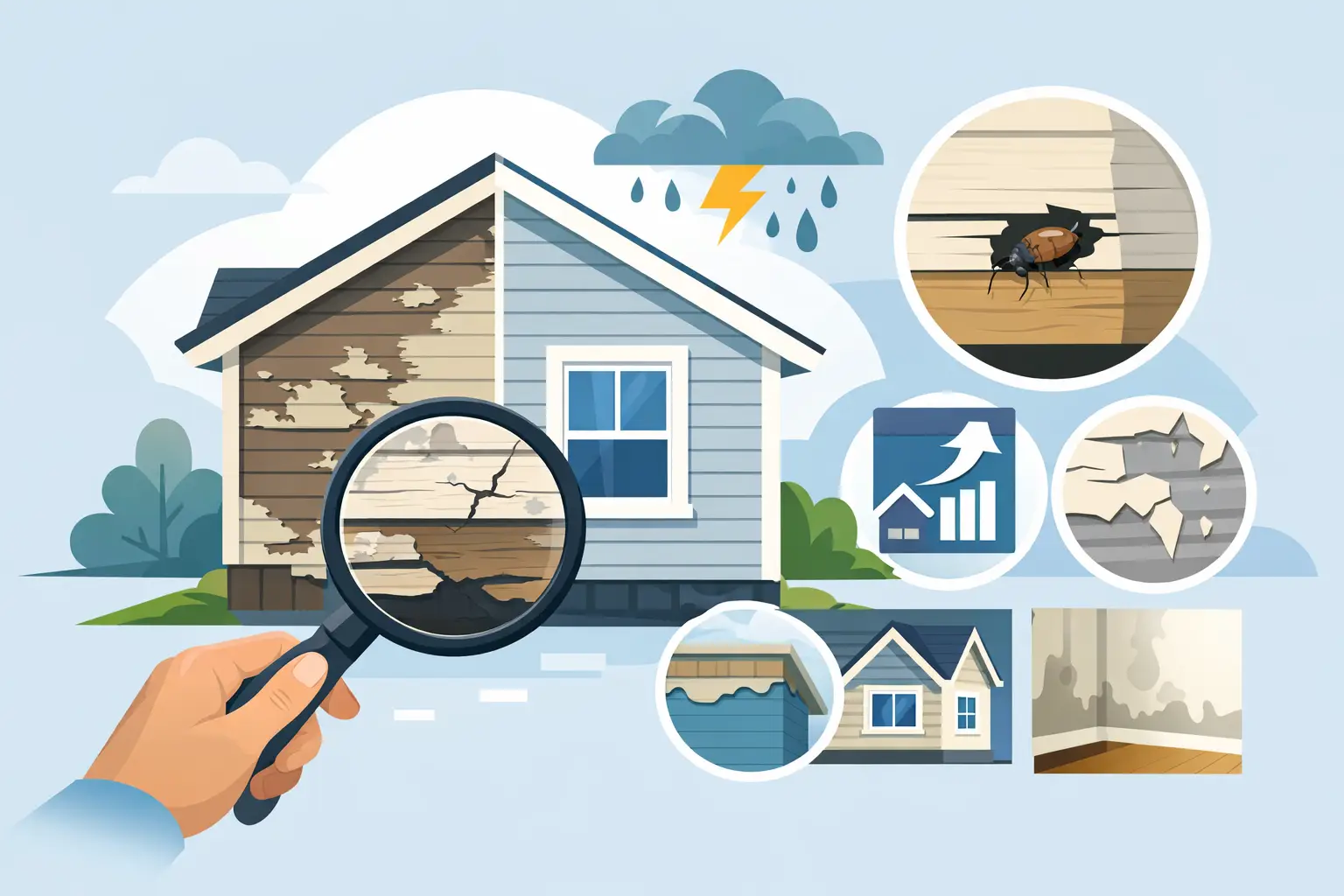
A small crack in the siding does not always look urgent. But when that crack starts letting in moisture, or when a loose panel keeps shifting after every windstorm, the issue stops being cosmetic. One of the most common questions homeowners ask is about the real signs you need new siding, not just minor touch-ups, and the answer usually comes down to protection, not appearance alone.
Siding is your home’s outer shield. It helps manage moisture, temperature swings, wind exposure, and everyday wear. When it starts to fail, the damage rarely stays on the surface for long. That matters even more in coastal conditions, where rain, damp air, and seasonal storms can expose weaknesses quickly.
1. Cracks, chips, or holes are becoming common
A single small blemish may be repairable. What raises concern is when damage keeps showing up across different walls or sections of the home. Cracks, chips, and holes can allow water behind the siding, and once moisture gets trapped, the structure underneath may begin to deteriorate.
This is especially true if the damage is not tied to one obvious impact point. If multiple boards or panels are splitting, aging may be the real issue. Repairs can help for a time, but repeated patching often means the material has reached the end of its useful life.
2. The siding is warping, buckling, or pulling away
Siding should sit flat and secure against the house. If you notice boards bowing outward, panels rippling, or seams opening up, that usually points to moisture intrusion, heat distortion, installation failure, or a combination of all three.
Warping is one of the clearest signs you need new siding because it affects how the entire system performs. Once materials begin to deform, they stop shedding water the way they should. Even if the problem looks limited to one side of the house, it is worth checking what is happening underneath.
3. Paint keeps peeling, or the finish fades too quickly
Faded colour alone does not always mean replacement is necessary. All exterior materials weather over time. The bigger issue is when paint peels repeatedly, the finish chalks heavily, or fresh coatings do not last the way they should.
Often, that points to siding that is no longer holding up well against moisture and sun exposure. If you are repainting much sooner than expected, it may not be a paint problem. It may be the substrate beneath it breaking down.
A well-performing siding system should maintain its finish for a reasonable stretch of time. If the exterior always looks tired shortly after maintenance, replacement may be more cost-effective than another round of scraping and painting.
4. You see rot, soft spots, or swelling
This is where siding problems move from inconvenient to serious. If a board feels soft when pressed, shows visible rot, or appears swollen at the edges, moisture has likely been getting in for some time.
Wood-based products are particularly vulnerable, but any siding system can develop concealed damage if water management fails. Soft spots near trim, around windows, or along lower courses deserve attention right away. Those areas often collect water first.
Rot does not improve with surface repairs. Once decay is present, the right solution depends on how far it has spread. In some cases, localized replacement is possible. In others, broader replacement is the safer call, especially if the wall assembly has been affected.
5. Mould, mildew, or staining keeps coming back
Not every stain is a siding failure. Some homes deal with shade, runoff patterns, or surface dirt that can be cleaned. But persistent mould, mildew, or dark streaking can signal trapped moisture, poor drainage, or material breakdown.
If you clean the exterior and the same problem returns quickly, the siding may no longer be performing as intended. Staining around joints, beneath windows, or near rooflines can also point to water entering where it should not.
On the coast, moisture-related issues can be easy to dismiss because damp conditions are common. That is exactly why siding needs to be built and installed properly. When recurring growth or staining shows up, it is worth treating it as a building-envelope concern, not just a cleaning issue.
6. Your energy bills are creeping up
Siding is not insulation by itself, but it does play a role in the home’s overall thermal performance. If panels are loose, gaps are opening, or the wall system has been compromised by moisture, outside air can move where it should not.
That can make your heating system work harder in colder months and reduce comfort throughout the year. Drafts near exterior walls, rooms that feel harder to heat, or unexplained increases in energy use can all point back to the condition of the exterior.
This is one of the less obvious signs you need new siding because homeowners often connect high energy bills to windows, attic insulation, or the furnace first. Sometimes the problem is broader. When the exterior shell is no longer tight and dependable, comfort and efficiency both suffer.
7. Interior walls show signs of moisture damage
Sometimes siding issues reveal themselves indoors before the full extent is visible outside. Peeling paint, water stains, musty odours, or bubbling drywall near exterior walls can all suggest moisture is getting past the outer cladding.
That does not always mean the siding alone is at fault. Flashing, windows, trim, and roof-wall intersections can all be part of the problem. Still, if the siding is older or visibly failing, it should be part of the inspection.
This is where proper diagnosis matters. Replacing siding without addressing the source of water entry is not a complete fix. But if the cladding system is worn out, replacement may be necessary to solve the problem properly.
8. Maintenance is becoming constant
There is a difference between normal upkeep and a house that always seems to need another exterior repair. If you are repeatedly caulking gaps, replacing loose pieces, repainting damaged sections, or dealing with the same trouble spots year after year, the siding may be costing more than it is worth.
Older exteriors can reach a point where maintenance no longer preserves value. It just delays a larger project while hidden damage continues to develop. Homeowners often notice this shift gradually. One repair becomes three, then five, and eventually the patchwork starts to show.
New siding is a bigger investment up front, but it can reduce ongoing repair costs and restore confidence in the home’s weather protection.
9. Pest activity is showing up around the exterior
Gaps, rot, and loose materials can create easy entry points for insects and small animals. Carpenter ants, wasps, and even rodents are more likely to exploit siding that has started to separate or soften.
If pest issues are concentrated around the exterior walls, the cladding may be part of the reason. Replacing damaged sections can help, but if the problems are widespread, full replacement may make more sense.
The goal is not only to close visible holes. It is to restore a properly finished exterior with solid detailing around corners, joints, trim, and penetrations.
10. The home looks worn in a way repairs cannot fix
Curb appeal matters, but this is not just about looks. A home that appears visibly tired often has deeper wear behind the surface. If the siding is uneven, heavily faded, patched in multiple places, or simply past its service life, replacement can improve both appearance and protection.
There is also a practical resale angle. Buyers notice when an exterior looks neglected, and they often assume hidden issues are present. A clean, properly installed siding system signals that the home has been maintained with care.
When repair is enough and when replacement is smarter
Not every damaged panel means you need a full siding project. If the issue is limited, the material is still in good shape, and the underlying wall is dry and sound, a targeted repair may be the right move.
Replacement becomes the smarter option when damage is widespread, moisture is involved, or the siding is aging out across the whole home. Matching older materials can also be difficult, which makes isolated repairs less appealing from both a performance and appearance standpoint.
That is why a thorough assessment matters. The right recommendation should be based on the condition of the full system, not just the most obvious damaged spot.
What homeowners should pay attention to next
If you have noticed several of these signs you need new siding, the next step is not to guess how bad it is. It is to have the exterior looked at closely, with attention to moisture exposure, flashing details, and the condition of the wall assembly beneath the surface.
Homes exposed to steady rain and coastal weather need siding that is installed with precision and built to last. Quality craftsmanship makes a real difference, especially at seams, penetrations, trim transitions, and other places where shortcuts tend to fail first. That is the standard DryTek brings to expert roofing and siding solutions built for Vancouver Island weather.
If something about your siding has been bothering you for a while, trust that instinct. Exterior problems are usually cheaper to deal with before they become interior ones.
Leave a Reply