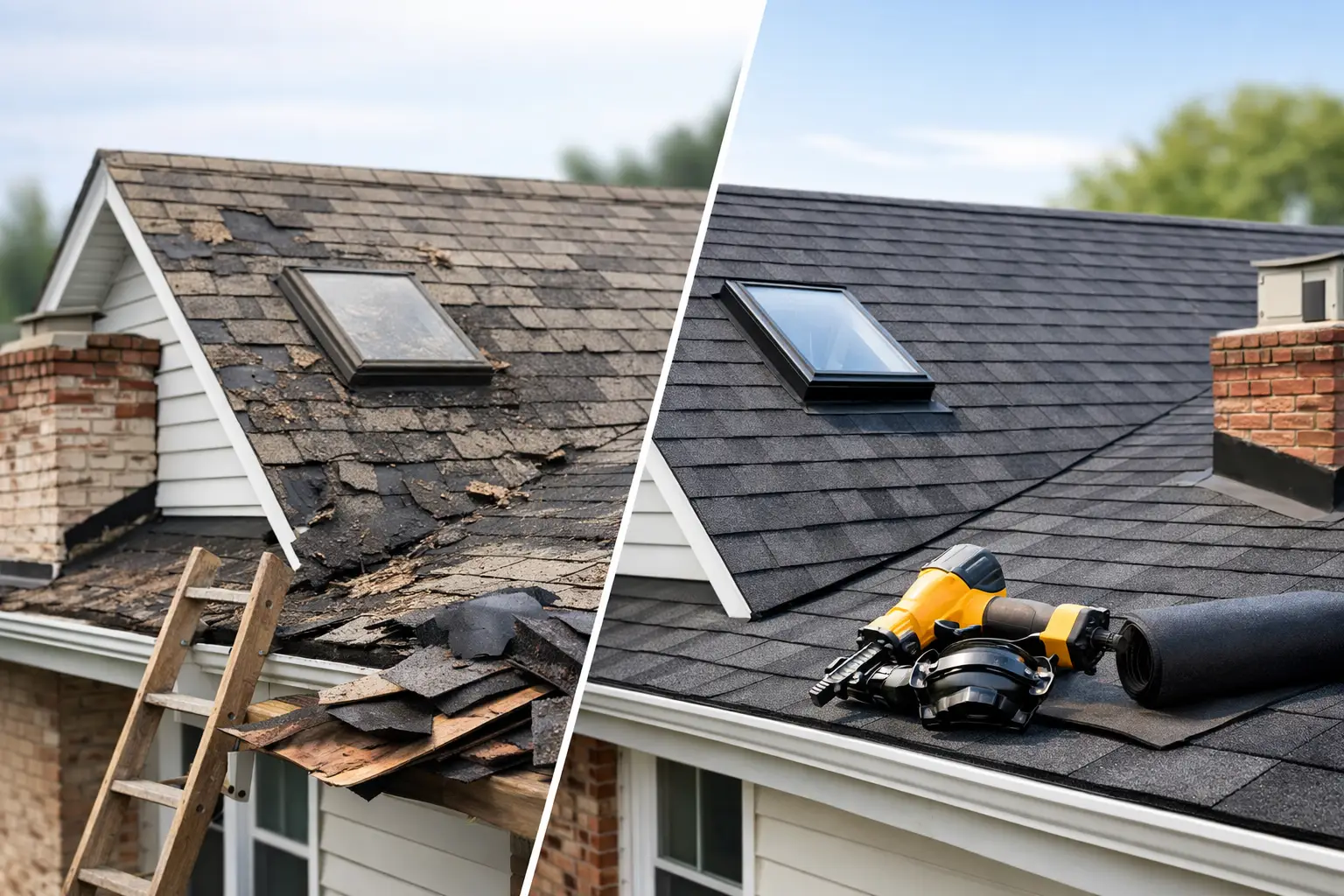
A roof can look acceptable from the driveway right up until the first hard rain exposes a problem. Water stains on a ceiling, loose shingles in the yard, moss at the valleys, or failing flashings around a chimney are often signs that the roof has reached the end of its reliable service life. A roof replacement before and after is about far more than a fresh layer of shingles. The real change is a home that is properly protected from the weather, detailed at its vulnerable points, and finished with care.
For Vancouver Island homeowners, the difference matters. Long wet seasons, wind-driven rain, coastal moisture, and shaded roof areas can speed up wear that may be less obvious in drier climates. A replacement done properly addresses the visible surface and the roofing system underneath it.
What a Roof Replacement Looks Like Before Work Begins
Before replacement, most aging roofs show a combination of surface wear and less visible deterioration. Shingles may curl at the edges, lose their protective granules, crack, or lift in the wind. Moss growth can hold moisture against the roof surface, while dark streaks may point to algae or prolonged dampness.
Those symptoms are useful, but they do not tell the full story. The condition of the roof deck, ventilation, underlayment, flashing, drip edge, and penetrations all affect how long a new roof will perform. A roof can have only a few visibly damaged shingles yet still have compromised materials beneath them.
The inspection stage should identify the scope of the work before crews begin. That includes measuring the roof, reviewing slope and drainage, examining vulnerable transitions, and noting features such as skylights, chimneys, plumbing vents, dormers, and adjoining walls. These are not small details. Most roof leaks occur at transitions and penetrations, not in the middle of an open roof field.
Homeowners should also expect an honest conversation about what cannot be confirmed until old materials are removed. Soft or water-damaged sheathing, for example, may be hidden beneath shingles and underlayment. A dependable contractor explains this possibility upfront, documents any issues found, and provides a clear path for necessary repairs rather than burying surprises in the final invoice.
Roof Replacement Before and After: The Changes That Matter
The most immediate after-photo usually shows new shingles, straighter roof lines, crisp edges, and a cleaner overall appearance. That visual improvement can significantly lift curb appeal, particularly when faded or patchy roofing has made the whole exterior look tired. A colour selected to complement siding, trim, brick, or exterior paint can make a house feel more cohesive without changing its character.
However, the most valuable changes are often hidden from view. Once the old roofing is removed, the deck can be checked and repaired where needed. A sound, dry deck provides the stable base that shingles require. Skipping damaged sheathing to save time or cost can leave a new roof vulnerable to uneven surfaces, fastener problems, and future moisture damage.
New underlayment adds another layer of weather protection beneath the shingles. At roof edges, valleys, and other high-risk locations, properly selected membranes help guard against wind-driven rain and water backup. Metal drip edge directs water away from the fascia and into the eavestrough system instead of allowing it to travel behind the roof edge.
Flashings are another major before-and-after improvement. Old flashings may be corroded, poorly integrated, or sealed repeatedly with caulking. A quality installation uses correctly fitted flashing at walls, chimneys, vents, and other transitions so water is directed onto the roof surface and away from the home. Caulking has a role in certain details, but it should not be the only line of defence.
A New Roof Is a System, Not Just Shingles
Roofing materials are designed to work together. Shingles shed water, but they depend on a dry deck, reliable underlayment, correctly placed fasteners, adequate ventilation, and careful edge detailing. If one part of that system is overlooked, the finished roof may look good on day one while carrying avoidable risks.
Ventilation is a common example. Inadequate attic ventilation can trap heat and moisture, contributing to condensation, mould risk, premature shingle aging, and ice-related concerns in colder periods. The right solution depends on the home’s roof design, insulation, existing intake and exhaust ventilation, and local conditions. It is not simply a matter of adding more vents wherever there is space.
Material choice also deserves more thought than selecting a shingle colour from a sample board. Architectural asphalt shingles are a practical choice for many homes because they provide dependable performance, dimensional appearance, and a range of colours. The right product should suit the roof slope, exposure, budget, and desired appearance. Homes in exposed locations may require particular attention to wind ratings and installation specifications.
A lower initial price can be attractive, but it is worth comparing what is actually included. Does the scope address underlayment, flashings, valleys, roof-edge metals, ventilation, disposal, deck repairs if required, and site cleanup? A detailed quote is not merely paperwork. It helps homeowners compare like for like and understand how the roof will be built.
What Homeowners Can Expect During Installation
A well-managed replacement is organized before the first shingle comes off. Crews need access to the property, a safe area for material delivery and disposal, and a plan to protect landscaping, siding, decks, and walkways. Roofing is noisy work, especially during tear-off, so homeowners may want to plan around remote meetings, naps, pets, or young children.
The old roof is removed in sections to avoid leaving the home exposed longer than necessary. Once the deck is visible, the crew can confirm its condition, replace any compromised sheathing, and install the new weather-protection layers. Shingles, ridge components, flashings, and ventilation pieces are then installed according to the roofing system requirements.
Weather affects the schedule. Vancouver Island rain is not a reason to accept rushed work or an exposed roof. Experienced crews watch forecasts, stage materials, and sequence the work to keep the home protected. Some projects can be completed quickly in favourable conditions, while larger roofs, complex designs, or unexpected deck repairs may take longer. Clear communication is more valuable than an unrealistic promise.
Cleanup should be treated as part of the installation, not an afterthought. That means removing debris, collecting loose nails with magnetic tools, clearing gutters where needed, and leaving the site orderly. The final walkthrough is the right time to review the work, ask about maintenance, and confirm that the visible details around edges, vents, and flashings have been finished properly.
How to Judge the Finished Roof
A homeowner does not need to be a roofer to spot signs of a careful finish. From the ground, look for straight shingle courses, consistent alignment, clean ridge lines, and tidy transitions around vents and walls. Flashing should look deliberate and integrated, not patched together with excessive sealant.
After the first significant rain, it is reasonable to check accessible attic areas for fresh signs of moisture and to confirm that eavestroughs are draining as expected. This is also a good time to look at areas where roof water meets siding, decks, or lower roof sections. A roof’s performance is closely tied to how it manages water at these intersections.
That said, appearance alone is not proof of quality. The underlayment, deck preparation, fastening pattern, ventilation approach, and flashing sequence are essential parts of the result even though they are concealed. Choosing a contractor with a workmanship-focused process matters because these details are installed once and expected to perform for years.
Protecting the Investment After Replacement
A new roof needs modest, regular attention rather than constant intervention. Keep gutters and downspouts clear so water can drain freely. Trim back branches that scrape the roof or keep it shaded and damp. Avoid pressure washing shingles, which can remove protective granules and shorten their life.
Moss should be handled carefully and early. Heavy scraping can damage shingles, while harsh treatments may affect nearby landscaping or runoff. The appropriate approach depends on the roofing material, extent of growth, and roof condition. Periodic professional inspection is especially useful after major wind events or if you notice damaged shingles, flashing movement, or interior water marks.
The best roof replacement before-and-after result is not simply a dramatic photo of a cleaner home. It is the confidence that the roof deck is sound, the water paths are controlled, and every visible finish reflects the care taken underneath. For homeowners who expect their exterior to stand up to coastal weather, that is the difference quality craftsmanship is meant to make.
Leave a Reply