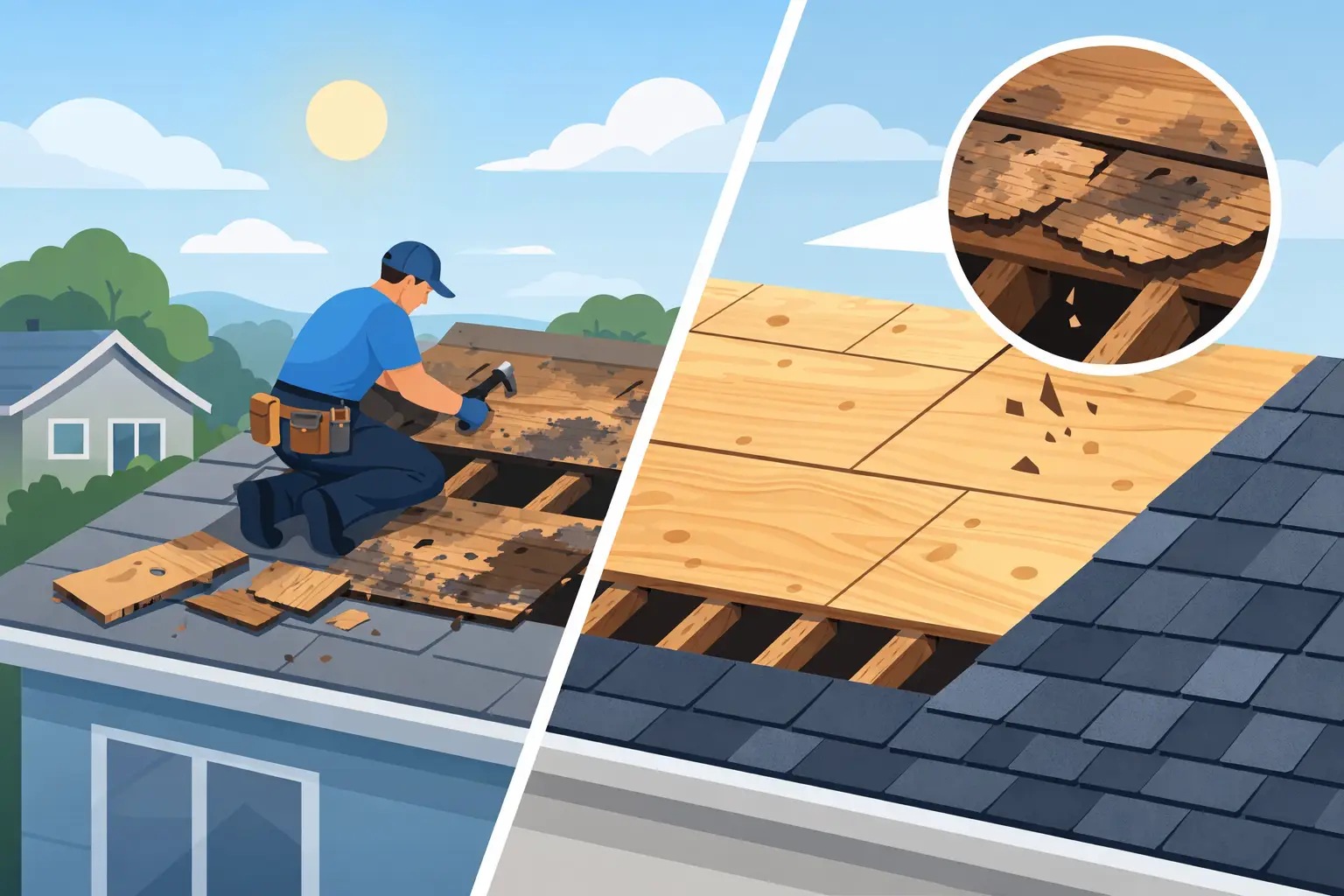
A new roof covering can look excellent from the street and still be hiding a problem underneath. If the plywood or OSB below the shingles has softened, swelled, or started to rot, the roof system is no longer doing its job properly. That is why homeowners often ask when should roof sheathing be replaced, especially after a leak, during a reroof, or when an older roof starts showing signs of movement.
Roof sheathing is the structural layer fastened over the rafters or trusses. It gives roofing materials a solid base, helps the roof hold its shape, and plays a key role in fastening performance. When it is sound, your shingles or metal roofing can perform as intended. When it is compromised, even high-quality roofing materials are working over a weak foundation.
When should roof sheathing be replaced during a roofing project?
The short answer is this: roof sheathing should be replaced when it has lost its structural strength, no longer holds fasteners properly, or has been damaged enough by moisture that repairs are no longer reliable.
That does not mean every stain or minor imperfection calls for full replacement. In many cases, a few localized sheets can be removed and replaced while the rest of the roof deck remains serviceable. The right decision depends on the extent of damage, how deep the moisture exposure goes, and whether the panel is still structurally sound.
This is where a proper inspection matters. Roofing problems are not always obvious from the attic or from the top side once old materials are stripped. A board or panel may look mostly intact, but if it feels soft underfoot, shows edge swelling, or delaminates around fastener lines, it may be at the end of its usable life.
The clearest signs your roof sheathing needs replacement
The most common reason for replacement is moisture damage. On coastal homes, repeated wetting from roof leaks, poor ventilation, wind-driven rain, or long-term condensation can break down the panel over time. Once that happens, the sheathing may not dry back to its original strength.
Rot is one of the clearest warning signs. If wood fibres are decaying, the panel is no longer dependable. Soft spots are another major concern. A roof deck should feel firm and stable. If sections feel spongy or flex more than they should, replacement is usually the right call.
Sagging is also significant. If part of the roofline dips or looks uneven, that can point to deteriorated sheathing, though framing issues can also be involved. Either way, it should be investigated before new roofing materials go on.
You may also see swelling along panel edges, visible mould growth, black staining from long-term leaks, or fasteners that no longer grip properly. If nails pull through easily or the surface has started to crumble, the deck cannot support the roofing system the way it should.
Inside the home, warning signs can show up as recurring ceiling stains, musty attic odours, peeling paint near upper walls, or unexplained drafts and dampness. Those symptoms do not automatically mean the sheathing is ruined, but they often point to moisture conditions that deserve a closer look.
Can roof sheathing be repaired instead of replaced?
Sometimes, yes. If damage is limited to a small area caused by a localized leak, a contractor may be able to cut out and replace only the affected section. That is common around roof penetrations like vents, skylights, and chimneys where water intrusion tends to start.
The trade-off is that patching only makes sense when the surrounding material is still solid. If multiple sheets show softening, if the damage extends beyond one obvious leak point, or if the roof is already being replaced due to age, broader replacement is often more practical. It avoids building a new roofing system over a patchwork deck that may continue to fail.
This is also where workmanship matters. A proper repair is not just about fitting in a new panel. The replacement section needs correct support, fastening, spacing, and tie-in details so the finished roof performs as one continuous system.
Why coastal moisture changes the answer
In a drier climate, roof sheathing may fail mostly from isolated leaks or age. In coastal BC, moisture exposure tends to be more persistent. Rainfall, humidity, salt air, and seasonal temperature swings can all work together to stress a roof assembly over time.
That does not mean every roof on Vancouver Island needs premature deck replacement. It does mean small problems can become larger ones faster if they are left alone. A minor leak around flashing may not stay minor through another wet season. Ventilation issues in the attic can also lead to condensation that quietly damages the underside of the sheathing, even when the outer roofing material looks acceptable.
For homeowners, the practical takeaway is simple: if your roof has leaked, if your attic has had moisture issues, or if your roof covering is being replaced after many years of service, the sheathing should be inspected carefully rather than assumed to be fine.
When should roof sheathing be replaced if the roof is being redone?
During a reroof, replacement is warranted whenever the existing deck cannot provide a clean, secure, and structurally sound substrate for the new roofing system. This is often the best time to deal with hidden problems because the roof covering is already off.
Trying to save questionable sheathing to reduce short-term cost can become expensive later. New shingles installed over weak or damp decking may not lie flat, may fail to seal properly, or may have reduced fastening strength. If sections need to be opened up again after the new roof is installed, the repair cost is usually higher than addressing the issue during the original project.
That said, not every reroof requires widespread deck replacement. Many homes need only a few sheets changed. Others need none at all. The right approach is based on what is actually found once the roof is opened, not on a fixed assumption either way.
How contractors assess whether sheathing is still sound
A proper assessment combines visual inspection with physical testing. Experienced roofers look for staining, swelling, rot, delamination, and mould. They also check how the deck feels under load and whether fasteners are holding properly.
From inside the attic, they may inspect for water trails, darkened wood, frost history, poor ventilation patterns, or signs of long-term condensation. From above, once shingles are removed, they can see the true condition of panel surfaces, joints, and previous repair areas.
Age plays a role, but it is not the deciding factor on its own. Some older sheathing remains in good condition if the roof stayed dry and ventilated. Some newer sheathing needs replacement because water got to it early and stayed there. Condition matters more than age.
The cost question homeowners usually ask next
Most homeowners are really asking two questions at once: does it need to be replaced, and can I avoid paying for more work than necessary?
That is a fair concern. Sheathing replacement adds labour and material cost to a roofing project. But it also protects the value of the work going on top of it. Skipping replacement where the deck is clearly compromised can shorten the life of the roof and increase the chance of future interior damage.
The better mindset is not cheapest versus most expensive. It is whether the roof system is being built on a reliable base. A contractor focused on quality craftsmanship should be able to show you what is damaged, explain whether the issue is isolated or widespread, and recommend a repair scope that fits the actual condition of the roof.
What homeowners can do before damage gets worse
The best way to avoid major sheathing replacement is to catch moisture issues early. That means paying attention after heavy rain, checking the attic for dampness or staining, and taking roof leaks seriously even if they appear small.
It also helps to keep roof penetrations, flashing, ventilation, and drainage systems in good condition. Water often reaches sheathing through failed details rather than through the main field of the roof. Good maintenance extends the life of both the roof covering and the structure underneath.
If you are planning a roof replacement, ask whether deck inspection and sheathing replacement are included as needed, and how damaged sections would be handled if discovered during tear-off. Clear answers upfront usually lead to a smoother project and fewer surprises.
A roof is only as dependable as the surface beneath it. When the sheathing is still solid, it makes sense to preserve it. When it has softened, rotted, sagged, or stopped holding properly, replacement is not an upgrade – it is the right way to protect the home for the long run.
Leave a Reply