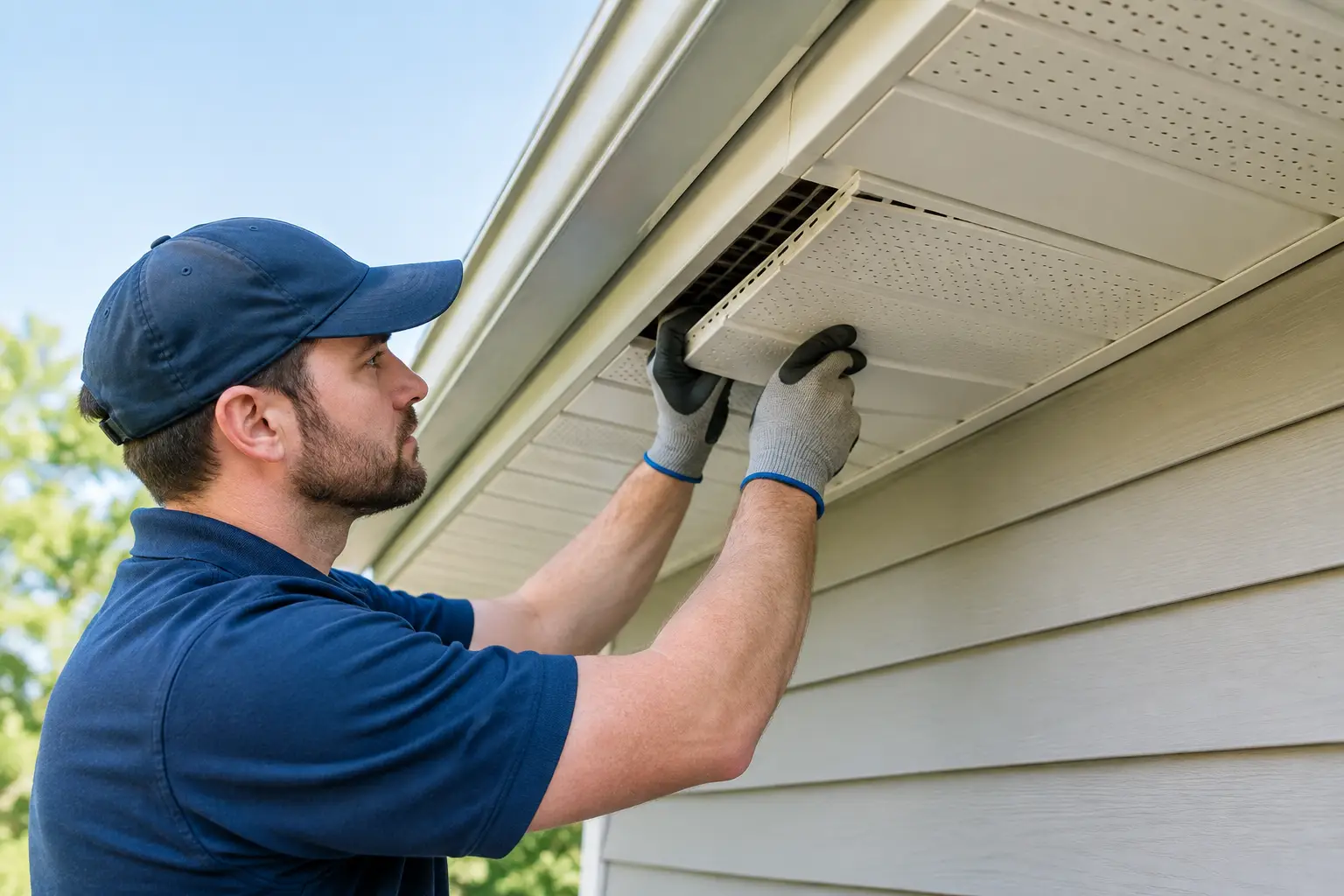
A soffit panel that rattles in the wind or hangs below the eaves is more than a cosmetic annoyance. Learning when to repair loose soffit panels can prevent birds, insects, wind-driven rain, and moisture from getting into areas that should stay protected. On Vancouver Island, repeated rain, coastal winds, and seasonal temperature changes can turn a small loose section into a larger exterior repair if it is left alone.
Soffits sit on the underside of your roof overhang. They finish the eaves, support proper attic ventilation, and help shield roof framing from the elements. A reliable repair starts with finding out why the panel came loose rather than simply pushing it back into place.
Why soffit panels come loose
Most loose soffits trace back to one of a few underlying conditions: failed fasteners, damaged trim channels, movement in the fascia, water exposure, or an installation detail that did not allow the material to expand and contract.
Vinyl and aluminum soffit panels commonly fit into receiving channels at the wall and fascia. If a channel bends, a fastening point works loose, or the fascia board moves, the panel can slip out of position. High winds may then catch the exposed edge and make the problem worse.
Wood soffits have different failure points. Peeling paint, soft spots, open joints, and sagging plywood often point to moisture getting behind the finish. In this case, fastening the panel back up without correcting the water source can trap a deteriorating board in place and delay a needed repair.
The location of the loose panel matters. One panel loose near a corner may be a simple trim or fastener issue. Several loose panels along the same roof edge can indicate failing fascia, poor attachment, or wind damage. If the area sits below a roof leak, overflowing gutter, or damaged flashing, treat it as a moisture investigation first.
Inspect safely before you repair loose soffit panels
Working at roofline height carries real risk. Use a stable ladder on firm, level ground, maintain three points of contact, and avoid working alone. Do not lean a ladder against gutters or fragile soffit material. If the repair requires reaching over a roof edge, working above a deck or slope, or removing large sections of soffit, a professional assessment is the safer choice.
From the ground, look for uneven panel lines, gaps at the fascia, missing vented sections, stains, sagging, or birds entering the eaves. Then inspect the roof edge above the loose panel. Damaged shingles, loose drip edge, blocked gutters, and water marks on fascia boards can all explain what is happening below.
At close range, gently test the panel. A sound vinyl or aluminum panel should move slightly with temperature changes but should not flap, sag, or pull free from its channel. Check whether it is intact and simply displaced, or cracked, warped, bent, or chewed by pests. Also look behind the opening where possible. Dark staining, soft wood, insulation debris, or visible daylight are signs the job may extend beyond a simple reattachment.
Match the repair to the soffit material
The right fix depends on whether the existing soffit is vinyl, aluminum, fibre cement, plywood, or another wood-based product. Using the wrong fastener or forcing a panel into place can cause more damage than the original problem.
Vinyl soffit panels
A vinyl panel that has slipped from its channel can often be reset if it is not cracked. Carefully release enough of the adjacent panel or trim to create room, slide the loose edge back into the receiving channel, and confirm the other edge is properly seated. Where fastening is required, use corrosion-resistant fasteners in the designated nailing slots.
Do not drive fasteners tightly against vinyl. The panel needs slight room to move as temperatures change. Over-tightening can make it buckle, while fastening through the face of a panel creates a visible point of failure and can restrict movement. If the J-channel, F-channel, or fascia channel is split or distorted, replacing that trim section usually produces a cleaner, longer-lasting result than trying to hold it with sealant.
Aluminum soffit panels
Aluminum is durable but can crease permanently in strong wind or when handled roughly. Minor displacement may be corrected by reseating the panel and securing the supporting trim. A bent or creased panel is generally best replaced because it may no longer sit flat or lock correctly with the surrounding pieces.
Use compatible corrosion-resistant fasteners. On wet coastal properties, material compatibility matters. Mixing certain metals without the right separation can lead to corrosion over time, especially where moisture remains trapped.
Wood or plywood soffits
With wood soffits, inspect the framing and fascia before reinstalling anything. Probe suspect areas gently with a screwdriver. If the board is soft, crumbling, or darkened from repeated wetting, replace the damaged material rather than fastening through compromised wood.
Cut replacement material to fit accurately, prime all exposed edges where appropriate, and fasten it into sound backing. Then address the cause of water exposure, whether that is a leaking gutter joint, roof-edge flashing issue, or failed paint and caulking detail. A properly repaired wood soffit should be sealed and finished so moisture cannot work into the end grain or open seams.
Keep ventilation working
Many soffit panels are vented to supply air to the attic. These perforated panels are not interchangeable with solid panels without considering the roof’s ventilation design. Replacing vented material with solid material can reduce airflow, contributing to excess attic humidity, condensation, mould risk, and shortened roof life.
Before replacing a panel, note its style and whether it is vented. Keep insulation from blocking the airflow inside the eave. If you can see loose insulation packed tightly against the soffit vents, or if the attic has signs of moisture, the ventilation system deserves a closer review.
Avoid using expanding foam, excessive caulking, or mesh in a way that closes the intended vent openings. Pest exclusion is sometimes necessary, but it needs to be installed without compromising airflow or creating a water trap.
When a simple repair is not enough
A loose panel may be the visible symptom of a roof-edge problem. Arrange a professional inspection if you find recurring movement after repair, widespread sagging, soft fascia, active water staining, missing flashing, pest activity, or multiple panels coming loose after windstorms.
It is also worth calling for help when the soffit was installed over damaged wood or when trim components no longer provide a secure receiving channel. Refastening a panel into rotten backing can make it look better briefly, but it does not restore the protective function of the eave.
For homes exposed to heavy rain and coastal weather, detail work at the roof edge matters. The gutter, drip edge, fascia, soffit, siding transition, and roof ventilation all need to work together. DryTek approaches these repairs with the same focus used on roofing and siding work: identify the source, use durable materials, and finish the visible details properly.
Prevent the next loose panel
Check eaves and gutters at least twice each year, and again after significant wind events. Clear debris so water can drain instead of backing up against the fascia. Watch for paint failure, open seams, and gutter movement, particularly at corners and downspout connections.
When roof, siding, or gutter work is being done, inspect the soffit line at the same time. Contractors may need to remove or work around these components, and a final check for straight panel alignment, secure trim, and clear vents helps catch small issues before the next storm does.
A secure soffit should sit straight, ventilate as intended, and disappear into the roofline rather than draw attention to itself. If yours is moving, staining, or opening at the edges, addressing it early protects both the finish of your home and the structure behind it.
Leave a Reply