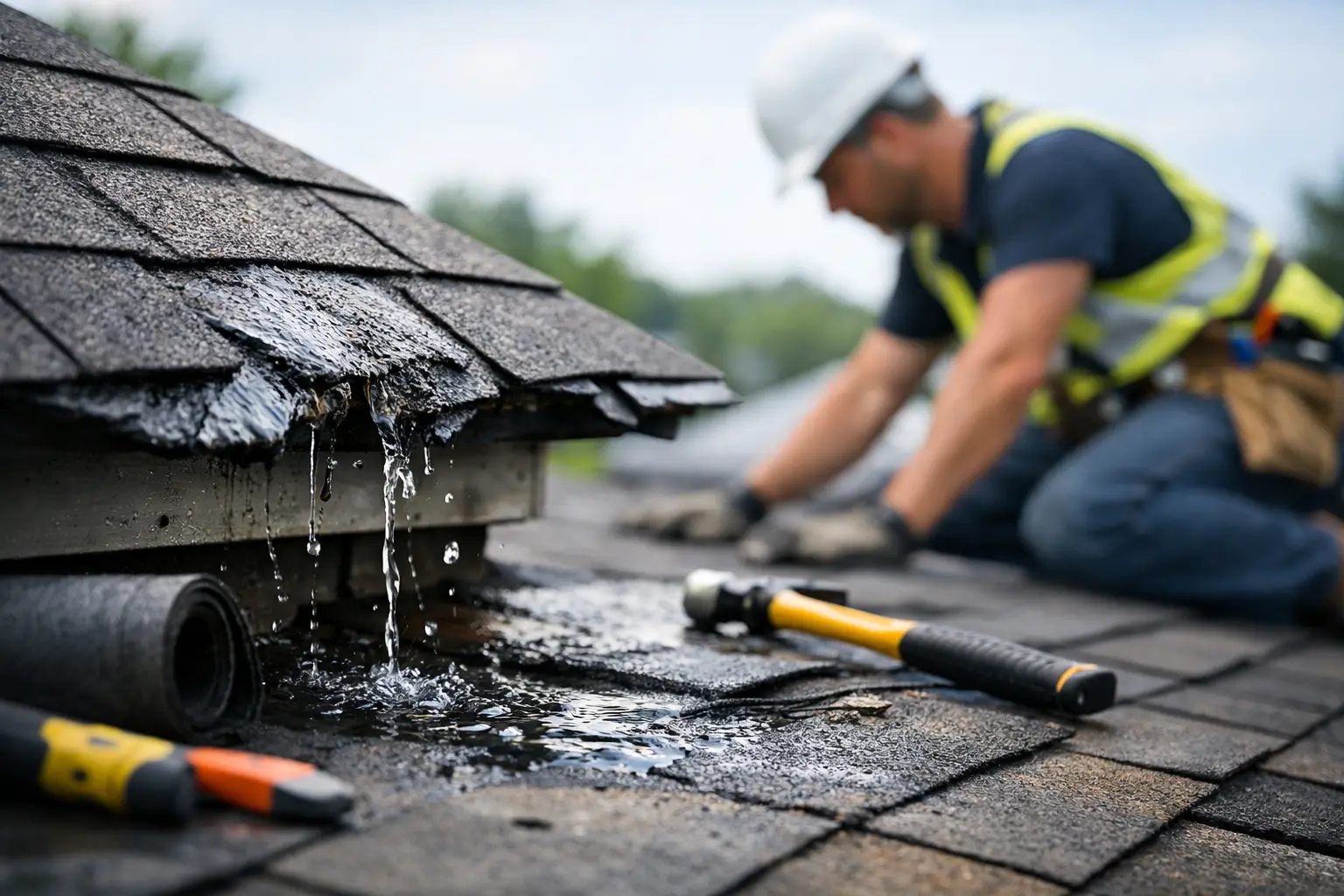
A stain spreading across a bedroom ceiling after a heavy rain is not just a cosmetic issue. Water may have travelled a surprising distance from the actual entry point, soaking insulation, dampening framing, or feeding mould growth before it becomes visible indoors. So, can a leaking roof be repaired? In many cases, yes – but a lasting repair depends on finding the source, assessing the surrounding roof system, and using materials suited to the home and local weather.
For Vancouver Island homeowners, that assessment matters. Frequent rain, wind-driven moisture, moss growth, and coastal exposure can turn a small weakness into a larger problem if it is left unchecked. A proper repair is not simply about covering a wet spot. It is about restoring the roof’s ability to shed water reliably.
Can a Leaking Roof Be Repaired Without Replacing It?
A roof leak can often be repaired when the damage is isolated and the roof still has useful service life remaining. Missing or cracked shingles, a failed pipe boot, loose flashing, damaged ridge caps, and a small puncture are all common repairable issues. When addressed early, these problems may require targeted work rather than a full roof replacement.
The deciding factor is the condition around the leak. If shingles are brittle, curling, losing granules across large areas, or nearing the end of their expected lifespan, repairing one section may only postpone a broader failure. The same is true when water has compromised roof decking or when leaks appear in several unrelated locations.
A professional inspection separates a local defect from a roof-wide issue. That distinction helps homeowners avoid two costly mistakes: replacing a roof that could have been repaired properly, or repeatedly patching a roof that no longer offers dependable protection.
Why the Visible Leak Is Not Always the Source
Water does not always enter directly above the stain on your ceiling. It can move along roof decking, rafters, plumbing vents, insulation, or flashing before dripping into the living space. A leak near a skylight, chimney, valley, vent, or wall transition may be caused by a failure several feet away.
This is why surface sealant alone is rarely a complete solution. Caulking may temporarily slow water entry in a specific detail, but it cannot correct damaged underlayment, poorly integrated flashing, lifted shingles, or rotted substrate. A repair should address the failed component and restore the overlapping layers that direct water down and off the roof.
On older roofs, moss can make diagnosis more difficult. Moss holds moisture against shingles and can lift their edges as it grows. Removing it aggressively, however, can strip protective granules or damage already-fragile materials. The condition of the roof should guide the cleaning and repair approach.
When a Roof Repair Is Usually the Right Choice
Targeted roof repair makes sense when the roof is generally sound and the cause is clear. A newer roof that has suffered storm damage, for example, may need only a limited shingle replacement and careful resealing around the affected area. Flashing repairs are also common around chimneys, dormers, vents, and skylights where the roof changes direction or meets another material.
Repairs are often appropriate for a single failed plumbing vent boot, a few wind-damaged shingles, exposed fasteners, or a localized issue in a valley. The goal is to match materials where possible, replace damaged components, and ensure water is directed correctly at every overlap and transition.
A good repair should also account for what cannot be seen from the ground. If moisture has reached the roof deck, the contractor may need to remove surrounding materials, inspect the sheathing, and replace softened or deteriorated wood before installing new roofing. Covering over damaged decking creates a weak foundation for the repair and can lead to further problems.
Signs Replacement May Be the Better Investment
There is a point where repairs become less cost-effective than replacement. If a roof has recurring leaks, widespread shingle deterioration, sagging areas, or extensive moisture damage beneath the surface, a full replacement can offer better long-term value and more reliable protection.
Consider replacement when you are seeing several of the following conditions:
- Leaks occurring in multiple areas or returning after prior repairs
- Shingles that are curling, cracking, bald, or losing granules extensively
- Soft spots, sagging roof lines, or visible deterioration of decking
- Significant flashing failures around several roof penetrations or transitions
- A roof that is near or beyond its expected service life
This does not mean every older roof needs immediate replacement. Some roofs still have years of service left with focused maintenance and timely repairs. The key is an honest condition assessment that considers the full assembly, not just the most obvious leak.
What a Proper Leak Repair Should Include
A durable roof repair starts with investigation. The roof surface, penetrations, flashing, valleys, gutters, attic space, and interior signs of moisture should all be considered. In some cases, the problem is related to condensation or ventilation rather than an exterior roof leak, especially when moisture appears during colder periods without a clear rainfall connection.
Once the source is identified, damaged roofing materials are removed as needed to inspect the layers beneath. Any compromised decking should be repaired before new underlayment, flashing, shingles, or other roof materials are installed. Details matter here. Flashing must be integrated into the roofing system, not simply placed over top of it, and shingles need correct fastening and overlap to perform in wind and rain.
Material matching can be a practical consideration. New shingles may not look identical to weathered existing shingles, particularly on older roofs. A skilled contractor can often minimize the visual difference by selecting the closest available match and repairing the smallest practical area. Where appearance is a major concern and the roof is already aging, replacement may provide a more consistent finish.
What Homeowners Should Do When They Notice a Leak
Move furniture, electronics, and valuables away from the affected area first. If water is collecting in a ceiling bulge, do not ignore it – the weight can cause the drywall to collapse. If it is safe to do so, contain the water with a bucket and take photos of the interior damage and any visible exterior concerns.
Avoid climbing onto a wet roof or trying to lift shingles during a storm. Wet roofing is slippery, and a quick fix can damage materials further or create a serious safety risk. If water is entering around electrical fixtures, shut off power to that area if you can do so safely and seek professional help promptly.
After the immediate issue is controlled, arrange an inspection as soon as conditions allow. Early action can limit damage to insulation, drywall, framing, and finishes. It also gives the repair team a better chance of identifying the original failure before temporary measures or drying conditions obscure the evidence.
Built for Vancouver Island Weather
Roofing on Vancouver Island must handle more than occasional rain. It must manage prolonged wet periods, wind-driven moisture, debris, moss, and seasonal temperature changes. Details around valleys, chimneys, vents, skylights, and wall intersections deserve particular attention because these are the areas where water management is most demanding.
DryTek approaches roof repair with that reality in mind. Quality craftsmanship means looking beyond the stain on the ceiling, correcting the source of water entry, and completing the repair with materials and finishing details built to perform in coastal conditions.
A leaking roof is worth taking seriously, but it does not automatically mean your home needs a new roof. With a timely inspection and a repair matched to the actual condition of the roof, many leaks can be resolved before they become a much larger project.
Leave a Reply