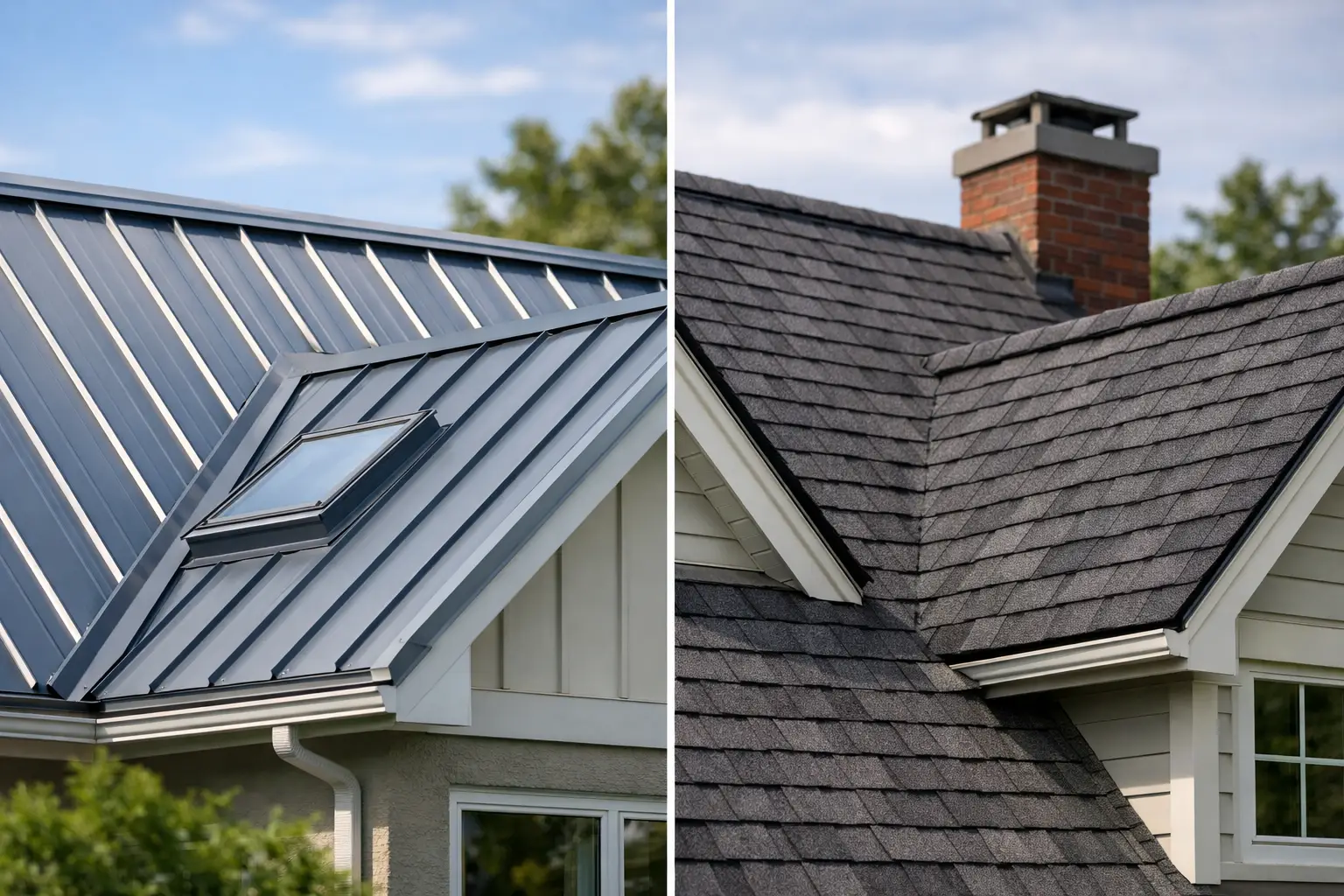
Replacing a roof usually starts with one practical question: do you want to pay less now, or deal with less later? When homeowners weigh metal roof versus shingles, they are really comparing upfront cost, long-term durability, appearance, and how each system holds up in wet coastal conditions.
There is no one-size-fits-all answer. The right choice depends on your budget, your home’s design, how long you plan to stay, and how much importance you place on lifespan and maintenance. A roof should do two jobs well – protect the home and suit the property. The best decision balances both.
Metal roof versus shingles: the biggest differences
Asphalt shingles remain the most common roofing material for residential homes in Canada. They are familiar, widely available, and generally more affordable to install. For many homeowners, that lower initial cost makes shingles the practical option.
Metal roofing is a different kind of investment. It usually costs more at the start, but it offers a longer service life and strong resistance to moisture, wind, and fire. On homes where long-term performance matters more than the cheapest quote, metal often earns serious consideration.
The simplest way to think about it is this: shingles are often easier on the budget today, while metal can be easier on the budget over decades. That said, the numbers only matter if the installation is done properly. Even premium materials can underperform if the details are rushed.
Cost matters, but it is not the whole story
If you are comparing estimates, shingles will typically come in lower than metal for the same roof area. Material cost is lower, labour is often more straightforward, and repairs can be simpler in some cases. For homeowners managing a renovation budget, that can make shingles the clear frontrunner.
Metal roofing generally requires a higher upfront investment. The final price depends on the profile, gauge, finish, roof complexity, and the condition of the roof deck underneath. A simple gable roof is one thing. A roof with multiple valleys, dormers, skylights, and transitions is another.
Still, price should be measured over the full life of the roof. If a shingle roof needs replacement much sooner than a properly installed metal roof, the lower starting price does not always mean lower total cost. This is especially relevant for homeowners planning to stay in the home long term.
What affects roofing cost most?
Material is only one part of the quote. Roof pitch, access, tear-off requirements, underlayment, flashing details, ventilation upgrades, and disposal all influence final cost. On coastal homes, the details around waterproofing matter just as much as the visible roofing product.
That is why comparing two numbers without comparing scope can be misleading. A cheaper estimate is not always a better roof.
Lifespan and maintenance
This is where metal usually pulls ahead. A properly installed metal roof can last decades longer than asphalt shingles, depending on the product and environment. It is less vulnerable to the kind of gradual wear that comes from prolonged rain exposure, UV, and temperature swings.
Shingles still perform well when they are installed correctly and maintained over time. But they are more likely to show age sooner. Granule loss, curling, cracking, and moss growth can become issues as the roof gets older, particularly in damp climates.
For many homeowners, the maintenance question is just as important as lifespan. If you want a roof that generally asks for less over time, metal has an advantage. If you are comfortable with a shorter replacement cycle and lower initial spend, shingles can still make good sense.
Performance in wet coastal weather
For homes exposed to frequent rain, moisture management is not optional. It is the entire job. In places like Vancouver Island, roofing materials need to stand up to prolonged wet weather, seasonal wind, and the wear that comes with a damp coastal environment.
Metal roofing performs very well in these conditions when installed with the right underlayment, flashing, fasteners, and ventilation strategy. Water sheds efficiently, and the material itself does not absorb moisture. That can be a strong advantage in areas where roofs stay wet for long stretches.
Shingles can also perform well in coastal weather, but they rely heavily on proper installation and ongoing care. Roof slope, attic ventilation, and regular maintenance all matter. Moss and debris are more likely to become part of the conversation with shingles, especially where trees shade the roof and keep it damp.
Wind and weather exposure
Wind resistance depends on the specific roofing system, not just the category. Some architectural shingles are rated for strong wind performance, and some metal systems are exceptionally durable. The key is matching the product to the home and installing it to spec.
On exposed properties, details like ridge treatment, edge securement, and flashing are critical. Roofing failures often start at transitions and penetrations, not in the middle of the field.
Appearance and curb appeal
A roof changes the look of a home more than many homeowners expect. Shingles tend to suit a wide range of house styles because they offer a familiar, traditional appearance. They come in many colours and profiles, and they blend easily with most neighbourhood aesthetics.
Metal roofing gives a cleaner, more defined look. Depending on the style, it can feel modern, coastal, farmhouse-inspired, or architectural. On the right home, it adds sharp lines and a premium finish. On the wrong home, it can feel out of place. That is why product selection should always consider the house itself, not just what is trending.
If resale value matters, appearance should not be treated as secondary. Buyers notice roofing. A roof that looks appropriate, well-finished, and consistent with the home’s exterior can strengthen overall curb appeal.
Noise, insulation, and comfort
One of the most common concerns about metal roofing is noise. Many people assume rain on metal will sound dramatically louder than shingles. In reality, with proper roof assembly and attic insulation, the difference is often much less noticeable than expected in a residential setting.
The bigger comfort factors are insulation, ventilation, and overall roof system design. A poorly ventilated roof can create problems regardless of material. A well-built system helps regulate temperature, manage moisture, and protect the structure underneath.
This is a good example of why roofing decisions should not be made on myths alone. The material matters, but the full assembly matters more.
Repairs and future flexibility
Shingle roofs are often easier to repair in isolated sections, depending on age and product availability. If a branch damages one area, it may be possible to replace the affected section without major disruption. Colour matching can still be a challenge as older shingles fade, but targeted repairs are common.
Metal roofs can also be repaired, though the process may be more specialized depending on the panel system. In some cases, replacing one damaged section is straightforward. In others, sequencing and profile matching make the repair more involved.
Homeowners should think beyond installation day. Ask what future repairs look like, how accessible replacement materials will be, and whether the system suits the realities of your property.
Which roof is better for your home?
When considering metal roof versus shingles, the better option is the one that fits your priorities honestly.
If your main concern is keeping upfront costs manageable while still getting solid protection and a reliable appearance, shingles are often the right fit. They remain a practical choice for many homes and can deliver very good performance when installed with care.
If your priority is long-term durability, lower maintenance, and strong performance in challenging weather, metal is often worth the added investment. It is particularly appealing for homeowners who plan to stay put and want a roof built for the long haul.
There is also the question of the home itself. Roof geometry, neighbourhood style, tree coverage, ventilation needs, and exposure all affect what makes sense. A quality contractor should be able to explain not just which material costs more, but which one fits the property best.
At DryTek, that is where craftsmanship matters most. Good roofing decisions are rarely about the product alone. They come from careful assessment, proper detailing, and installation work that respects the climate the roof has to face year after year.
A new roof is not just a line item on a renovation budget. It is the layer that protects everything underneath it. Choose the system that fits your home, your timeline, and the standard of performance you expect every time the weather turns.
Leave a Reply