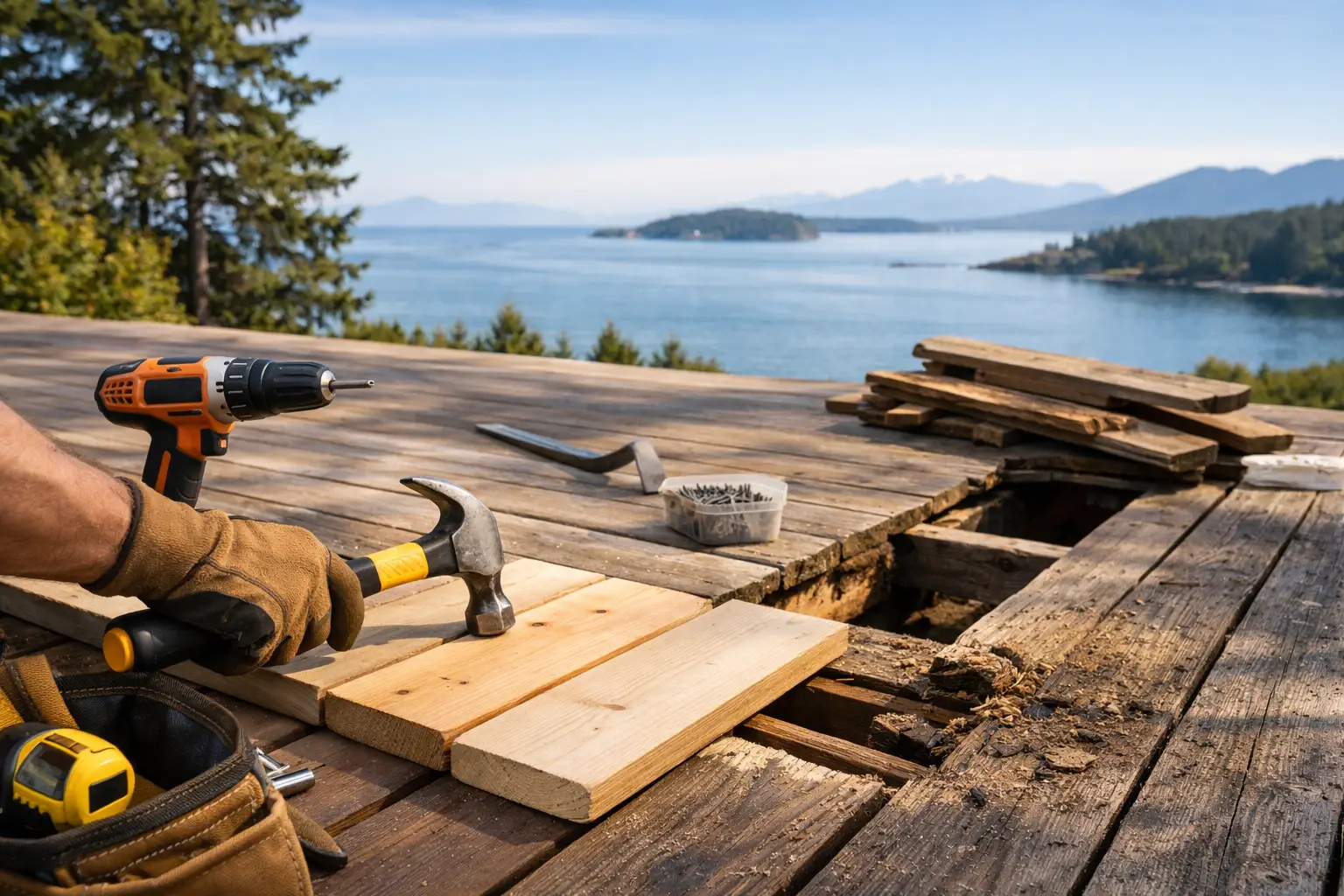
A deck can look serviceable from the yard while hiding the kinds of problems that matter most: soft framing, corroded fasteners, loose railings, or water entering where the deck meets the house. So, how much does deck repair cost? For Vancouver Island homeowners, a small, contained repair may cost a few hundred dollars, while structural work involving framing, stairs, railings, or the ledger connection can run into several thousand.
The difference comes down to what is damaged, how far moisture has travelled, and whether the existing structure can safely support a repair. A proper quote should account for more than the board you can see. It should identify the cause of the failure and provide a durable solution built for coastal weather.
Typical Deck Repair Costs in BC
Deck repair pricing is usually based on labour, materials, access, and the extent of deterioration discovered during inspection. The following ranges are general Canadian dollar estimates for common residential repairs. They help with early budgeting, but they are not a substitute for an on-site assessment.
| Repair scope | Typical cost range | | — | —: | | Replacing a few damaged deck boards | $300 to $1,200 | | Localized surface board replacement | $800 to $3,000 | | Repairing or rebuilding a section of railing | $1,200 to $5,000 | | Repairing deck stairs or stringers | $1,500 to $5,000 | | Replacing localized joists, beams, or posts | $2,500 to $8,000+ | | Ledger repair and house connection work | $3,000 to $9,000+ | | Significant structural repair or partial rebuild | $8,000 to $20,000+ |
A simple board replacement sits at the lower end because the framing below is sound and the work is accessible. Once a contractor needs to lift boards, brace the deck, excavate around footings, or open siding near the house connection, the scope changes quickly.
Materials also matter. Pressure-treated lumber is often the most economical option for structural repairs, while cedar and composite materials increase the material cost. Matching existing deck boards may be difficult when a product has faded, weathered, or been discontinued. In some cases, replacing a larger section creates a better-looking and longer-lasting result than patching isolated boards with a noticeably different material.
What Affects How Much Deck Repair Costs?
The most significant factor is whether the problem is cosmetic or structural. Surface issues such as splintered boards, raised fasteners, peeling stain, and minor rot at a few board ends can often be addressed without dismantling the deck. Damage to the framing, posts, footings, or connection to the home needs a more careful approach.
Moisture is the common thread. Vancouver Island decks face frequent rain, damp winters, wind-driven water, and long periods when shaded areas do not dry properly. Water can collect at post bases, penetrate failed flashing, sit between deck boards, and become trapped where the ledger meets the home. What begins as one soft board can sometimes reveal damaged joists or decay behind the siding.
Access affects labour as well. A ground-level deck is usually easier to repair than a second-storey deck over a sloped lot, garden, or finished patio. Tight side yards, limited material access, and the need to protect landscaping can add time. Removal and disposal of old treated lumber also need to be included in the price.
Code and safety requirements can influence the final scope. A railing that is loose, too low, or improperly secured may need more than a quick tightening. Stairs may need corrected rise and run, secure stringers, proper handrails, or improved landings. If a repair leads into a larger rebuild, permits and current building requirements may apply.
Repairs That Should Never Be Delayed
Homeowners can often plan around cosmetic maintenance, but certain signs call for prompt professional attention. A deck should not feel bouncy, shift underfoot, or move where it meets the house. Those are not normal signs of age.
Pay close attention to soft or crumbling wood around posts, beams, stair stringers, and the ledger board. Rusted or missing structural connectors, loose railings, cracked posts, and visible sagging are also concerns. If water is getting behind siding at the deck connection, the deck and the home exterior may both be at risk.
Avoid assuming that new boards will solve a structural issue. Covering deteriorated framing makes the deck look better temporarily, but it does not restore safe load-bearing capacity. A quality repair begins with the supporting structure, then finishes with details that help manage water and improve appearance.
Repair or Replace: Which Is the Better Value?
Repair is usually the better value when the damage is contained and the main framing remains dry, solid, and properly supported. Replacing a handful of boards, a damaged stair section, or one localized railing area can extend the useful life of a well-built deck without the cost of starting over.
Replacement becomes more practical when rot is widespread, framing is undersized or poorly installed, footings are failing, or several repairs are needed at once. Repeated patchwork can cost more over time, especially when it does not address poor drainage, improper flashing, or an outdated structure. A partial rebuild may also make sense if the deck layout works but one section has failed.
The right decision is not always the cheapest immediate option. A contractor should explain what can be safely repaired, what may need attention later, and whether spending more now avoids reopening the same areas in a few seasons. Clear scope is particularly valuable when buying or selling a home, planning exterior renovations, or considering composite decking.
What a Proper Deck Repair Quote Should Include
A reliable deck repair quote should describe the condition found, the work proposed, the materials to be used, and the expected finished result. Vague allowances can lead to difficult conversations once the project is underway, particularly if hidden rot is discovered.
Ask whether the quote includes demolition, disposal, fasteners, flashing, structural connectors, sealing of cut ends, railing work, and clean-up. For repairs close to the home, ask how the contractor will protect siding and address water management at the ledger. These are small details on paper, but they have a major impact on long-term performance.
It is also reasonable to ask how concealed damage will be handled. No contractor can see inside every enclosed connection before work begins. A professional should identify potential unknowns in advance and communicate clearly if conditions require a change in scope.
Protecting Your Deck After the Repair
A sound repair lasts longer with basic maintenance. Keep debris from building up between boards and against the house, where it holds moisture. Check that downspouts and roof runoff do not drain onto the deck or near its footings. Trim back vegetation that limits airflow beneath the structure.
Inspect the deck each spring and fall, especially after a wet winter. Look for loose fasteners, cracked boards, fading sealant, soft spots, and movement at railings or stairs. Wood decks benefit from cleaning and appropriate sealing on a schedule that reflects sun exposure, shade, and product requirements. Composite surfaces need less finishing work, but their framing and connections still require inspection.
If you are unsure whether the problem is limited to a few boards or reaches the structure below, arrange an assessment before the wet season makes it worse. Early repair protects your investment, preserves the look of your outdoor space, and gives you a safer place to enjoy when better weather returns.
Leave a Reply