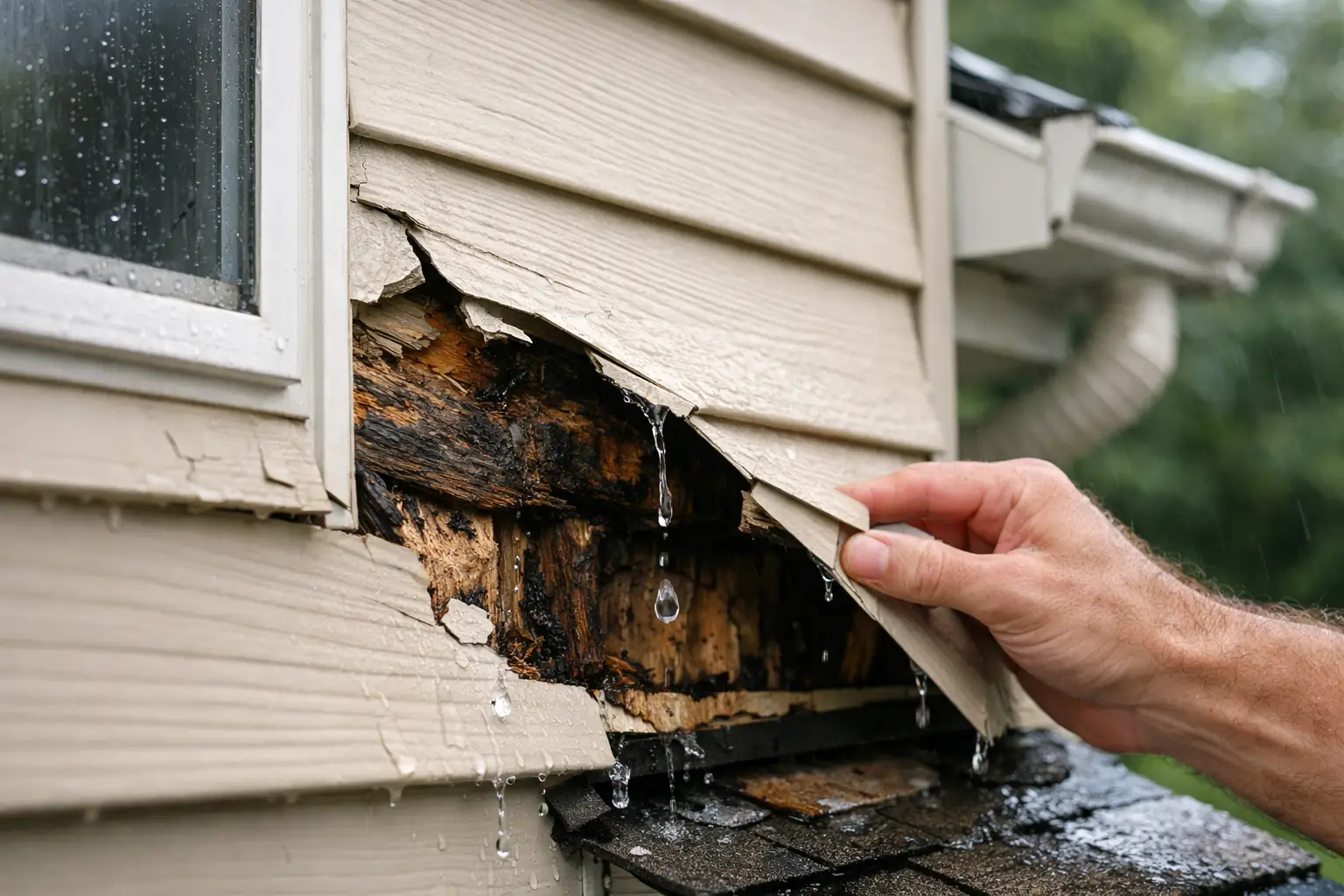
A crack near a window, a loose corner panel, or a gap where siding meets the roofline may look like a small exterior issue. On Vancouver Island, where wind-driven rain can work its way into the smallest opening, it can become much more than a cosmetic concern. Can damaged siding cause leaks? Yes. When siding or the details around it fail, water can reach the wall assembly, insulation, framing, and interior finishes.
The good news is that siding damage does not automatically mean water is already inside the home. Quality siding systems are designed in layers, with water-resistive barriers and flashing behind the visible cladding. The risk depends on the type of damage, the age and condition of those hidden layers, and how long the opening has been exposed to wet weather. Catching trouble early is usually the difference between a targeted repair and a larger wall restoration.
Can Damaged Siding Cause Leaks Behind the Walls?
Siding is the home’s first line of defence against rain, but it is not meant to be the only one. Most exterior wall systems include cladding, an air gap or drainage plane, a water-resistive barrier, flashing, sheathing, insulation, and framing. When installed properly, this layered approach directs incidental moisture back outside.
Damage changes the way water moves across that system. A split board, lifted panel, missing piece of caulking, or failed trim joint can allow water behind the siding. From there, it should drain safely if the materials and flashing behind the cladding are intact. If the drainage plane is compromised, blocked, poorly installed, or simply deteriorated with age, moisture can soak into sheathing and wood framing.
Wind matters as much as rain volume. During coastal storms, rain does not always run straight down a wall. It can be forced sideways and upward into horizontal laps, trim joints, vents, window openings, and the transitions between siding and roof components. That is why an exterior that appears fine in dry weather may show problems only after sustained wind-driven rain.
The Siding Damage Most Likely to Let Water In
Not all damage carries the same level of concern. Faded colour, surface scuffs, or minor dents may affect curb appeal without creating a leak path. Open joints and failed details deserve faster attention because they can expose the wall to repeated moisture.
Cracked, broken, or warped siding can leave direct gaps. Wood siding may split along the grain, while vinyl can crack after an impact or become loose in high winds. Fibre cement can chip or crack around fasteners and edges. The material changes, but the concern is the same: an opening gives rain a route behind the cladding.
Loose siding is another warning sign. Panels that rattle, bow outward, or pull away around corners may have damaged fasteners, inadequate fastening, or moisture-related movement behind them. A loose panel can also disrupt the intended overlap that sheds water.
Trim around windows and doors needs particular care. Water often enters at transitions, not across the broad face of the siding. Gaps at window trim, head flashing that is missing or incorrectly integrated, and dried or separated sealant can let water reach the wall opening. Caulking is useful at the right locations, but it is not a substitute for correctly installed flashing.
Pay attention to siding where it meets rooflines, decks, chimneys, outdoor fixtures, and utility penetrations. These intersections need deliberate flashing and clear drainage paths. A repair that simply covers a gap without correcting the detail beneath may look finished while continuing to trap or redirect water into the wall.
Signs a Siding Leak May Be Developing
A leak behind siding is not always visible right away. Moisture can travel along framing, sheathing, or flashing before it appears indoors, so the stain on a ceiling or wall may not sit directly below the original entry point.
Outside, look for swollen or soft wood trim, peeling paint concentrated in one area, rusting fasteners, dark staining, green growth, or siding that feels loose. Bubbling paint and recurring deterioration near windows can indicate repeated wetting, although they can also result from poor surface preparation or trapped moisture. A careful inspection separates these possibilities.
Inside, watch for a musty odour, new stains, peeling drywall paint, swollen baseboards, damp carpet near exterior walls, or window trim that feels soft. If a symptom appears after heavy rain and becomes less noticeable during dry periods, exterior water intrusion should be considered.
Higher utility bills and cold, drafty wall areas can also be clues. Wet insulation loses performance, and air leaks often occur at the same poorly detailed transitions that admit water. These signs do not prove damaged siding is the source, but they justify a closer assessment.
How to Check Your Exterior Without Causing More Damage
A homeowner can do a useful visual check from the ground, especially after a storm. Walk slowly around the property and inspect walls where water collects or is driven by prevailing winds. Use binoculars for high areas rather than climbing ladders or pulling at siding.
Look closely at corners, window and door trim, hose bibs, dryer vents, electrical boxes, deck ledger areas, and the connection between siding and roof flashing. Check whether gutters overflow onto walls or whether downspouts discharge too close to the foundation. Those drainage issues can worsen siding wear and create moisture problems that resemble a siding leak.
Avoid trying to solve the issue by applying caulking across every visible seam. Many siding systems need certain joints and lower edges to remain open for drainage. Sealing those paths can trap moisture behind the cladding, which creates the very problem the repair was meant to prevent.
If you can safely access an unfinished basement, crawlspace, or attic adjacent to the affected wall, look for damp wood, staining, or insulation changes. Do not rely on a single dry-day inspection. Water entry may require a specific combination of rain direction, wind, and temperature to reveal itself.
Repairing the Cause, Not Just the Symptom
The right repair depends on how far water has travelled. A localized crack or missing piece of siding may only require replacement of the damaged material, proper flashing integration, and refinishing as needed. If the wall has been wet for a prolonged period, the siding may need to be removed so the sheathing, framing, and insulation can be assessed.
This is where workmanship makes a real difference. A lasting repair follows the water path from top to bottom: roof and wall flashing direct water outward, the weather barrier overlaps correctly, openings are properly flashed, and the siding is installed with the clearances and fastening required by the material manufacturer. New cladding alone cannot compensate for poor details behind it.
Material selection also deserves thought. Fibre cement, engineered wood, vinyl, and natural wood each have advantages, maintenance requirements, and installation rules. Vancouver Island weather favours assemblies that manage moisture reliably, but the best choice still depends on the home’s design, existing exterior, budget, and the level of maintenance the owner wants to take on.
When to Call a Siding Professional
Call for an assessment promptly if you see active water indoors, soft or crumbling exterior materials, widespread warping, visible mould, or staining that returns after rain. The same applies if siding damage is located around windows, doors, roof-to-wall connections, or deck attachments. These are high-risk details where water can bypass the visible cladding and reach concealed materials.
A professional exterior assessment should look beyond the damaged board or panel. The goal is to identify the entry point, evaluate nearby flashing and drainage details, and determine whether moisture has affected the wall behind the siding. That approach protects both the appearance of the repair and the structure it is meant to protect.
Small siding defects are easier to address before another wet season turns them into concealed damage. A careful repair, completed with the right materials and proper flashing details, keeps rain where it belongs: outside the home.
Leave a Reply