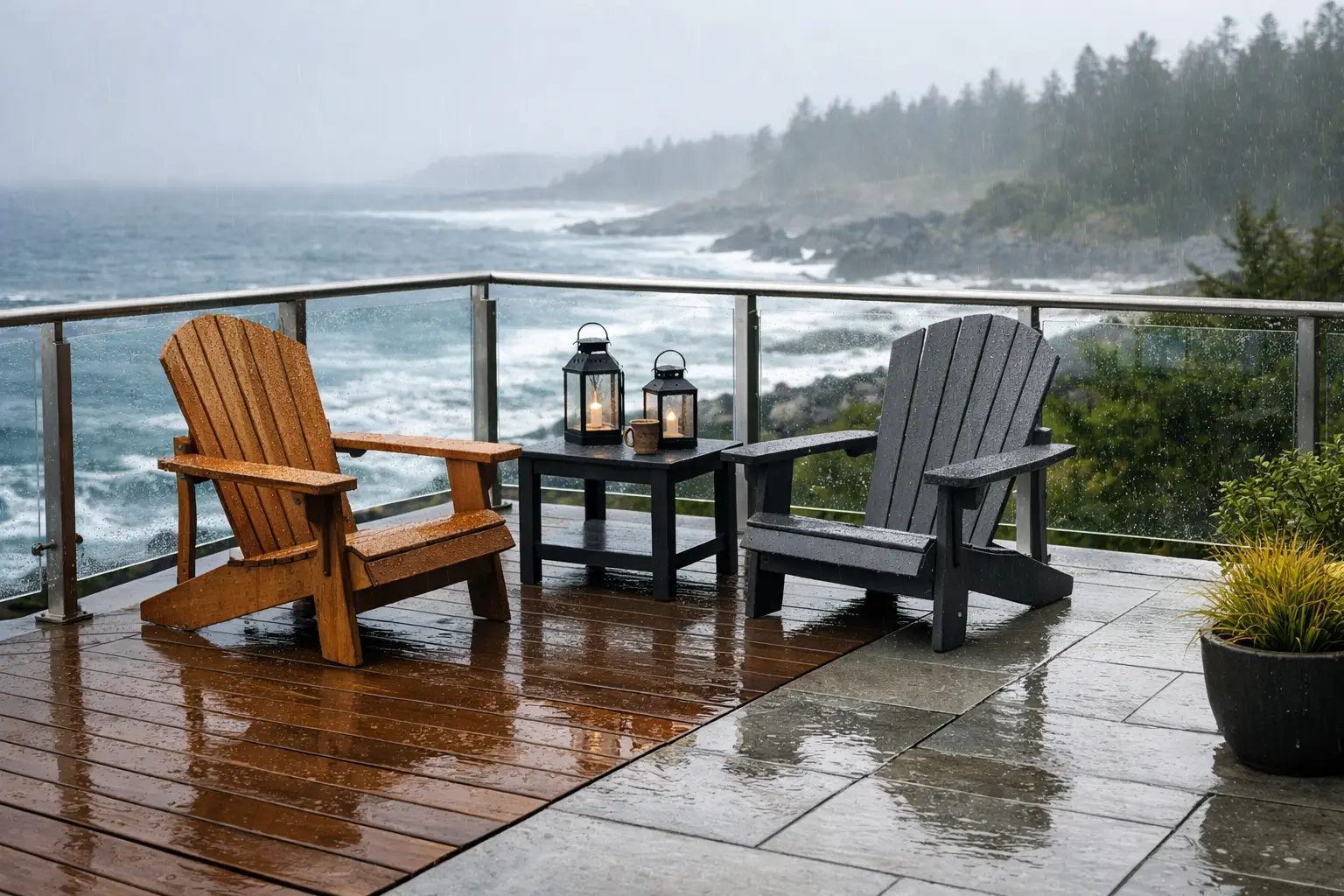
A deck can look excellent on the day it is finished and still fail early if it was not designed for regular moisture. For Vancouver Island homeowners, choosing the best deck materials for rain is about more than a surface that does not rot. It means considering standing water, airflow, fasteners, substructure protection, slip resistance, and the maintenance you are prepared to take on over the years.
A well-built deck should shed water quickly, dry evenly, and hold its appearance through long wet seasons. The right material depends on your budget, the amount of sun the deck receives, whether it is covered, and how much maintenance you want to handle. Here is how the leading options perform when rain is part of everyday life.
Best Deck Materials for Rain: What Matters Most
No decking board can compensate for poor installation. Before comparing materials, it helps to understand the details that keep a deck sound in a wet climate. Boards need correct spacing so water can escape rather than sit between them. The framing needs to be properly flashed where it meets the home, supported on suitable footings, and built with enough ventilation underneath to allow wet components to dry.
Surface texture matters as well. A very smooth board may become slippery under wet leaves, algae, or coastal grime. A board with a purposeful embossed grain or traction-friendly finish can be a better choice near entry doors, stairs, pools, and frequently used walkways.
The structure beneath the boards deserves equal attention. Even premium composite or PVC decking can be installed over framing that holds moisture and deteriorates too soon. Pressure-treated framing, corrosion-resistant connectors, proper ledger flashing, and careful drainage planning are the foundation of a deck built for local conditions.
Capped Composite: A Strong All-Around Choice
For many homeowners, capped composite is one of the best deck materials for rain. It is made from a blend of wood fibre and recycled plastic, then protected by a durable outer cap. That protective layer reduces water absorption, staining, fading, and surface mould compared with traditional wood decking.
Composite does not need annual staining or sealing, which is a major advantage for busy households. Routine cleaning with a manufacturer-approved deck cleaner and a soft brush is usually enough to remove dirt, pollen, and organic buildup. Quality composite boards also maintain a consistent appearance, making them well suited to homeowners who want a polished outdoor space without frequent refinishing.
There are trade-offs. Composite costs more upfront than pressure-treated lumber, and lower-quality products can fade, scratch, or develop mildew staining if they are not cleaned. It also expands and contracts with temperature changes, so installer spacing requirements must be followed precisely. A poorly gapped composite deck can look uneven or trap debris, even when the boards themselves are high quality.
For exposed decks that see regular rain and family use, premium capped composite often offers the best balance of durability, appearance, and manageable upkeep.
Choose a textured, capped board
Not all composite is equal in wet conditions. Look for a fully capped board with a textured finish rather than a smooth, glossy surface. The goal is not a completely non-slip deck, since no outdoor surface is immune to wet organic debris, but dependable traction under normal rainy conditions. Regular cleaning remains part of safe deck ownership.
PVC Decking: Maximum Moisture Resistance
PVC decking is made without wood content, which gives it a clear advantage where moisture resistance is the priority. Because it does not contain wood fibre, it will not absorb water in the same way as composite or natural lumber. This makes it an excellent option for highly exposed decks, waterfront properties, and areas where rainwater is slow to evaporate.
PVC boards are also lightweight and low maintenance. They resist rot, insects, and many common stains, and they are available in a range of colours and grain patterns. For homeowners who want a deck surface with the least possible concern about moisture damage, PVC is difficult to beat.
Its main drawback is cost. PVC is generally one of the more expensive decking choices, and some homeowners prefer the more substantial feel and varied appearance of quality composite or real wood. Dark PVC boards can also become hot in direct summer sun. On a shaded or rain-exposed Vancouver Island deck, however, its water resistance can justify the investment.
Pressure-Treated Wood: Practical With Ongoing Care
Pressure-treated lumber remains a dependable and budget-conscious decking material. Modern treated wood is designed to resist decay and insect damage, and it can provide many years of service when installed and maintained correctly. Its natural look also suits traditional homes, cottages, and projects where the budget needs to stay focused on structural work.
Rain is not the problem for pressure-treated wood. Repeated wetting and drying without maintenance is the problem. Over time, boards can crack, cup, splinter, and develop surface mildew. To protect the deck, homeowners should allow new lumber to dry as recommended, then apply a quality water-repellent stain or sealer. That treatment will need renewing periodically, especially on exposed horizontal surfaces.
Wood also needs closer inspection than composite or PVC. Check for loose fasteners, raised grain, soft spots, and boards that are holding water. With consistent care, a pressure-treated deck can be a sound choice. Without it, the lower initial price can be offset by earlier repairs and refinishing.
When cedar makes sense
Cedar has a warm, distinctive appearance and natural resistance to decay, but it is not maintenance-free. In a rainy climate, cedar needs regular cleaning and protective finishing to limit weathering, checking, and moisture movement. It is a good fit when natural character is the priority and the homeowner is comfortable maintaining it. It is less practical for a heavily used deck that must remain low maintenance year after year.
Aluminum Decking: A Specialized Wet-Weather Option
Aluminum decking is not the first choice for every home, but it performs exceptionally well in constant moisture. It cannot rot, warp, or absorb water, and many systems are designed to channel rain through the deck surface rather than allowing it to drip below. This can create a dry patio or storage area under an elevated deck.
The material is highly durable, fire-resistant, and well suited to properties where under-deck drainage is a priority. It can be particularly useful for second-storey decks or compact yards where every outdoor area needs to work harder.
The look and sound of aluminum are different from wood-based products, and the upfront price is usually higher. It may also not suit every architectural style. Still, for a homeowner seeking a long-lasting waterproof deck surface rather than a conventional board-and-gap design, it deserves serious consideration.
Do Not Overlook the Substructure
The deck boards are the visible finish, but the substructure often determines the lifespan of the project. Wet framing can deteriorate long before composite or PVC boards show wear. Protecting the joists with joist tape is a worthwhile detail because water tends to collect around screw penetrations and along the top edges of framing.
The ledger board, where the deck connects to the house, requires meticulous flashing. This area must direct water away from the wall assembly, not behind siding or into the home. Properly selected fasteners are equally important. Coastal moisture can accelerate corrosion, so approved hot-dipped galvanized or stainless steel hardware should be matched to the materials being used.
Drainage below the deck also needs a plan. Grade should carry water away from the house, and ground beneath the deck should not become a permanently damp, poorly ventilated space. In many cases, a layer of landscape fabric and drain rock helps control mud, weeds, and splash-back while allowing water to move through.
Choosing the Right Material for Your Home
If low maintenance and a refined finish are your priorities, capped composite is usually the most balanced choice. If maximum water resistance matters most, especially on an elevated deck, PVC or aluminum may be worth the additional investment. If you prefer real wood and are prepared to maintain it, pressure-treated lumber or cedar can still deliver a durable, attractive result.
The best decision starts with an honest assessment of how you will use the space. A covered deck outside a living room has different needs than an exposed rear deck under large trees. Stairs, railings, drainage, and the condition of the existing structure all influence the final material recommendation.
A deck built for rain is not defined by one product. It is the result of quality materials, proper water management, and careful finishing at every connection. When those details are handled properly, your outdoor space can remain safe, attractive, and ready to use through the wettest months of the year.
Leave a Reply