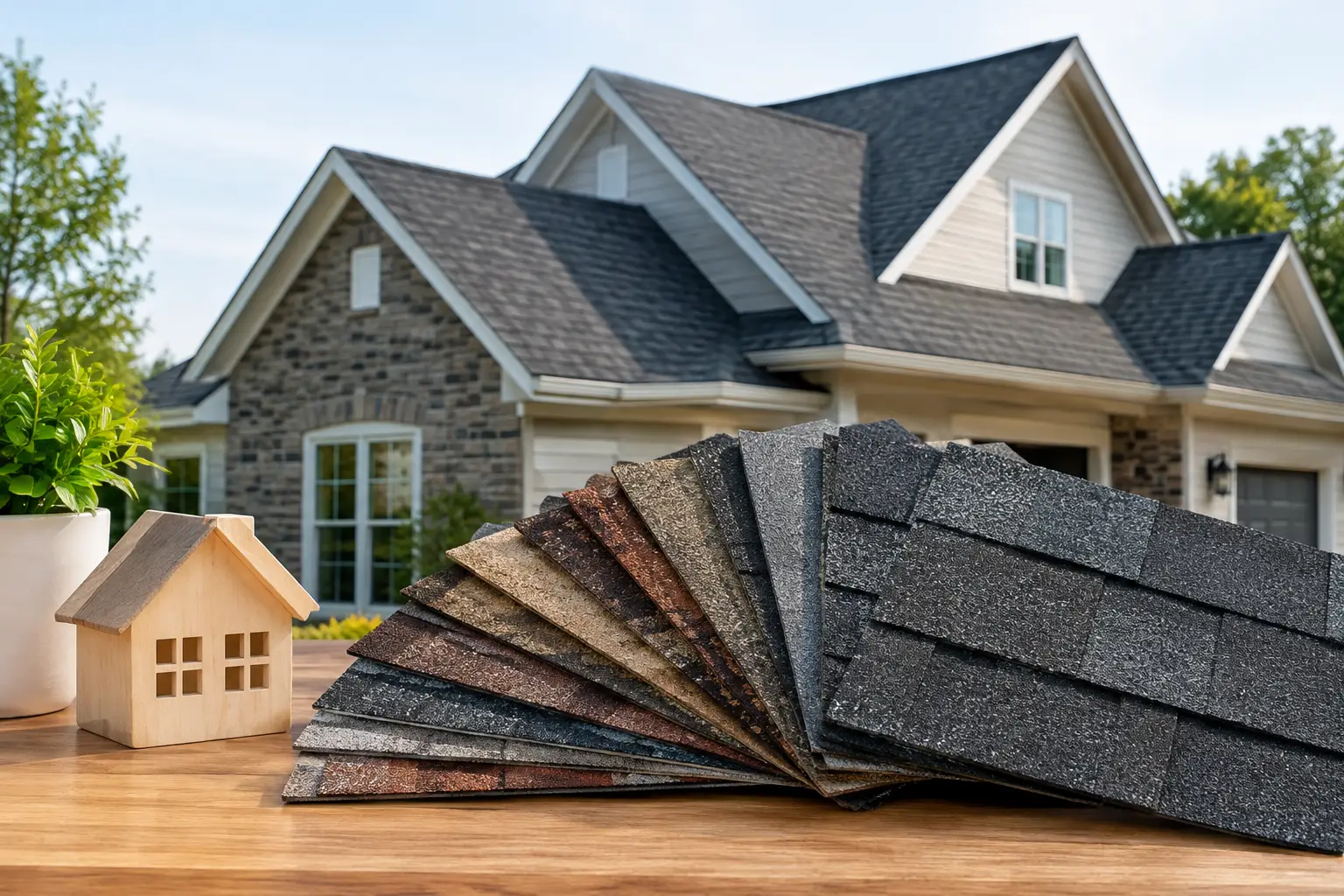
A new roof changes more than a home’s weather protection. It can make siding look cleaner, bring out architectural details, or make an otherwise well-kept exterior feel dated. When you choose asphalt shingle color, the best decision is rarely the boldest sample on the table. It is the colour that works with your home’s fixed finishes, its setting, and the practical demands of years of coastal weather.
For Vancouver Island homeowners, that decision deserves a careful look. Rain, changing daylight, mature trees, salt air in some communities, and seasonal moss growth all affect how a roof looks over time. A quality shingle and precise installation are essential, but selecting the right colour is what brings the finished exterior together.
Start With the Elements You Are Not Changing
Your roof covers a large portion of the home, but it should not compete with the materials that are expensive or difficult to replace. Start with brick, stone, siding, trim, windows, fascia, gutters, and permanent outdoor features. These elements set the colour direction for the roof.
Look beneath the obvious colour. Grey siding may have cool blue undertones or warmer beige ones. Beige stone can contain brown, rust, charcoal, or cream flecks. A roof colour that looks neutral in isolation may clash once it is beside those undertones.
For example, a blue-grey home with crisp white trim often works well with charcoal, black, or cooler weathered-grey shingles. A home with warm taupe siding, cedar details, or tan stone usually benefits from a brown-black blend, warm grey, or muted driftwood tone. Pure black can look sharp on many homes, but it may feel too stark against soft, warm finishes.
If your siding will also be replaced, choose the roof first. Asphalt shingles generally last longer than a paint colour or many siding finishes, so the roof should guide the rest of the exterior palette.
See Samples Where the Roof Will Actually Live
A small shingle sample is useful, but it can be misleading. Asphalt shingles contain granules in several shades, and those colours read differently across an entire roof plane. What appears to be a quiet grey in a showroom can look much darker, bluer, or more varied once installed.
Bring full-size samples outside and view them against the siding at different times of day. Morning light, bright overcast conditions, direct afternoon sun, and wet weather each reveal something different. This matters on Vancouver Island, where soft overcast light is common and can make cool tones appear deeper than they do in a brochure.
Stand across the street as well as near the house. From a distance, the roof is read as one broad colour field. This is especially important for homes with steep pitches, second-storey rooflines, dormers, or a prominent front gable.
Do not choose from a phone or computer screen alone. Screen settings, photography, and indoor lighting can all distort the colour. A physical sample on site is a far more reliable reference.
Choose Asphalt Shingle Color for Your Home Style
Architecture should guide the level of contrast and variation in the shingle. A roof does not need to disappear, but it should suit the proportions and character of the home.
Traditional homes, craftsman designs, and properties with wood or stone accents often suit blended shingles with warm browns, heathered greys, or subtle variegation. These colours add depth without looking overly busy. Modern homes with clean lines can carry darker, more uniform charcoal or black shingles, especially when window frames, metal details, or trim repeat the darker tone.
For low-slope roof sections that are highly visible, avoid relying on colour alone to create visual interest. The texture and profile of the shingle will be more noticeable there. On steep roofs, blended colours tend to show more variation and can add welcome dimension.
A useful rule is to aim for intentional contrast. If the siding is light, a medium or dark roof often gives the home definition. If the siding is very dark, a mid-tone roof may prevent the exterior from becoming visually heavy. Matching the roof too closely to the siding can flatten the whole façade unless that restrained look is clearly part of the design.
Think About Weather, Heat, and Day-to-Day Appearance
Darker shingles absorb more solar heat than lighter options. In a mild coastal climate, that difference is usually not the only factor to consider, but it can matter on sunny exposures, in upper-floor rooms, or in homes with limited attic ventilation. Ventilation, insulation, roof assembly, and proper installation have a much larger role in overall roof performance than colour alone.
Appearance in wet conditions is also worth considering. Dark shingles can conceal some staining and organic debris, while very light colours may show dirt more readily. Yet an almost-black roof beneath dense tree cover can make a shaded home look heavier. Mid-tone greys and brown-grey blends are often practical choices because they hide everyday variation while still keeping the roof visually balanced.
Trees, shade, and moisture require maintenance regardless of colour. Keeping gutters clear, trimming branches away from the roof where appropriate, and addressing moss before it becomes established will do more for roof longevity than selecting a particular shade. A roof should be built for Vancouver Island weather, then maintained with the same care.
Balance Personal Taste With Long-Term Value
A roof is not a small accent that can be changed on a whim. Trend-forward colours can be attractive, but a strongly red, blue, or heavily patterned roof may limit future exterior updates and narrow resale appeal. For most homeowners, a well-chosen neutral is the dependable choice.
Neutral does not mean bland. Charcoal, weathered wood, slate grey, warm brown, and mixed grey-brown shingles all create different impressions. The strongest option is usually one that supports the home rather than demanding attention from it.
Consider the surrounding streetscape, but do not feel obligated to match nearby houses. Your home should feel connected to its setting while keeping its own character. A highly contrasting roof can work on a contemporary renovation, while a more subdued choice may be better for an established neighbourhood with natural landscaping and mature trees.
If resale may be on the horizon, choose a broadly appealing colour with enough depth to look considered. Buyers respond to an exterior that feels cohesive and well maintained. They are less concerned with a particular shingle name than with the confidence that the roof complements the home and has been installed properly.
Avoid These Common Colour Mistakes
The most common mistake is choosing a colour in isolation. A shingle that looks excellent on a display board may be wrong beside your stone, siding, and trim. Another is selecting from a tiny sample under indoor lighting, then being surprised by the installed result.
Homeowners also sometimes make the roof match one minor feature, such as a front door or decorative shutter. Those elements are easy to change. Build the palette around permanent materials first, then use paint and accessories to finish the look.
Finally, do not let colour distract from roof quality. The right shingle needs the right underlayment, flashing, ventilation, fastening, and finishing details. Those components protect the home from wind-driven rain and moisture entry. Colour creates curb appeal; craftsmanship protects the investment behind it.
Get a Second Set of Experienced Eyes
When two colours both seem right, ask your roofing contractor to review them with the full exterior in view. An experienced local team can point out undertones, roof pitch effects, drainage details, and practical concerns that may not be obvious from a sample board. At DryTek, the goal is not to push a default colour. It is to help homeowners make a durable, well-finished choice that suits their property.
Before making the final selection, place your preferred samples beside the siding, step back to the street, and look again on an overcast day. The colour that still feels balanced in real conditions is usually the one you will be pleased to come home to for years.
Leave a Reply