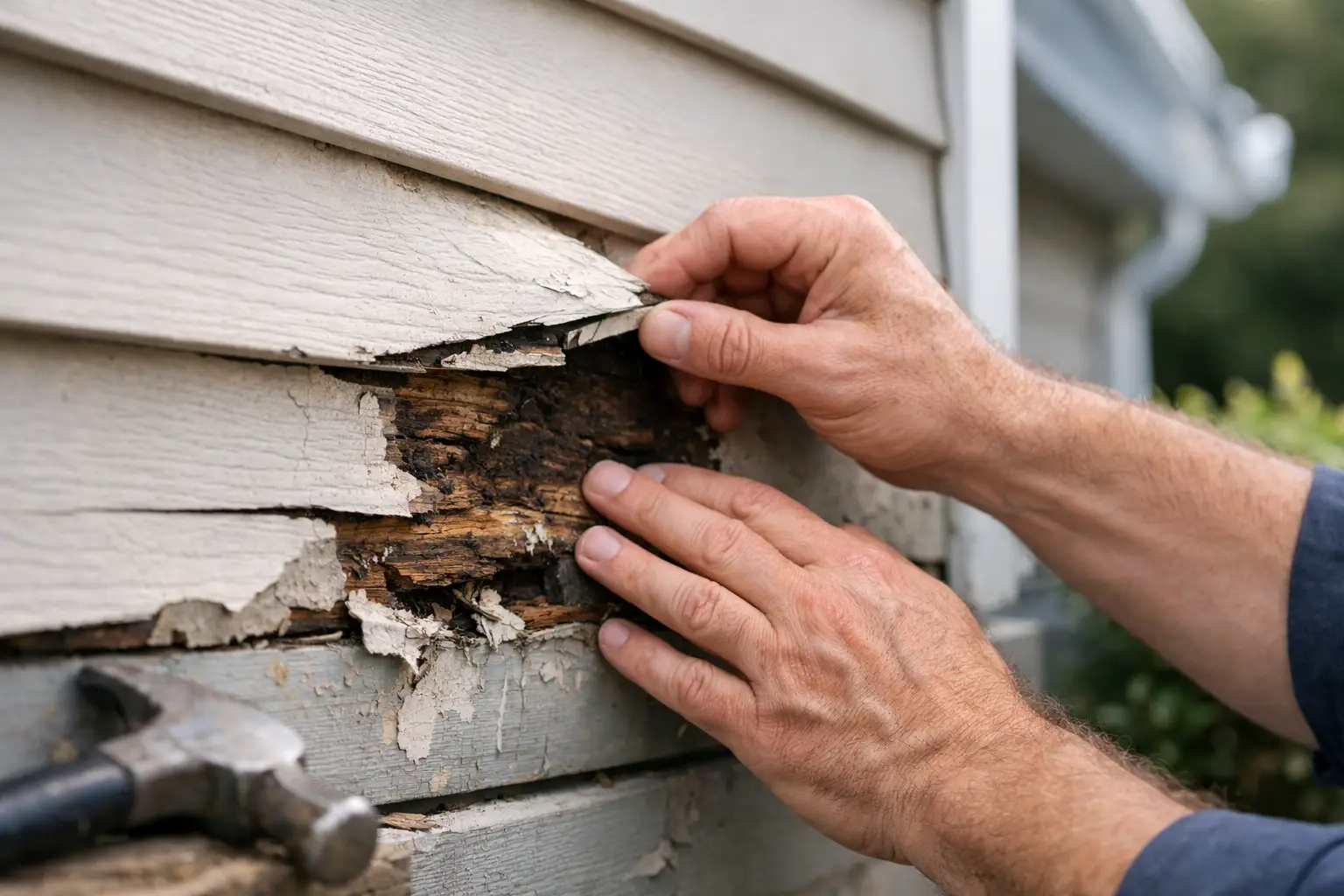
A loose siding panel may look like a minor cosmetic issue, but on a Vancouver Island home, it can become an entry point for wind-driven rain. Effective siding repair is about more than restoring a clean exterior. It protects the wall assembly behind the cladding, helps prevent moisture damage, and keeps a small problem from becoming a far more involved project.
Whether your home has vinyl, wood, fibre cement, or engineered wood siding, the right response depends on the material, the extent of the damage, and what is happening beneath the surface. Some issues can be repaired cleanly. Others are a warning that the siding, flashing, or underlying structure needs closer attention.
What Siding Damage Is Telling You
Siding is a protective layer, not just a finish. It sheds rain, reduces the effect of wind, and helps shield the framing and sheathing from prolonged exposure. When it cracks, separates, warps, or deteriorates, water may reach places it was never meant to go.
Coastal weather adds pressure to every exterior. Repeated rain, high humidity, salt air in exposed areas, and temperature changes can all wear on siding joints, caulking, paint, and fasteners. A repair that addresses only the visible damage without correcting the cause may look finished for a season, then fail again.
The most common causes are straightforward: impact from a branch or lawn equipment, failed caulking around openings, improper flashing, aging materials, installation gaps, and moisture trapped behind the siding. Woodpecker holes and pest activity can also create small openings that deserve prompt attention.
Signs You Need Siding Repair
Not every mark on a wall calls for immediate work. A light surface scuff may be cosmetic, while a crack at a joint can allow water behind the cladding. The key is to look for changes that affect how the siding sheds water or stays secured to the wall.
Watch for these warning signs around the full exterior, especially near windows, doors, roof-to-wall intersections, decks, and areas protected by overhangs:
- Cracked, split, loose, or missing boards and panels
- Bubbling, peeling, or blistering paint on wood siding
- Soft spots, dark staining, or visible rot
- Gaps at trim, corners, windows, and utility penetrations
- Warped vinyl panels or fibre cement boards pulling away from the wall
- Repeated moisture marks indoors near exterior walls
A closer look after a heavy rain can be useful. Check for dripping at trim, streaks below joints, or areas that remain damp longer than surrounding sections. Do not probe aggressively at a suspected soft spot, as this can enlarge the damage. A professional assessment can determine whether the issue is isolated to the siding or has reached the sheathing and framing.
When a Local Siding Repair Is Enough
Targeted repair is often the practical choice when damage is limited and the rest of the exterior is performing well. Replacing a few cracked fibre cement boards, reinstalling loose vinyl panels, repairing a small section of rot, or renewing failed sealant around properly flashed trim can extend the life of the siding without the cost of a full replacement.
For this approach to work, the surrounding siding needs to be in sound condition. The repair should also match the existing drainage details. That means using compatible materials, maintaining proper clearances from roofs and grade, and integrating flashing or weather-resistive barriers where needed. A new board installed over a moisture problem is not a lasting repair.
Colour matching is another consideration. New siding can appear noticeably different beside older, weathered material, particularly on sun-exposed elevations. Sometimes a careful repair and repaint creates a clean result. In other cases, homeowners choose to repair the damaged area now and plan for a broader exterior update later.
When Repair Becomes a Replacement Conversation
There is a point where repeated patching costs more than it saves. If damage is widespread, boards are failing in several areas, or moisture has affected large portions of the wall, replacement may offer better value and more reliable protection.
Replacement is also worth discussing when siding has reached the end of its expected service life, when major renovation work exposes the walls, or when the existing installation has persistent design problems. For example, inadequate flashing at window openings or siding installed too close to roofing can create recurring water-entry issues. Correcting those details across the exterior may be the sounder long-term decision.
This does not mean every older exterior needs to be stripped immediately. A thorough inspection should distinguish between normal aging and active failure. The goal is to make an informed investment based on the condition of the home, not simply replace material because it is no longer brand new.
The Details That Make Siding Repair Last
Good workmanship is most visible in the finishing details, but its real value is in the protection those details provide. Proper siding repair begins with identifying the water path. A contractor should look at the damaged area, then inspect the trim, flashing, roof edge, gutters, penetrations, and surrounding materials that may be contributing to the problem.
If siding is removed, the wall behind it should be checked for dampness, stained sheathing, deteriorated insulation, or framing damage. Any compromised material needs to be addressed before the new siding is installed. Depending on the repair, this may include replacing sheathing, restoring the weather-resistive barrier, and installing flashing that directs water back to the exterior.
Material-specific practices matter as well. Vinyl needs room to expand and contract, so fastening it too tightly can lead to buckling. Fibre cement needs correct clearances, appropriate fasteners, and sealed cut edges. Wood siding needs reliable paint or stain coverage and careful maintenance at joints and end grain. The right material can perform very well, but only when it is installed according to its requirements.
Protecting Your Exterior Between Repairs
Homeowners cannot prevent every impact or weather event, but routine attention can reduce the chance of hidden damage. Keep gutters flowing and downspouts directing water away from the house. Trim branches that rub against walls or rooflines, and avoid spraying siding with a high-pressure washer, which can force water behind panels or damage finishes.
Walk around the home each spring and fall. Look closely at caulking around windows and doors, lower courses of siding near decks or soil, and any wall that receives the strongest wind and rain. If you notice a new gap, stain, or loose panel, addressing it early is usually simpler than waiting for visible rot or interior symptoms.
For Vancouver Island homes, moisture management should always lead the decision. An exterior can look tidy while rain is finding its way behind failed trim or damaged cladding. DryTek approaches siding work with that in mind: repair the visible issue, confirm the wall is protected, and finish the details so the home looks as solid as it performs.
If you are unsure whether damage calls for a repair or a larger update, start with a careful inspection rather than a quick patch. A well-timed repair can preserve the character of your home and protect the structure behind it for years to come.
Leave a Reply