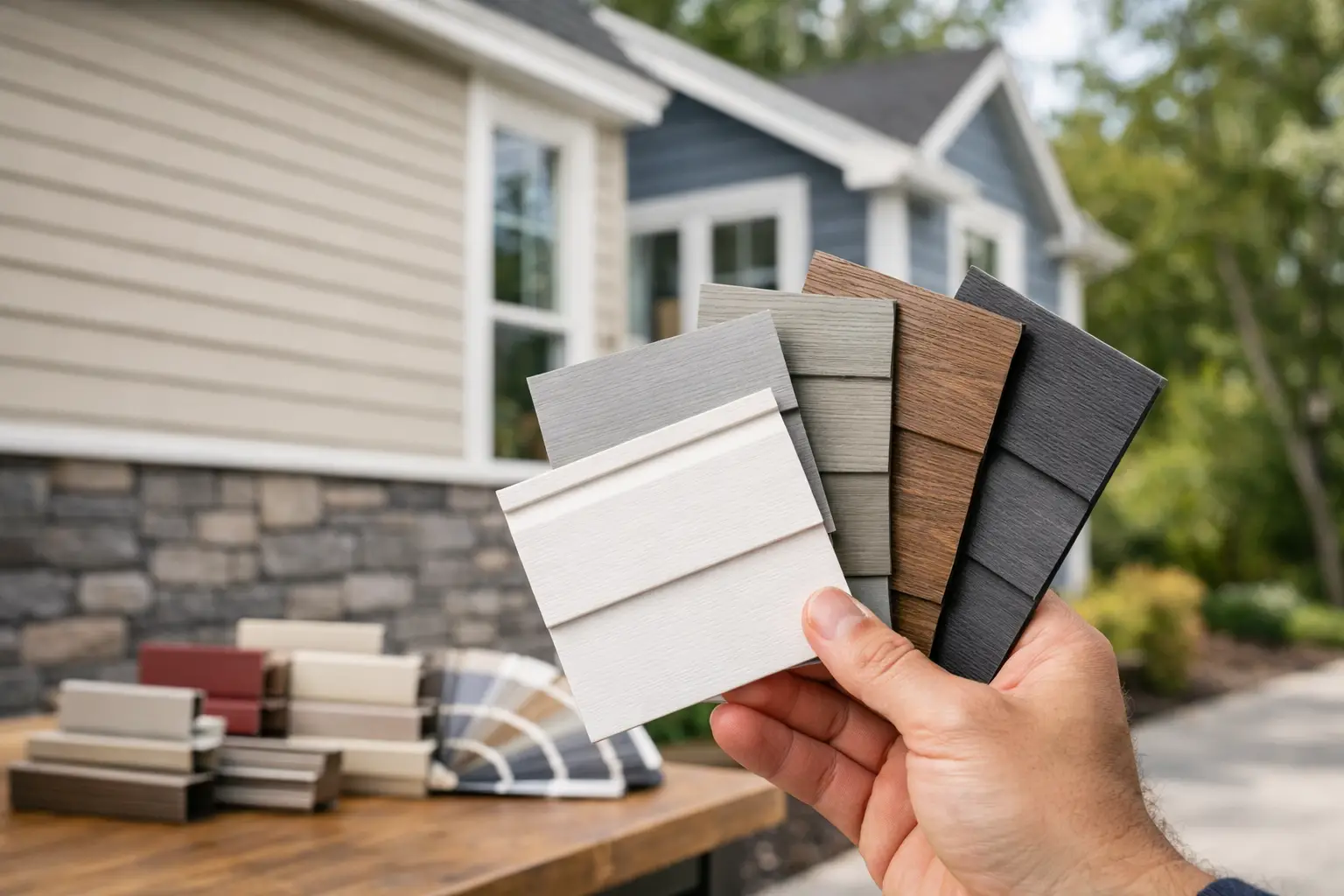
A siding profile does more than set the look of your home. It affects how water sheds, where shadows fall, how seams are finished, and whether an exterior renovation feels suited to the building. Knowing how to choose siding profile means looking beyond a sample board and considering your home’s architecture, exposure, material, and the details that make the finished work perform properly.
For homeowners on Vancouver Island, that decision also needs to account for persistent rain, damp conditions, wind-driven moisture, and salt exposure near the coast. The right profile should complement your home while supporting a well-built wall assembly behind it.
Start With Your Home’s Architectural Lines
The most successful siding choice usually follows the proportions and era of the house rather than competing with them. A low, wide rancher often benefits from long horizontal lines. A taller two-storey home may suit vertical siding that draws the eye upward. Traditional homes can carry narrower laps or shingle-style accents, while a modern design often looks strongest with broad, clean panels and restrained trim.
Look at the roof pitch, window layout, entryway, and any existing stone, brick, or timber features. These elements establish a visual rhythm. Siding should reinforce that rhythm, not make the exterior feel busy or disconnected.
Horizontal lap siding remains a dependable choice because it works with many home styles and creates familiar, balanced shadow lines. The width of each course changes the result. Narrower laps tend to feel more traditional and detailed, while wider laps give the home a calmer, more contemporary appearance.
Vertical board-and-batten siding has a different effect. It can make a home appear taller and is often used on modern farmhouse, West Coast contemporary, and cabin-inspired designs. It is particularly effective on gable ends, bump-outs, or an entry feature, where it adds contrast without covering the entire house in competing patterns.
How to Choose Siding Profile by Exposure
A profile that looks excellent on a sheltered elevation may need more careful planning on the side of the home that receives the most weather. On the coast, siding is part of a larger moisture-management system. Its profile matters, but so do the flashing, drainage plane, rainscreen gap, trim details, fasteners, and ventilation behind it.
Horizontal profiles naturally direct water downward, which is one reason they remain common in wet climates. Vertical siding can also perform very well, but it requires precise detailing at horizontal transitions, window heads, base conditions, and any trim intersections. Water must have a clear path out of the wall assembly rather than a place to collect.
This is not a reason to avoid vertical siding. It is a reason to insist on correct installation. A durable exterior is built through the details that are often hidden once the project is complete.
Consider the amount of overhang your home has as well. Deep eaves offer meaningful protection to upper walls, while minimal overhangs leave siding more exposed to rain and ultraviolet light. Homes near open water, on elevated lots, or in heavily treed areas may face different combinations of wind, moisture, shade, and debris. The best siding profile is one that suits those conditions rather than simply following a design trend.
Match the Profile to the Siding Material
Not every profile is available in every material, and not every material performs the same way over time. Choosing the profile and material together helps avoid compromises later in the project.
Fibre cement is available in lap, panel, shingle, and vertical applications. It offers a crisp, substantial appearance and holds up well against moisture, rot, and insects when installed according to manufacturer requirements. It is heavier than some alternatives and needs careful cutting, fastening, clearances, and finishing, so workmanship is especially important.
Engineered wood products can provide the warmth and texture homeowners want with improved consistency over traditional wood. They are often available in lap and panel profiles, including board-and-batten layouts. Their long-term performance depends on proper edge treatment, paint or coating maintenance, and strict attention to clearance and flashing details.
Vinyl siding is lighter, economical, and available in a range of traditional profiles. It can be a practical option for certain budgets and homes, but its appearance, movement with temperature changes, and detailing should be assessed carefully. Wider panels can help reduce the number of seams, while darker colours may require products specifically designed to handle heat gain.
Natural wood creates a distinctive finish that is difficult to duplicate, especially on heritage or custom homes. It also asks more of the homeowner over its lifespan. Regular coating maintenance and early attention to moisture exposure are necessary to preserve both the appearance and the substrate.
The material should support the look you want, but it should also fit the maintenance level you are prepared to take on. A profile is only a good choice if it remains practical several years after installation.
Use Contrast With Restraint
Combining profiles can add depth to a home, but too many changes can make an exterior look fragmented. In most cases, one primary profile and one secondary accent profile are enough.
For example, horizontal lap siding across the main walls with vertical board-and-batten in the gables creates a clear, intentional contrast. Smooth panels around an entry can give a more modern home a strong focal point. Shingle-style siding may work well in a small upper section or dormer without overwhelming the entire façade.
Pay attention to where profile changes occur. A change should follow a natural architectural break, such as a storey line, gable, porch roof, or projecting section of wall. Stopping one profile in the middle of an uninterrupted wall usually looks arbitrary and creates extra trim details that must be managed correctly.
Colour can do some of the design work too. If you are using two profiles, keeping them in a coordinated colour palette often produces a cleaner result. Strong profile contrast plus strong colour contrast can be effective on the right home, but it requires confidence in the overall design and careful sample review.
Consider Scale From the Street
A siding sample can be misleading because a small piece does not show how the profile will read across a full elevation. Before making a final selection, stand across the street and consider the scale of the house.
Wide lap siding on a small cottage may feel oversized. Very narrow laps on a large home can create too many lines and make the exterior appear visually crowded. Panel siding with minimal joints can make a large wall feel calm and modern, but it may look stark on a traditional home unless trim, texture, or other architectural elements add balance.
Windows are especially useful reference points. Their height and spacing help determine whether a siding reveal will look proportionate. Trim width matters for the same reason. A bold profile with undersized trim can feel unfinished, while oversized trim on a modest home may dominate the façade.
If possible, view larger installed examples of the profile in similar light conditions. Coastal light can be soft and grey for long periods, which changes how colours, textures, and shadow lines appear. What looks subtle in a showroom may look much stronger outdoors.
Do Not Treat Trim as an Afterthought
Siding profile and trim are a single visual and functional system. Corners, window surrounds, door trim, soffits, fascia, transitions, and penetrations all affect whether the exterior looks polished and keeps water moving where it should.
A clean modern panel profile may call for simple, narrow trim and deliberate reveals. Traditional lap siding often works well with more pronounced corner boards and window casings. Board-and-batten layouts need careful batten spacing and accurate alignment so the pattern does not drift around windows, doors, and corners.
This is where quality craftsmanship is most visible. Straight courses, consistent gaps, clean cuts, well-planned joints, and properly integrated flashing separate an exterior that merely looks new from one built to stay dependable through coastal weather.
Make the Final Choice on Performance and Confidence
Before approving a siding profile, ask how it will handle your home’s exposure, how it fits the chosen material, what maintenance it requires, and how it connects to the trim and drainage details. Also ask to see the full design in context, not just as a small swatch.
The right answer is not always the trendiest profile or the one with the lowest initial cost. It is the option that suits your home, respects Vancouver Island weather, and can be installed with the care required for lasting protection. A thoughtful siding plan gives your home a finished appearance now and fewer reasons for concern when the next long stretch of rain arrives.
Leave a Reply