When a roof leaks, most homeowners blame the shingles first. Fair enough – they take the weather head-on. But the layer underneath often decides how much water actually reaches the roof deck. That is why a proper roof underlayment comparison matters, especially in wet coastal conditions where wind-driven rain, persistent moisture, and long damp seasons put every layer of the roof assembly to work.
Underlayment is the secondary water-shedding layer installed between the roof deck and the outer roofing material. You usually will not see it once the roof is complete, but it plays a major role in protecting the home during storms, during installation, and in the years between minor wear and major repairs. If you are replacing a roof, comparing underlayment options is not a technical side issue. It is part of choosing how well your roof is built.
Roof underlayment comparison: the three main options
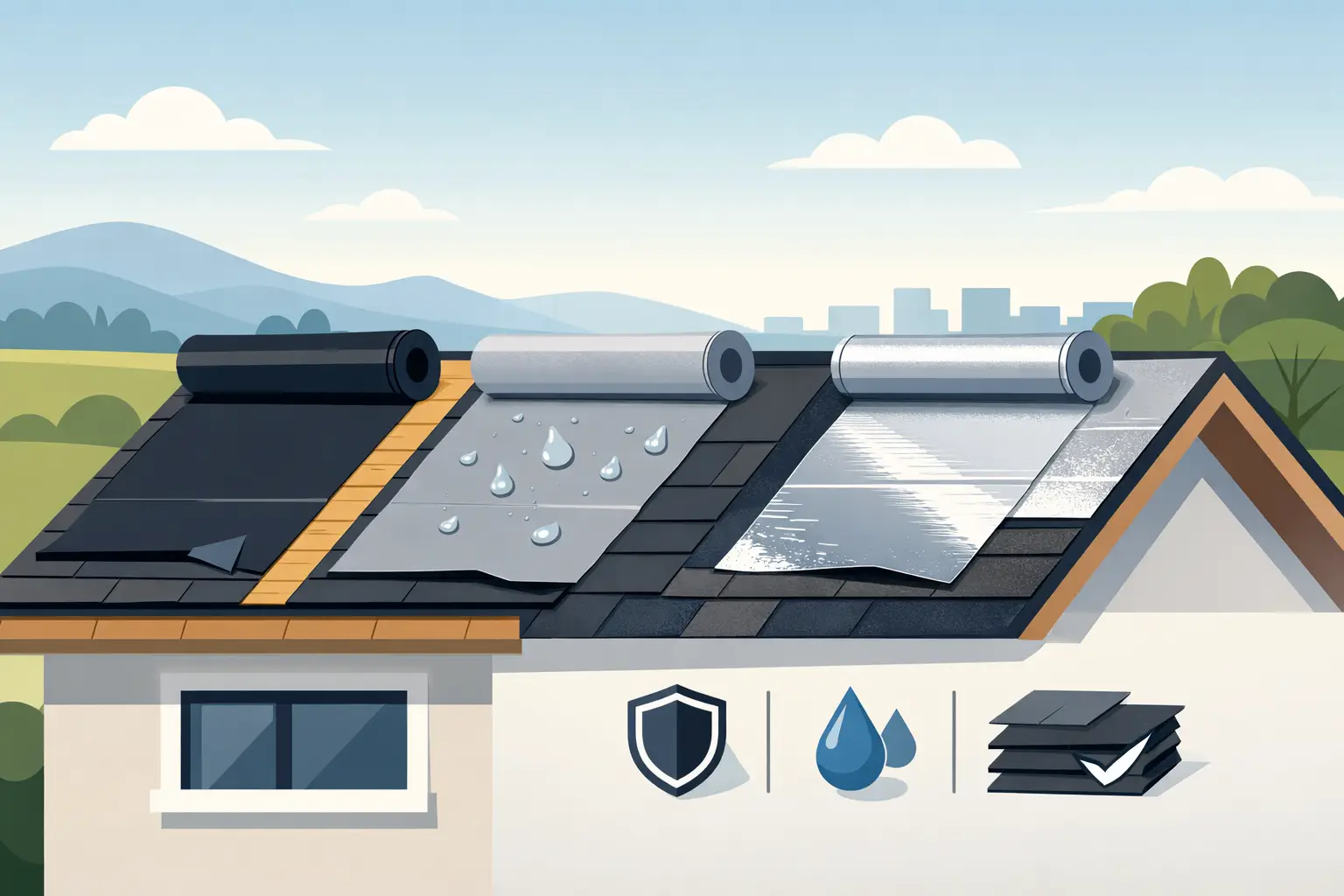
Most residential projects come down to three categories: asphalt-saturated felt, synthetic underlayment, and self-adhered membrane, often called peel-and-stick. Each has a place, and each comes with trade-offs.
Felt has been used for decades and remains familiar to many roofers and homeowners. It is typically available in lighter and heavier grades, with the heavier option providing better durability. Felt can perform adequately in many applications, but it absorbs moisture more readily than newer materials and tends to wrinkle when exposed to wet conditions. On a simple roof in a milder setting, that may be manageable. In a damp climate, it can become a weak point during installation or if the finished roofing takes any damage later on.
Synthetic underlayment has become a common upgrade because it is lighter, tougher, and more resistant to tearing than felt. It usually handles foot traffic better during installation and stays more dimensionally stable when exposed to moisture. That matters on active job sites and on roofs with steeper slopes or more complicated layouts. For many homeowners, synthetic underlayment offers the best balance of cost, durability, and day-to-day performance.
Self-adhered membrane is different from the other two because it bonds directly to the deck. It creates a more watertight seal and can help around vulnerable areas such as valleys, eaves, penetrations, and low-slope transitions. In some assemblies, it is used across the full roof deck. It offers the highest level of protection, but it also costs more and requires careful installation. It is not automatically the right choice for every house, every roof design, or every budget.
How felt, synthetic, and peel-and-stick actually perform
A roof underlayment comparison is more useful when it goes beyond labels and looks at job-site realities.
Water resistance
Felt sheds water, but it is not the strongest performer when exposure times increase or when repeated moisture becomes part of the equation. If it gets wet before the roof covering is fully installed, it can deteriorate faster than synthetic products.
Synthetic underlayment generally offers better moisture resistance and more reliable short-term weather protection during installation. That can be valuable when weather windows are tight.
Self-adhered membrane provides the strongest barrier of the three. Because it seals to the deck and often seals around fasteners, it helps limit water intrusion in areas that are more leak-prone.
Tear strength and walkability
Felt is more vulnerable to tearing, especially in windy conditions or on a busy install. It can also become slippery or fragile depending on weather and age.
Synthetic products are usually stronger under foot and less likely to rip during installation. For roofs with more movement, staging, or detail work, that added toughness can make a real difference in the quality of the finished job.
Self-adhered membranes can be highly durable once installed, but application demands precision. Repositioning is limited, and mistakes are harder to correct cleanly.
Heat, UV, and exposure tolerance
If roofing cannot be installed immediately, exposure ratings matter. Many synthetic underlayments tolerate longer exposure periods than felt. That gives contractors more flexibility when weather shifts or when a larger project takes time.
Self-adhered products vary by manufacturer, so exposure tolerance depends on the specific material. This is one area where product selection should never be generic.
Cost
Felt is usually the budget option. Synthetic costs more upfront but often delivers better performance and reliability. Self-adhered membrane is the premium choice and is commonly used strategically rather than everywhere, unless the roof design or climate risk justifies full coverage.
What works best in a wet coastal climate
For homeowners on Vancouver Island or elsewhere in coastal BC, moisture is not an occasional issue. It is a design condition. Long rainy periods, salt air, damp mornings, and storm-driven weather all increase the value of a stronger roof assembly.
That is why the cheapest underlayment is not always the most economical choice. If a material is more likely to absorb moisture, wrinkle, tear, or underperform during prolonged wet conditions, the savings at installation can disappear quickly.
In many cases, synthetic underlayment makes sense as the standard field underlayment for sloped residential roofs in this region. It offers dependable protection without pushing every project into the highest-cost category. Then, in the most vulnerable areas – eaves, valleys, around skylights, chimneys, and roof penetrations – self-adhered membrane can be added where the roof needs more protection.
That approach gives homeowners a better-built system rather than a one-material answer applied everywhere.
The roof design matters as much as the product
Not every roof needs the same underlayment plan. A simple gable roof with good slope and clean drainage behaves differently than a roof with multiple valleys, dormers, transitions, and penetrations.
Low-slope sections tend to need more attention because water drains more slowly and has more opportunity to work its way into vulnerable points. Roofs under heavy tree cover may also stay damp longer, which increases wear over time. If ice damming is a concern in certain seasons or elevations, self-adhered protection at eaves becomes even more important.
The roofing material above the underlayment matters too. Asphalt shingles, metal roofing, and cedar each interact differently with the layers beneath them. Ventilation, deck condition, and fastening methods all affect the final result. A good recommendation should reflect the whole assembly, not just the underlayment roll being quoted.
When a premium underlayment is worth it
Sometimes the right answer is straightforward. If your roof has a history of leak trouble around details, if the design is complex, or if the home is exposed to harsher weather, paying more for better underlayment protection is usually justified.
It is also worth upgrading when the roof deck is being replaced or extensively repaired. Once the roof is open, it makes sense to build the assembly properly rather than save a modest amount on a hidden layer that carries real risk.
Homeowners planning to stay in the house long term often benefit from choosing a higher-performing underlayment. You may never see it, but you will benefit from what it prevents.
Questions worth asking during a roof underlayment comparison
If you are reviewing quotes, do not stop at the shingle brand and colour. Ask what type of underlayment is included, where self-adhered membrane will be installed, and why that approach suits your roof.
You should also ask whether the material is appropriate for your roof slope, exposure, and local weather. If two quotes differ significantly in price, underlayment is often one of the reasons. A lower number may reflect a thinner or less resilient assembly.
A contractor should be able to explain the trade-offs clearly. Not with sales language, but with practical reasoning tied to your roof design and the conditions your home actually faces.
Choosing the right balance
The best underlayment is not always the most expensive one. It is the one that matches the roof design, the climate, and the level of protection the home needs.
For many homeowners, felt is harder to justify unless budget is the overriding factor and the roof conditions are relatively forgiving. Synthetic underlayment often lands in the sweet spot for residential reroofing because it improves durability and moisture resistance without overcomplicating the job. Self-adhered membrane remains the strongest option for vulnerable areas and, on some roofs, for broader coverage where risk is higher.
At DryTek, we see the difference that proper material selection makes over time. A roof should not just look finished on day one. It should be built to handle the weather it is actually going to face.
If you are comparing roofing estimates, pay attention to the layers you will never see again once the job is complete. That is often where the real quality of a roof starts.
Leave a Reply