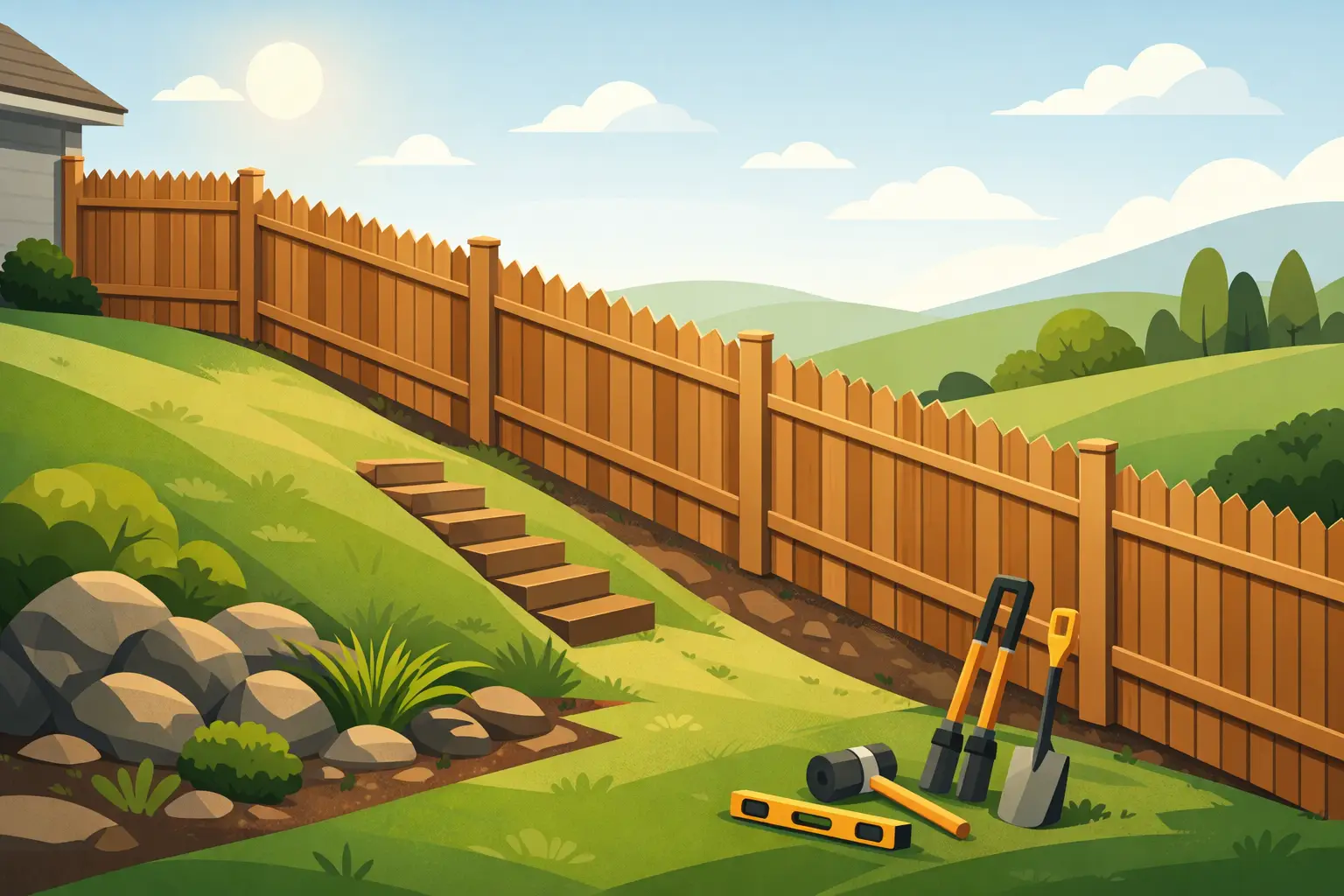
A sloped yard can make a fence project look simple from the street and frustrating the moment layout starts. Fence installation for sloped yard conditions takes more than setting posts in a straight line and hoping the panels follow. If the grade is not handled properly, the result can look uneven, leave gaps at the bottom, and put extra stress on the structure over time.
The good news is that a slope does not mean you have to settle for a poor finish. With the right planning, the right installation method, and attention to site conditions, a fence can look clean, perform properly, and suit the shape of the property.
Why slope changes the job
On level ground, fence layout is fairly predictable. Post heights stay consistent, panels align more easily, and bottom clearance is easier to control. Once the yard slopes, every decision becomes more important. The fence has to respond to grade changes without looking awkward or becoming structurally weak.
That affects appearance, privacy, drainage, and long-term durability. A fence that climbs too sharply can look jagged. One that tries to force perfectly level panels across steep ground may leave large triangular gaps underneath. In a wet coastal climate, those details matter even more because trapped moisture, unstable footings, and wood sitting too close to soil can shorten the life of the build.
The two main methods for fence installation for sloped yard projects
Most sloped-yard fences are built using one of two approaches: stepped fencing or racked fencing. Neither is automatically better. The right choice depends on the steepness of the grade, the fence style, and the finish you want.
Stepped fencing
A stepped fence keeps each panel level, then drops the next panel down at the next post. This creates a stair-step appearance along the top and bottom of the fence.
This method works well for many wood privacy fences, especially when the slope is moderate to steep. It keeps panel construction straightforward and can be easier to frame cleanly. It also allows for a strong, consistent build when using pre-built sections or standard rail spacing.
The trade-off is visual. On some properties, the stepped look is sharp and intentional. On others, it can feel more segmented than homeowners expect. Bottom gaps can also become more noticeable if the slope changes quickly between posts.
Racked fencing
A racked fence follows the angle of the ground more closely. Instead of staying level, the panel or rails are adjusted so the fence runs with the slope.
This usually creates a smoother look, especially from a distance. It can reduce gaps at the bottom and give the fence a more custom appearance. For certain metal and custom wood systems, it is an excellent option.
The limitation is that not every fence style can rack well. Some panel designs have little flexibility. If the slope is too steep, forcing a rack can twist components, create inconsistent spacing, or weaken the overall structure. This is where experience matters. What looks cleaner on paper is not always the best long-term choice on site.
Choosing the right style for your yard
The slope itself is only part of the decision. Fence design matters just as much.
For full privacy wood fencing, stepped installation is often the more practical route, particularly on steeper grades. It keeps framing square and makes it easier to maintain solid attachment points. A custom-built wood fence can sometimes be adjusted to follow grade more closely, but that depends on the board layout and how much variation exists across the run.
For ornamental metal fencing, racking is often preferred because the open design hides grade changes more naturally. On the other hand, if your priority is containing pets in a yard with uneven terrain, the focus may shift from top-line appearance to bottom clearance. In that case, a custom solution matters more than choosing a standard style off a brochure.
Layout is where good results start
The biggest mistakes in fence installation for sloped yard projects usually happen before the first post goes in. Rushing layout can lock in problems that are difficult to fix later.
A proper layout should account for grade changes across the entire run, not just between two points. Many yards have rolling or inconsistent slopes rather than one clean angle. That means post spacing, panel transitions, and finished height all need to be checked in relation to the whole line.
Corners, gates, and retaining features also complicate the plan. A gate installed in the wrong spot on a slope can swing poorly, drag, or need awkward hardware adjustments. If there is a retaining wall, drainage swale, or soft area in the yard, that needs to be considered early so the fence is not fighting the site.
Post depth and footing quality matter more on a slope
On sloped ground, posts do more than hold panels upright. They resist uneven forces caused by grade, wind, and shifting moisture conditions. That is why footing depth, diameter, and soil stability should never be treated as minor details.
A fence can look straight on day one and still fail early if the post installation is not suited to the site. Loose or saturated soil, common in coastal conditions, can reduce long-term stability. On some properties, deeper footings or site-specific adjustments are needed to get a lasting result.
This is also one reason bargain fence quotes can be misleading. A lower price may reflect a faster install, not a better one. If the slope requires extra layout time, custom cuts, or reinforced post work, that labour is part of building it properly.
Material choice affects performance and appearance
Wood remains a popular choice for sloped yards because it offers flexibility in custom installation and a strong privacy finish. It can be adapted on site, detailed neatly, and built to suit the property rather than forcing the property to suit the fence.
That said, wood needs thoughtful clearance from soil and proper finishing if you want it to hold up well in wet conditions. On Vancouver Island, where moisture exposure is a constant consideration, details like post protection, drainage around footings, and material quality are not extras. They are part of the job.
Metal fencing can be a strong option where visibility, lower visual weight, or easier grade-following is preferred. Composite may work in some applications, but it often has more installation limitations on slopes depending on the system. The cleanest-looking material is not always the one that performs best on a difficult grade.
What homeowners often overlook
Many homeowners focus on the fence line and forget the surrounding conditions that influence how the project turns out.
Drainage is a big one. Water should move away from posts and not collect along the fence base. Landscaping is another. If garden beds, mulch, or future edging will sit tight against the fence, the build should allow for airflow and maintenance access.
Neighbouring grades can matter too. If one side of the property sits higher than the other, privacy and finished height may feel different depending on where you stand. Local requirements also need to be checked before construction begins, especially where height limits, property lines, or shared boundaries are involved.
When custom work is worth it
A sloped yard is rarely the place for a one-size-fits-all approach. Standard panels can work in some cases, but custom fabrication often delivers a better result when the grade changes significantly or the property has multiple transitions.
Custom work allows for cleaner top lines, better bottom alignment, stronger framing decisions, and a finish that looks intentional rather than improvised. For homeowners investing in curb appeal and long-term durability, that difference is usually visible right away.
At DryTek, that kind of detail matters. A fence should not only stand up well. It should look like it belongs to the home and the site.
How to tell if a fence plan is realistic
If you are reviewing a proposal for a sloped-yard fence, ask how the installer plans to handle grade changes, post depth, gate placement, and bottom gaps. Those answers should be specific. A good plan will explain the method, the expected look, and where the compromises are.
That last part matters. Every sloped yard involves trade-offs. You may prioritise privacy over a perfectly smooth top line, or visual consistency over tight ground clearance in every section. A dependable contractor will walk you through those choices clearly instead of promising that every challenge disappears once the build starts.
The best fence for a sloped yard is not the one with the fanciest style or the cheapest number. It is the one that respects the grade, suits the property, and is built with enough care to keep performing through years of weather. If the layout is thoughtful and the workmanship is precise, a difficult yard can end up with one of the best-looking fences on the block.

Leave a Reply