A deck can look excellent on installation day and become a source of regret a few wet seasons later. That is why a useful composite decking review has to look beyond colour samples and low-maintenance claims. For Vancouver Island homeowners, the real question is whether the boards will stay safe, stable, and attractive through rain, shade, salt air, temperature swings, and everyday use.
Composite decking is not one single product. Board quality, cap construction, frame preparation, fastening methods, drainage, and installation detail all affect the finished result. The right material can offer years of dependable outdoor living. The wrong product, or a rushed installation, can leave you with staining, movement, slippery surfaces, and an expensive repair.
Composite Decking Review: What It Does Well
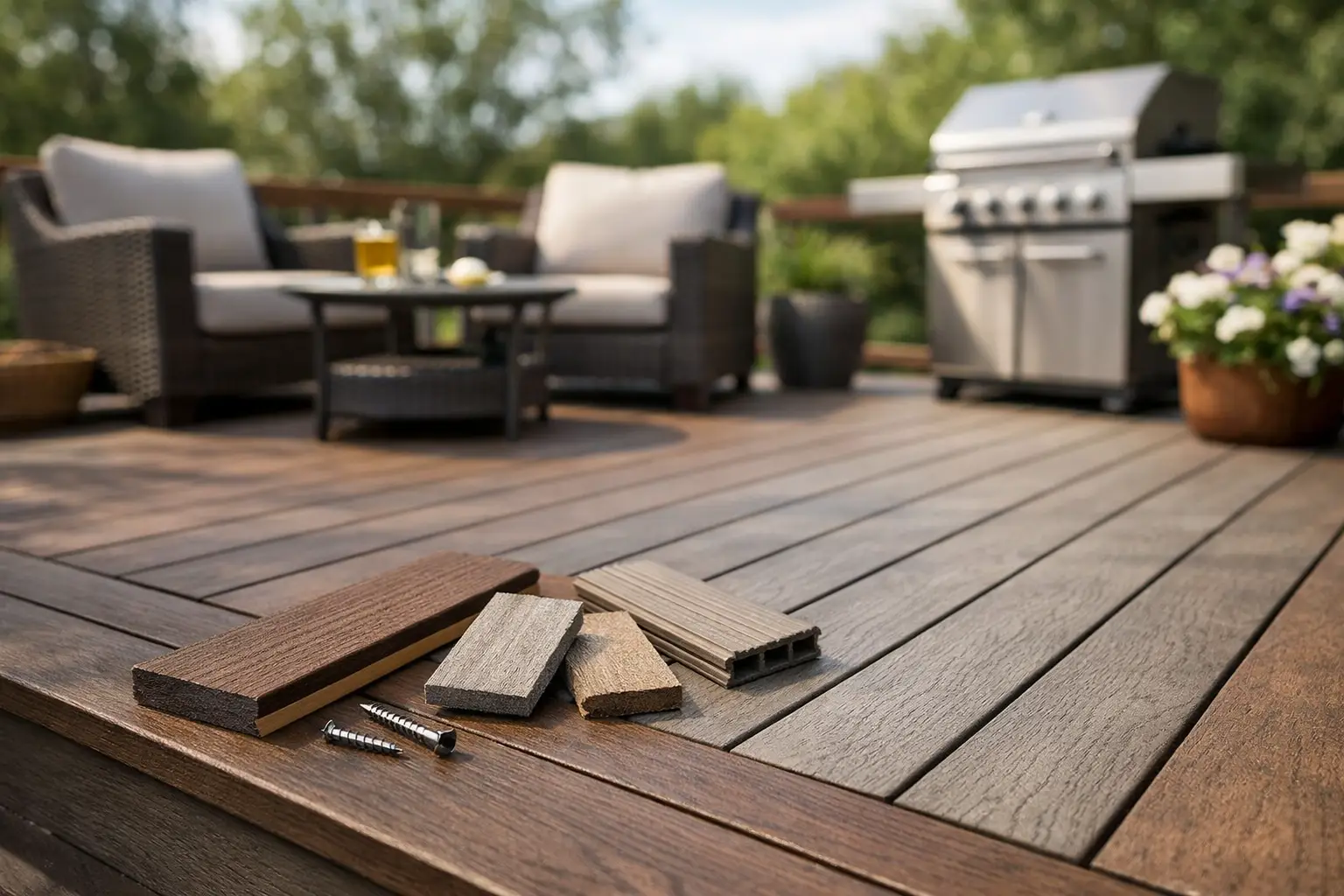
Composite decking is typically made from wood fibres and recycled plastics, formed into solid or scalloped boards. Most quality options now have a protective outer cap designed to resist moisture, fading, staining, and surface wear. This construction is the main reason homeowners consider it over traditional wood decking.
Its strongest advantage is reduced maintenance. Unlike cedar or pressure-treated lumber, composite boards do not need regular staining or sealing to maintain basic weather resistance. A seasonal wash with mild soap and water is usually enough to remove dirt, pollen, and surface grime. That is a meaningful benefit for homeowners who would rather use their weekends on the deck than refinishing it.
Composite also holds its appearance more consistently than wood. Wood can weather beautifully, but it can also fade unevenly, split around fasteners, and develop raised grain. A quality capped composite board maintains a more uniform colour and texture, particularly when it is installed with proper spacing and good drainage below.
The material is also resistant to rot and insect damage. On a wet coastal property, that matters. Deck framing still needs to be protected and built correctly, but the walking surface itself is less vulnerable to the repeated wet-dry cycles that wear down natural wood.
Where Composite Decking Has Trade-Offs
Composite is not maintenance-free, and it is not automatically better for every project. Its upfront material cost is usually higher than pressure-treated lumber and can exceed many cedar options. The total installed price depends on the board profile, concealed fastening system, railing, stairs, framing upgrades, site access, and deck design.
It can also get warmer under direct sun than wood. Darker colours absorb more heat, so a charcoal or deep brown board may be uncomfortable for bare feet on a sunny south-facing deck. Lighter colours can help, as can thoughtful shade planning, but this is worth considering before choosing a colour from a small showroom sample.
Surface grip deserves close attention as well. Many modern composite boards have improved texture, but no decking surface is completely slip-proof when wet, icy, or covered in algae. A shaded deck beside trees, for example, will need routine cleaning regardless of the material. Look for a board with a textured finish rather than a very smooth surface, and make sure the deck is designed to drain properly.
Finally, composite moves differently than wood. Boards expand and contract with changes in temperature. The manufacturer’s required end gaps, side gaps, fastener spacing, and fascia details are not optional finishing touches. They are part of the system. When these allowances are ignored, boards can buckle, gaps can look inconsistent, and edges can lose their clean alignment.
Capped vs. Uncapped Composite Boards
If you are comparing options, the cap is one of the most important differences to understand. Uncapped composite boards have a more exposed wood-plastic surface. They may cost less, but they are generally more prone to staining, fading, moisture absorption, and mould-related surface discolouration.
Capped composite decking has a protective polymer shell around the board, either on three sides or all four. The cap improves resistance to spills, UV exposure, and moisture. For most homes exposed to regular rain and damp conditions, a quality capped board is the more sensible long-term choice.
Full capping is especially useful on deck edges, stair treads, and low-clearance applications where moisture can linger. That said, the cap does not make poor drainage harmless. Water trapped below boards or against fascia can still affect the framing, collect debris, and create conditions for algae growth.
How Composite Performs in Coastal Weather
Composite decking is well suited to Vancouver Island weather when the deck is detailed correctly. It will not rot like untreated wood, and it does not require a protective stain cycle. Those are real advantages in a climate where decks spend long periods wet.
However, moisture management still determines much of the deck’s lifespan. The structure needs appropriate ground clearance, proper ledger flashing where the deck meets the home, ventilation below the boards, and a drainage plan that keeps standing water from collecting around the footings or framing. On elevated decks, finished underside details should not block essential airflow.
Salt air can also be hard on metal components. In exposed coastal areas, the fasteners, connectors, flashing, and railing hardware need to be selected for the environment. A premium composite board installed over corroding or poorly protected framing hardware is not a durable deck system.
The Installation Details That Matter Most
A composite deck is only as reliable as its structure. Before replacing old boards, inspect the existing framing carefully. Joists with rot, inadequate spacing, weak connections, or poor ledger flashing should be corrected before new composite boards are installed. Covering an aging frame with expensive decking rarely saves money in the long run.
Joist spacing must match the selected board manufacturer’s requirements. Some composite products need closer spacing than standard wood decking, particularly when boards are installed diagonally or used on stairs. Composite boards can flex more than wood, so adequate support is essential for a firm feel underfoot.
Concealed fasteners give composite decks their polished, screw-free appearance, but the system needs to be installed accurately. Proper fastener placement keeps board gaps consistent and allows for seasonal movement. Face-fastening may still be required at borders, picture-frame details, or stair areas, and those fasteners should be colour-matched and installed neatly.
Finishing details separate a serviceable deck from one that looks properly built. Clean fascia lines, well-supported stair treads, carefully finished board ends, and railing that integrates with the deck layout all contribute to the final result. These details also protect vulnerable edges from water and impact damage.
Is Composite Decking Worth the Cost?
For a homeowner planning to stay in the home for years, composite often makes sense. The initial investment is higher, but the savings in staining, sealing, and board replacement can narrow the gap over time. It also provides a consistently finished look that can improve the usability and appeal of the outdoor space.
For a lower-budget project, a well-built pressure-treated deck remains a practical option. It can perform well when maintained, and it is easier to repair board by board. Cedar can also be the right choice for homeowners who value natural grain, a cooler surface underfoot, and the character of real wood. The trade-off is accepting the maintenance that comes with it.
Composite is often the strongest fit when maintenance is a priority, the deck receives frequent rain, or the design includes detailed railings, stairs, and finished edges that homeowners want to keep looking clean. It is less compelling when the budget is tightly fixed, the deck is temporary, or a natural wood appearance is the non-negotiable goal.
Choosing the Right Board for Your Home
Do not choose composite decking by colour alone. Ask to see a full-length sample outdoors, preferably in both sun and shade. Check the texture with wet shoes, compare the board’s heat level in direct sun, and look at the edge profile if the deck design will expose board ends.
Review the warranty, but read it as a product guide rather than a substitute for workmanship. Warranties can cover material defects while excluding installation errors, insufficient ventilation, unsupported spans, or damage caused by incorrect cleaners. A careful installation protects both the deck and your ability to rely on the product warranty if an issue arises.
The best composite deck is one that suits the property, the exposure, and the way you live outside. Choose the board after the structure and drainage plan are clear, not before. With quality materials, precise installation, and regular basic cleaning, your deck can remain a dependable part of your home through many coastal seasons.
Leave a Reply