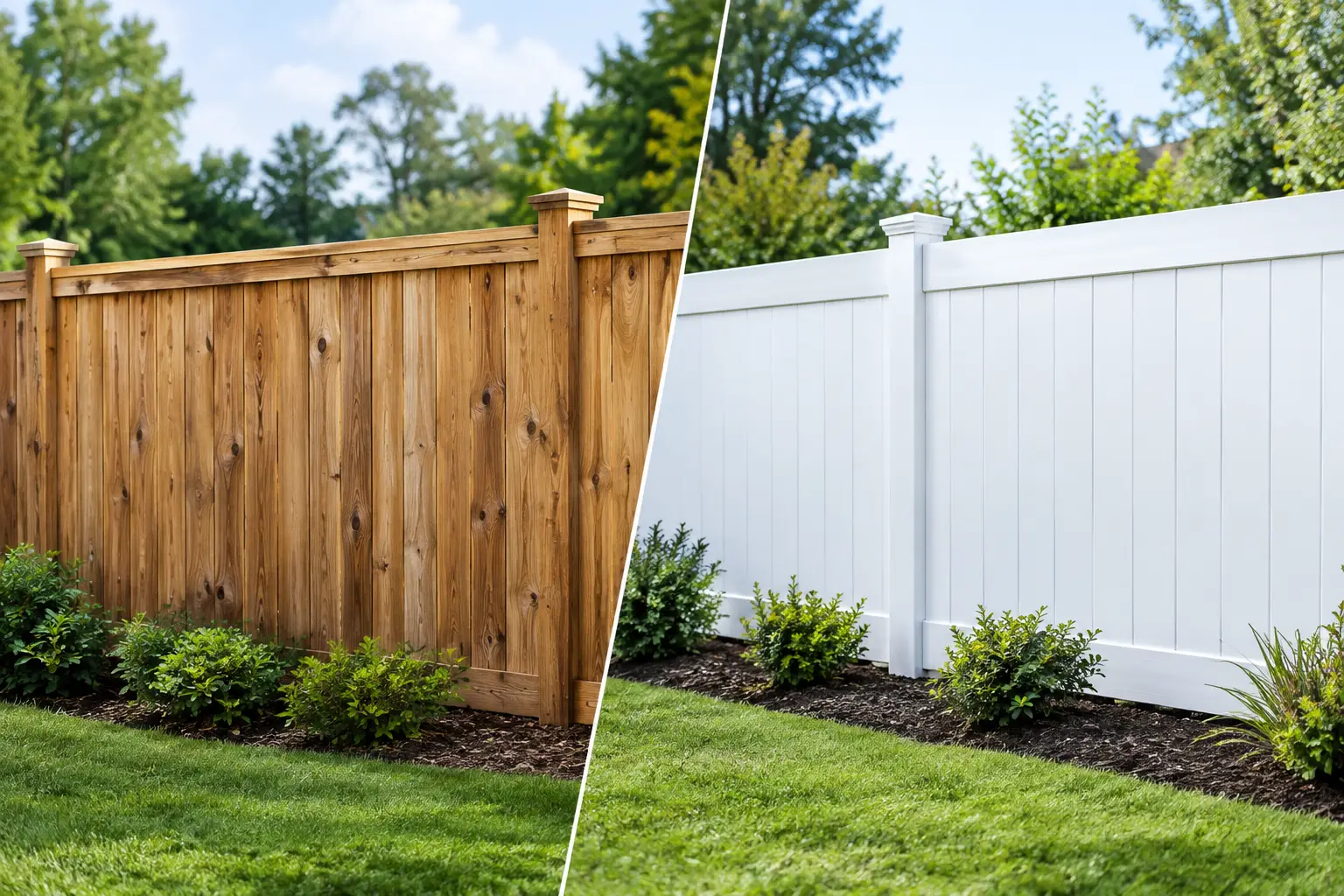
A fence on Vancouver Island does more than mark a property line. It stands through months of rain, wind-driven moisture, wet soil, and the occasional hard winter storm. That is why the wood fence versus vinyl decision should start with performance, not just the colour of a sample board or the lowest quote.
Both materials can create privacy, improve curb appeal, and make a yard feel finished. The better choice depends on the look you want, how much maintenance you are prepared to take on, the exposure of your site, and whether the fence is being built with a sound structure underneath it. A well-installed fence of either type will outperform a poorly built one.
Wood Fence Versus Vinyl in Coastal Conditions
Wood remains the traditional choice for good reason. Cedar fences have a natural warmth that suits everything from older neighbourhoods to newer landscape designs. They can be built in nearly any configuration, including horizontal slats, full privacy panels, lattice tops, and stepped sections for sloped yards. Wood is also easy to modify later if you want to add a gate, change a section, or blend the fence into a deck or pergola.
For coastal homes, though, wood needs regular attention. Rain is not automatically a problem for cedar, but repeated wetting, slow drying, ground contact, and neglected finish work can shorten its service life. Boards can shrink, cup, crack, or develop surface mildew over time. Posts are particularly important: if they are undersized, set incorrectly, or left vulnerable to standing water, the whole fence can begin to lean long before the pickets are due for replacement.
Vinyl does not absorb moisture, so it will not rot, splinter, or require staining. That makes it appealing for homeowners who want a clean privacy fence without a recurring refinishing project. A vinyl fence can be washed with mild soap and water when it collects dirt or algae, and its colour is consistent from board to board.
Its limitations are more structural and visual than maintenance-related. Vinyl panels are less forgiving of impact than wood, especially in colder temperatures. A hard hit from yard equipment, a fallen branch, or a shifting gate can crack a component that then needs replacement. Vinyl also expands and contracts with temperature changes, so it must be installed with the correct clearances and supporting system. It is not a material that benefits from shortcuts.
Wind, drainage, and post construction matter most
A privacy fence acts like a sail in high winds. The taller and more solid the fence, the more force its posts and rails must resist. This applies to cedar and vinyl equally. On exposed properties, proper post depth, concrete placement, drainage, rail spacing, and gate framing deserve more attention than the surface material alone.
Vinyl systems often use reinforced posts or metal inserts for added stiffness. Wood fences rely on appropriately sized pressure-treated posts and well-fastened rails. In either case, setting a fence without accounting for soil conditions and drainage can lead to movement, sagging gates, and premature repairs.
If your yard stays wet for long periods, avoid designs that trap debris and moisture at the base of the fence. Leave appropriate clearance from soil, manage grading where practical, and make sure water has a path away from posts and adjacent structures. Detail-oriented installation is what turns a good material into a long-lasting fence.
Appearance: Natural Character or Consistent Finish?
Wood offers more visual flexibility. Cedar can be left to weather naturally, stained to bring out its grain, or painted to match trim and outdoor structures. It has texture and variation that vinyl cannot fully duplicate. For homeowners planning a custom deck, pergola, or garden setting, wood often creates the more cohesive result.
That character comes with change. Even a well-maintained cedar fence will develop a different tone over the years. Some homeowners appreciate the weathered look; others prefer to preserve a fresh stain colour and are willing to maintain it.
Vinyl provides a more uniform finish. White remains common, but many systems are available in neutral tones and wood-look options. It can suit a crisp, low-maintenance landscape particularly well. Before choosing it, look at full installed panels rather than a small sample. Vinyl can appear more substantial or more plastic-like depending on the profile, colour, post caps, and surrounding architecture.
Neither option is automatically more attractive. The right one should complement the home, not compete with it. A heritage-style property may suit stained cedar beautifully, while a contemporary home with clean exterior lines may benefit from a simple vinyl privacy design.
Cost Is More Than the Initial Quote
Vinyl usually costs more upfront than a basic wood fence, although prices vary by height, design, access, site preparation, and gate requirements. Cedar may be the more economical installation at the outset, while premium grades, custom horizontal layouts, decorative tops, and quality staining can narrow or reverse the gap.
Over the life of the fence, wood carries ongoing costs for cleaning, staining or sealing, occasional board replacement, and possible repairs after prolonged exposure. Vinyl carries lower routine maintenance costs, but damaged sections can be more complicated to match or replace if a product line is discontinued.
Homeowners should also compare like for like. A low price on wood may reflect thinner boards, light-duty rails, shallow posts, or minimal gate framing. A low vinyl quote may omit reinforcement or use a lighter-grade system that flexes more than expected. The most useful estimate explains the materials, post spacing, construction method, hardware, disposal, and any site-specific work required.
Gates deserve their own conversation
Gates are where many fence projects show their quality. They carry weight, move every day, and are vulnerable to sagging if the opening is not framed correctly. Wood gates can be custom-built to suit unusual widths and can be repaired piece by piece. Vinyl gates need proper reinforcement and durable hinges to keep panels square.
If a driveway gate, side-yard access, or pool enclosure is part of the plan, discuss its use early. The right width, swing direction, latch placement, and frame construction will make the fence easier to live with for years.
Maintenance Expectations for Each Material
A wood fence benefits from an annual inspection. Check for loose fasteners, damaged boards, soil buildup, mildew, and areas where sprinklers keep the wood wet. Cleaning and reapplying a quality protective finish on an appropriate schedule helps limit moisture absorption and ultraviolet fading. The schedule will depend on exposure, product choice, and whether the fence is stained or painted.
Vinyl asks for less, but not nothing. Wash it periodically, clear vegetation that holds moisture against the panels, and inspect posts, caps, and gate hardware. Avoid aggressive pressure washing or abrasive cleaners that can mark the finish. If you see a loose rail or a shifting post, address it before the movement damages adjacent sections.
For both materials, keep shrubs trimmed back and avoid piling mulch or soil against the base. A fence cannot dry properly when landscaping continually holds moisture against it.
Which Fence Is Right for Your Home?
Choose wood if you value natural material, custom design freedom, and the ability to stain, paint, or repair individual components. It is an especially strong choice when the fence needs to tie into cedar decking, a pergola, or a more traditional home exterior. Plan for maintenance, and invest in sound post and rail construction from the start.
Choose vinyl if low routine maintenance and a consistent finished appearance are your priorities. It can be a practical option for busy households and straightforward privacy applications, provided the system is suited to the site and properly reinforced where needed. Do not assume maintenance-free means installation details do not matter.
For many Vancouver Island properties, the decision comes down to the relationship between appearance and upkeep. Cedar rewards homeowners who enjoy its natural character and will care for it. Vinyl rewards those who prefer a stable, easy-clean surface and a more uniform look. In either case, a fence built with quality materials, proper drainage, and careful finishing will protect your privacy and improve the way your outdoor space feels every day.
Before committing, ask for a plan that considers your lot, wind exposure, grade changes, gates, and the other exterior features around it. That kind of careful assessment is how DryTek approaches outdoor structures built for Vancouver Island weather.
Leave a Reply