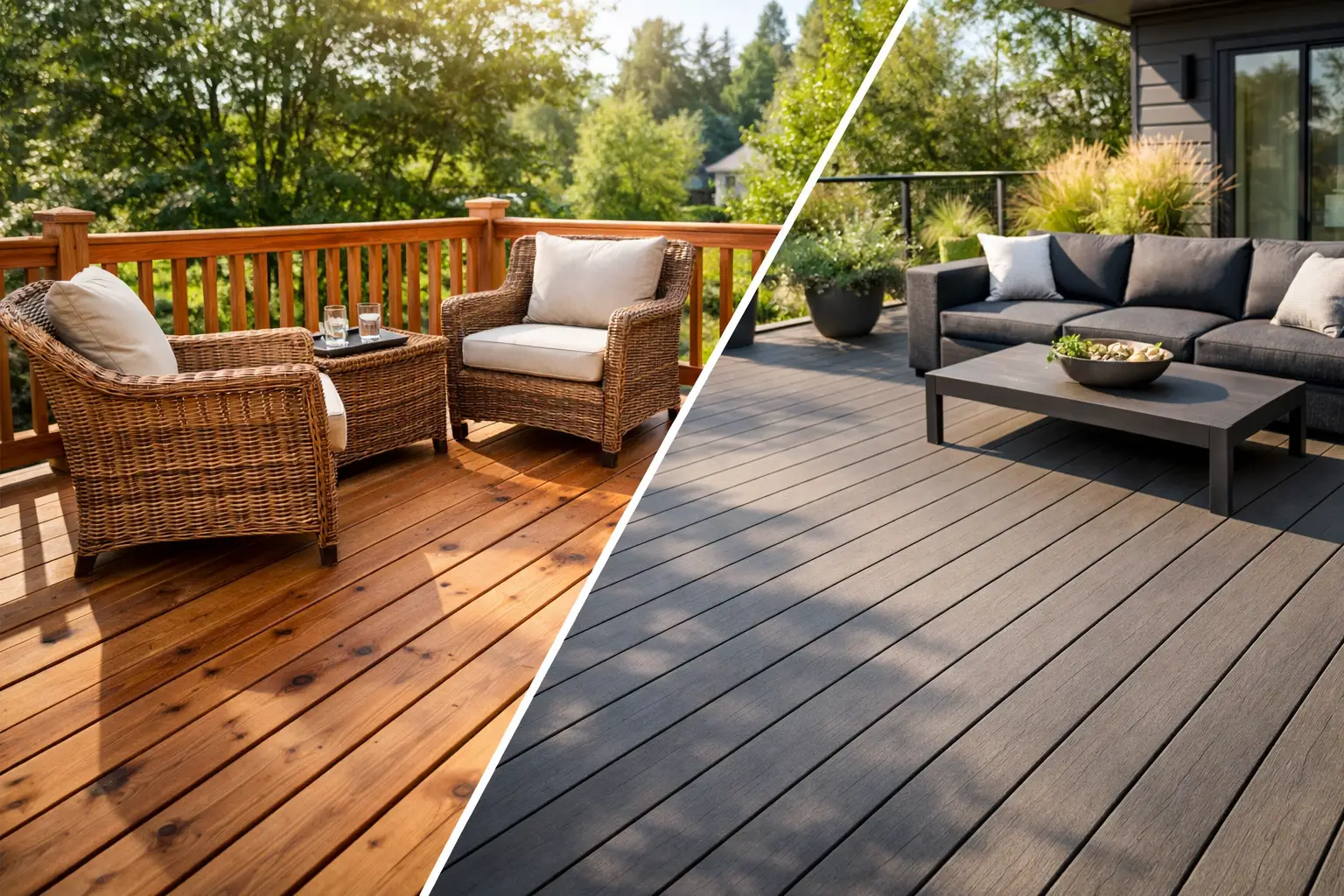
A deck on Vancouver Island has to handle more than summer barbecues. It faces long wet seasons, shaded corners that stay damp, salt air in some communities, and regular foot traffic from muddy boots. When weighing a cedar deck vs composite, the right answer comes down to how you use the space, how much maintenance you accept, and what you expect the deck to look like years from now.
Cedar offers a natural warmth that is difficult to duplicate. Composite offers consistency and less routine upkeep. Both can make an excellent outdoor living space when the framing, drainage, fasteners, and finishing details are handled properly.
Cedar Deck vs Composite: The Core Difference
Cedar is a real wood decking material, valued for its grain, colour variation, and naturally occurring resistance to decay and insects. It is lighter than many other wood options and comfortable underfoot. A cedar deck has character from the day it is installed, then continues to change as it weathers.
Composite decking is a manufactured board, typically made from a blend of recycled wood fibres and plastic. Many modern products have a protective outer cap designed to resist fading, stains, moisture, and surface wear. It does not have the same natural variation as cedar, but quality products provide a clean, uniform finish that holds its appearance with less effort.
The comparison is not simply natural versus manufactured. It is a decision between an outdoor surface that needs ongoing care to stay at its best and one that carries a higher initial cost in exchange for lower maintenance.
Appearance and Feel Underfoot
For homeowners who want a deck to feel connected to the landscape, cedar remains a strong choice. Its warm tones work particularly well with wood-sided homes, garden settings, and traditional West Coast architecture. No two boards are identical, which gives the finished deck depth and a more custom appearance.
That natural beauty does require acceptance of change. Without a protective finish, cedar will gradually weather to a soft silver-grey. Some homeowners like that look. Others prefer to preserve the original colour with a quality stain or oil. Either approach can look intentional, but neglect can leave the surface uneven, blotchy, or prone to checking.
Composite has improved significantly in appearance. Better products offer varied colouring and embossed grain patterns that avoid the flat, plastic look associated with older boards. It is a practical fit for contemporary homes, clean-lined outdoor spaces, and homeowners who want a predictable colour across the entire deck.
On hot, sunny days, cedar is generally more comfortable under bare feet. Dark composite colours can absorb considerable heat, especially in open south-facing locations. If your deck receives strong afternoon sun, sample boards are worth reviewing outdoors rather than under showroom lighting.
Upfront Cost and Long-Term Value
Cedar usually costs less to install than premium composite decking. The material is commonly more affordable, and its lighter weight can make handling and installation more straightforward. For a homeowner working within a defined renovation budget, cedar can create a beautiful, well-built deck without directing too much of the budget to the finished surface.
Composite boards cost more upfront, and the supporting details may add to that difference. Hidden fastening systems, picture-frame borders, fascia, and manufacturer-specific installation requirements can increase labour and material costs. That does not make composite overpriced. It means the investment should be judged over the expected life of the deck rather than at the initial quote alone.
Cedar requires periodic cleaning and refinishing. The exact schedule depends on exposure, drainage, foot traffic, and the type of finish used, but homeowners should plan for regular attention. Composite typically needs cleaning with soap, water, and a suitable brush to remove dirt, pollen, and surface mildew.
Over a long ownership period, composite can narrow or offset its higher initial cost through reduced staining, sealing, and repair work. Cedar may still be the better value when a homeowner enjoys maintaining real wood, plans to refresh the deck as part of regular exterior care, or prefers to invest more of the budget in railings, stairs, lighting, or a covered area.
Moisture Performance in Coastal Conditions
Rain itself does not ruin a deck. Trapped moisture does. This matters in coastal British Columbia, where decks may remain wet for extended periods in fall and winter.
Cedar has natural durability, but it is still wood. It can absorb moisture, expand and contract, develop checks, and support mildew growth when it is left dirty or poorly ventilated. Keeping debris out of board gaps, allowing air to move beneath the deck, and maintaining a protective finish all help cedar perform well.
Composite does not rot like wood, which makes it appealing for damp sites. However, it is not maintenance-free and it is not immune to installation problems. Debris can collect between boards, organic residue can support surface mildew, and poor airflow below the deck can create persistent dampness around the structure. The boards may be highly moisture resistant, but the framing beneath them is still usually wood and needs proper protection.
A quality deck build accounts for drainage before the first board is installed. Proper joist spacing, flashing where the deck meets the home, corrosion-resistant fasteners, adequate ground clearance, and ventilation below the structure are not optional details in a wet climate. They are what protect the investment whether you choose cedar or composite.
Maintenance: What Each Material Really Needs
Cedar needs a homeowner who is prepared to pay attention. At minimum, that means seasonal cleaning, clearing leaves and soil from the surface, and watching for worn finish, loose fasteners, split boards, or areas that stay damp. Refinishing intervals vary, but exposed horizontal surfaces generally need more frequent care than vertical siding or protected trim.
The benefit is that cedar can be renewed. A tired surface can often be cleaned, sanded where appropriate, and refinished. Individual damaged boards can also be replaced without changing the character of the whole deck.
Composite asks for less, not nothing. A spring clean and occasional wash will help prevent grime and mildew from becoming embedded. Food, grease, and spills should be cleaned promptly, especially on uncapped or lightly textured products. Follow the manufacturer’s care requirements, because harsh cleaners or improper pressure washing can damage the surface or affect warranty coverage.
If the idea of staining a deck every few years feels like a recurring burden, composite is likely the more comfortable ownership choice. If you enjoy the look and hands-on care of wood, cedar rewards that effort.
Durability, Repairs, and Design Flexibility
Composite is highly resistant to splinters, rot, and insect damage. That makes it an excellent option for busy family decks, areas around hot tubs, and spaces where bare feet, pets, and frequent use are expected. Its colour is also more stable than cedar’s, particularly when a capped product is installed correctly.
Cedar can last for many years, but its surface will show weathering sooner. It is more susceptible to dents, scratches, checking, and movement. Those traits are part of real wood, not necessarily signs of poor quality. The question is whether you see them as natural character or as maintenance concerns.
Design can influence the decision as much as material performance. Cedar is easy to cut and adapt for custom stairs, skirting, benches, and detailed transitions. Composite supports refined designs as well, including contrasting borders and coordinated fascia, but requires closer attention to expansion gaps and fastening instructions. A contractor should plan those details carefully so the finished deck looks precise through changing temperatures.
Which Deck Is Right for Your Home?
Choose cedar when natural grain, a softer underfoot feel, and a lower upfront cost matter most. It is especially well suited to homeowners who are willing to maintain it and who appreciate that wood develops a lived-in appearance over time.
Choose composite when you want a consistent finish, strong moisture resistance, and less ongoing work. It is often the better fit for high-use decks, rental properties, busy households, or homeowners who want to spend weekends using the deck rather than refinishing it.
There is also a middle ground. A cedar deck with a roof cover or pergola can reduce weather exposure, while a composite deck can be softened with cedar privacy screens, planters, or trim. The best outdoor spaces are designed as complete structures, not selected one board at a time.
Before committing, consider where water travels around your home, how much direct sun the deck receives, and whether you will realistically keep up with maintenance. DryTek approaches deck work with those practical details in mind, because a well-chosen surface performs best when the structure beneath it is built with equal care.
A deck should feel like a natural extension of your home, not another exterior chore waiting for attention. Start with the material that matches your habits, then make sure the installation is built to stay dry, stable, and finished properly through every season.
Leave a Reply