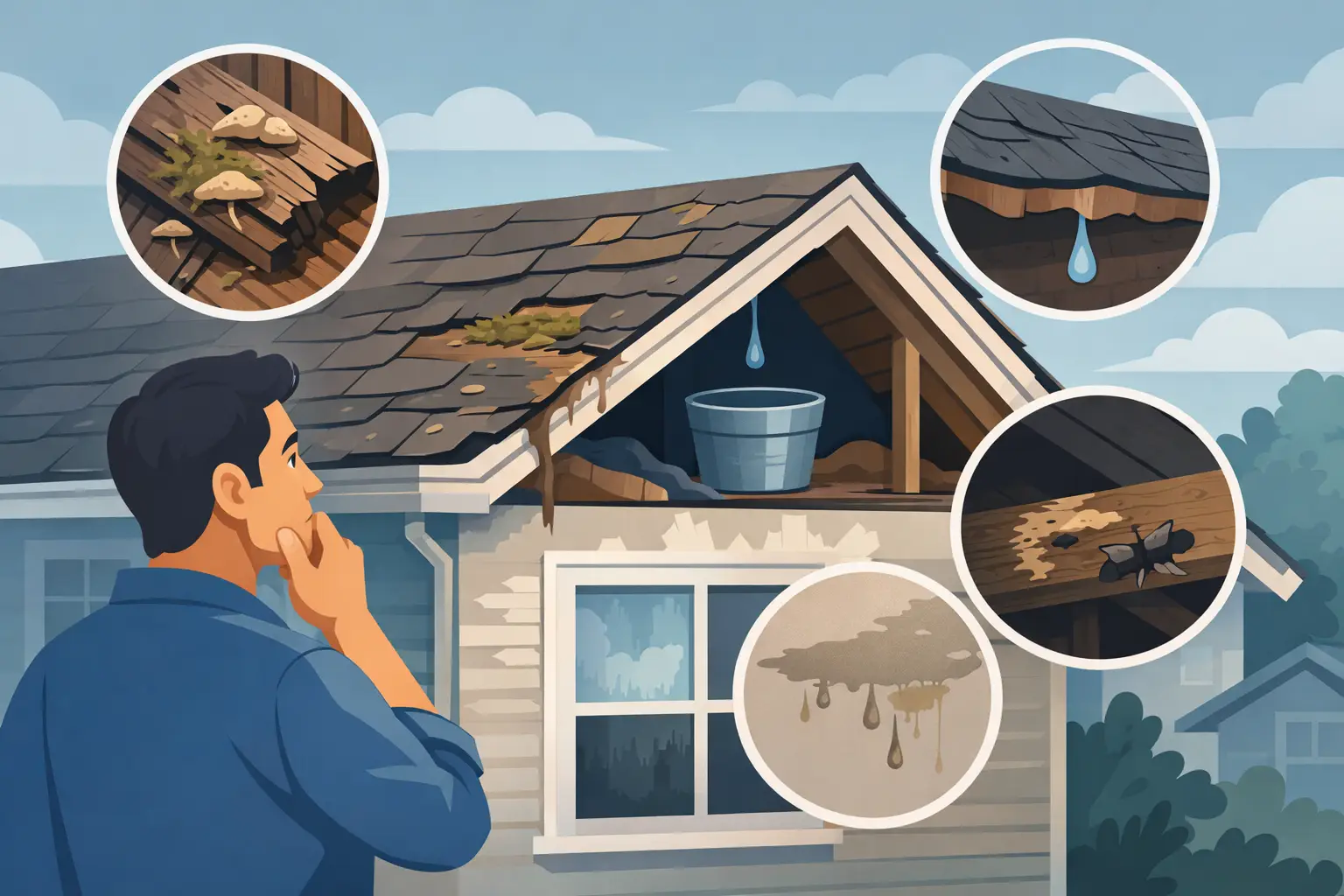
A roof can look fine from the driveway and still be failing underneath. That is what makes the top signs of roof rot so easy to miss. By the time water stains show up indoors or shingles start shifting, the damage has often moved past the surface and into the structure that keeps your home dry and sound.
On Vancouver Island, roofs take a steady beating from rain, damp air, wind-driven moisture, and long stretches where materials never fully dry out. Rot does not usually start with one dramatic event. More often, it develops slowly where trapped moisture, poor ventilation, aging materials, or small leaks go unchecked. Knowing what to watch for helps you act early, when repairs are still manageable and the rest of the roof system can often be protected.
Why roof rot starts in the first place
Roof rot is wood decay caused by moisture exposure over time. That moisture can come from obvious leaks, but it can also come from condensation in the attic, blocked ventilation, ice and debris buildup near roof edges, or flashing details that are letting in small amounts of water with every storm.
Not every aging roof has rot, and not every soft area means total replacement. It depends on where the moisture is getting in, how long it has been there, and whether the damage is limited to sheathing or has reached rafters, fascia, soffits, or wall assemblies below. That is why surface appearance only tells part of the story.
Top signs of roof rot on the outside
The first clues often appear around edges, penetrations, and low points where water lingers longest.
1. Sagging or uneven roof lines
A roofline should look straight and consistent. If part of the roof appears dipped, wavy, or slightly sunken, that can point to moisture-damaged decking or framing below. Sagging does not always mean collapse is near, but it does mean the roof system may no longer be carrying loads the way it should.
This kind of issue deserves prompt attention, especially in wet coastal conditions where saturated materials can keep deteriorating even between storms.
2. Soft or spongy areas underfoot
If a roofer walks a roof and finds spots that feel soft, springy, or unstable, that is a major warning sign. Healthy roof decking should feel solid. When plywood or boards have absorbed moisture for too long, they begin to lose strength and break down.
Homeowners should not climb onto a roof to test this themselves. The safer takeaway is simple: if shingles look sunken or irregular in one area, there may be soft decking underneath.
3. Curling, buckling, or shifting shingles
Shingles can curl or lift for several reasons, including age and heat exposure, but localized distortion can also signal rotting roof sheathing below. When the deck changes shape or loses fastener hold, the roofing above it often starts to move in ways it should not.
The key is pattern. Uniform wear across an old roof is one thing. A cluster of warped shingles in one area, especially near a vent, valley, skylight, or chimney, suggests a moisture problem underneath.
4. Rotting fascia or soffits
The roof edge tells you a lot. Peeling paint, stained wood, crumbling corners, or swollen fascia boards can all point to repeated moisture exposure. Sometimes the issue starts because gutters are overflowing. Other times, water is backing up under the roofing or poor ventilation is trapping damp air in the eaves.
Fascia and soffit decay matters because it may be connected to hidden roof rot above or attic moisture problems behind.
Top signs of roof rot inside the home
Exterior clues matter, but interior symptoms often confirm that moisture has been active for longer than expected.
5. Water stains on ceilings or upper walls
Brown rings, yellow patches, or paint that bubbles near the ceiling are classic signs of roof-related moisture. The tricky part is that the leak you see indoors may not be directly below the source. Water can travel along framing before it becomes visible.
A stain does not always mean the roof deck is rotten already, but if the issue has been recurring or ignored through multiple wet seasons, rot becomes far more likely.
6. Musty odours in the attic or upper floor
A damp, stale smell is often an early warning that moisture is lingering where it should not. Wood rot, mould growth, and wet insulation all create odours that homeowners notice before they see structural damage.
If the smell gets stronger after rain or during colder months, that can point to a roof leak, attic condensation, or a ventilation problem that is feeding decay.
7. Mould or dark staining on attic wood
A quick attic look can reveal a lot. Dark discolouration, fuzzy growth, or consistently damp-looking sheathing are signs that moisture is present. Not all staining is active rot, but it should never be brushed off without a closer inspection.
In some cases, the problem is a roof leak. In others, warm indoor air is reaching a cold attic and condensing on the underside of the roof. Either way, wood that stays damp long enough will eventually begin to decay.
8. Daylight showing through boards or around penetrations
If you can see daylight where the roof assembly should be closed and protected, water can get in too. Small gaps around vents, flashing, or damaged boards may seem minor, but those repeated wetting points are often where rot begins.
This is especially common around older penetrations that were patched more than once instead of rebuilt properly.
The less obvious signs homeowners overlook
Some of the top signs of roof rot are not dramatic at all. Higher energy bills can point to wet, ineffective insulation. Gutters that constantly fill with shingle granules and roof debris may reflect advanced roof wear that has left the deck vulnerable. Repeated minor repairs in the same area can also suggest the visible symptom has been fixed, while the wet substrate underneath has not.
Another overlooked clue is how long the roof stays wet after rainfall. If one section dries much more slowly than the rest, it may have poor drainage, moss growth, or a shaded condition that keeps materials damp. That does not guarantee rot, but it creates the kind of environment where decay takes hold faster.
When roof rot is repairable and when it is not
This is where a careful inspection matters. Small, localized rot around a vent, roof edge, or flashing detail can often be repaired by removing affected materials, replacing damaged wood, and rebuilding the area properly. If the surrounding roofing is still in good shape, that approach can extend the life of the system.
When rot is widespread, the conversation changes. Multiple soft areas, sagging sections, recurring leaks, or damage that has spread into framing usually means spot repairs will not hold up well. In that case, partial or full replacement may be the more dependable and cost-effective choice.
There is also a timing issue. Waiting too long can turn a repairable deck problem into a larger structural job involving insulation, ventilation corrections, fascia replacement, or interior repairs. Early action almost always gives homeowners more options.
What to do if you notice these signs
Start with documentation. Take photos of stains, sagging areas, or visible exterior damage, and make note of when you first saw them and whether they worsen after rain. That helps track patterns and gives a roofing professional better information.
Then book an inspection. A proper assessment should look beyond the shingles to the condition of the sheathing, flashing, roof edges, attic ventilation, and any connected moisture pathways. A craftsmanship-focused contractor will not just point out damage. They should explain why it happened and what repair approach makes sense for the age and condition of the roof.
If the roof is actively leaking, do not wait for it to get worse. Temporary measures may help limit interior damage, but they are not a substitute for correcting the source. On homes exposed to regular coastal moisture, delay tends to make every part of the repair more involved.
A roof does not need to be visibly failing to deserve attention. Often, the best time to act is when the signs still seem small. Catching rot early protects more than shingles and plywood. It protects the framing, insulation, finishes, and peace of mind that your home is supposed to have through the wettest months of the year.
Leave a Reply