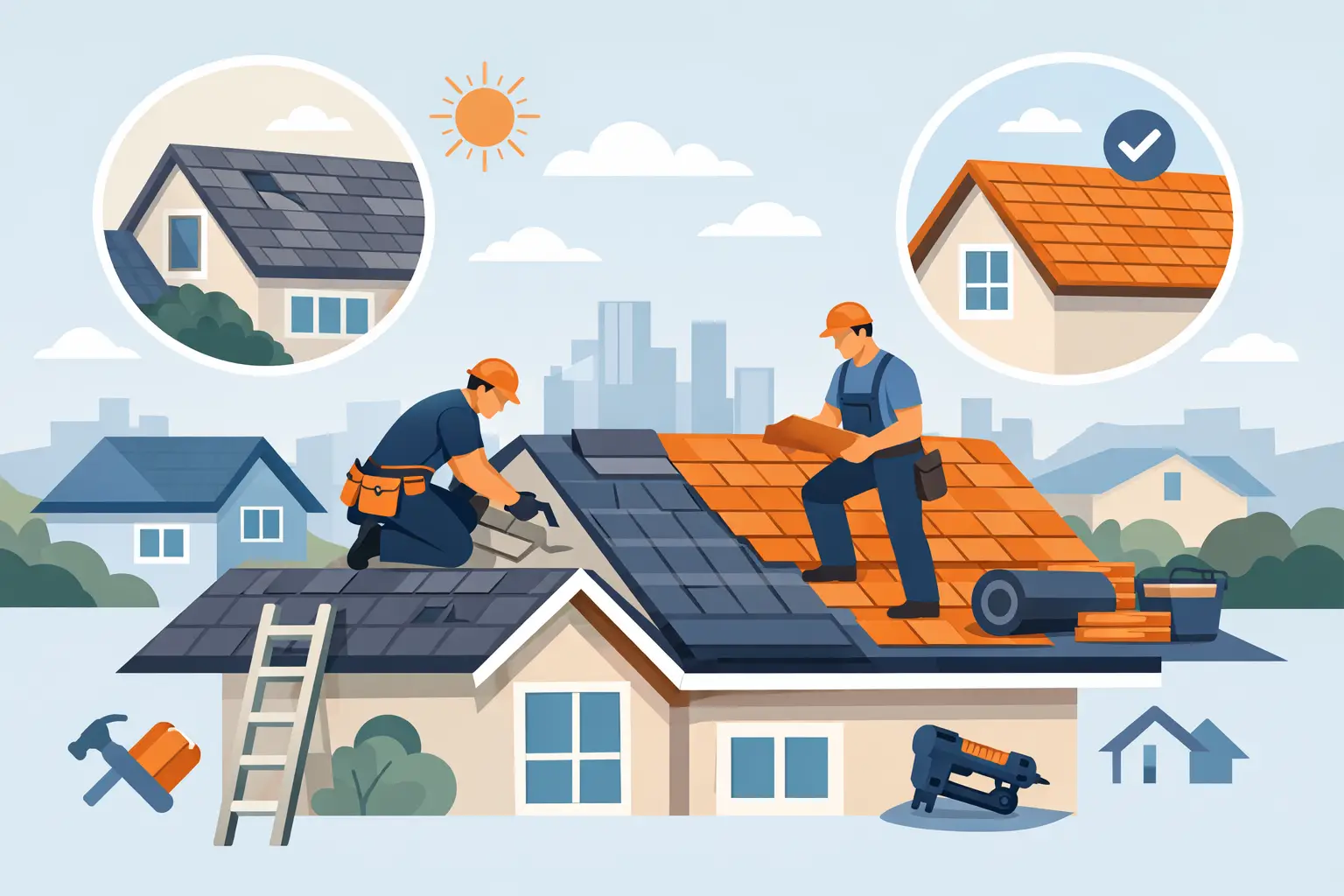
A roof usually does not fail all at once. It starts with curled shingles, recurring leaks, dark streaks, soft spots, or flashing that never seems to stay sealed for long. A solid residential roof replacement guide helps you catch the difference between a roof that needs a repair and one that is already costing you more by hanging on.
For homeowners, replacing a roof is rarely just about shingles. It is about protecting insulation, framing, ceilings, siding lines, ventilation, and the overall value of the home. On the coast, where rain, wind, and moisture can wear materials faster, good decisions at the planning stage matter just as much as the installation itself.
When a roof replacement makes more sense than another repair
Repairs are often the right call when damage is isolated. A few missing shingles after a windstorm, a small flashing issue near a vent, or a localized leak around a roof penetration can usually be handled without replacing the full system.
The equation changes when problems are widespread or recurring. If your roof is nearing the end of its expected service life, multiple repairs can become a temporary patch on a larger issue. Water does not always enter where it shows up inside. By the time staining appears on a ceiling, moisture may have already travelled along decking or framing.
Age is one of the clearest indicators. If the roof is older and showing broad wear, replacement often delivers better long-term value than repeated service calls. The same is true when you see granule loss, widespread shingle lifting, sagging sections, or signs that the roof deck may have been affected.
Signs your roof may be ready for replacement
Some warning signs are obvious, while others are easier to overlook. Leaks inside the home are a major red flag, but they are not the only one. You should also pay attention to shingles that are cracking, curling, or losing granules in large amounts.
A roof that looks uneven can point to deck issues underneath, not just surface wear. Moss growth can also be a concern, especially in damp conditions, because it can hold moisture against the roof surface and shorten material life. Flashing failures around chimneys, skylights, valleys, and vents are another common clue that the system as a whole is beginning to break down.
If several of these signs are happening at once, a full assessment is usually the next step. A proper inspection should look beyond the outer layer and consider ventilation, underlayment, drainage details, and the condition of the substrate.
Residential roof replacement guide to material choices
Material selection affects more than curb appeal. It changes lifespan, maintenance needs, wind performance, and how the roof handles ongoing moisture exposure.
Asphalt shingles remain one of the most common choices for residential roofing because they offer a practical balance of cost, appearance, and performance. Not all shingles are equal, though. Better products tend to provide stronger wind ratings, improved algae resistance, and more consistent long-term wear.
Architectural shingles are often preferred over basic 3-tab options because they are thicker, more durable, and visually stronger. For many homeowners, they offer a better return over time.
Metal roofing can be an excellent option in the right setting. It is durable, sheds water effectively, and can last significantly longer than asphalt. The trade-off is a higher upfront cost and a different look that may or may not suit the home.
Other materials may be considered depending on the property, pitch, and design goals, but the best choice usually comes down to climate fit, budget, and how long you plan to stay in the home. In coastal BC conditions, moisture management details are every bit as important as the finish material itself.
What a roof replacement should include
A proper replacement is not just a new layer on top. In many cases, old roofing must be removed so the deck can be inspected and any hidden damage can be addressed. This is one of the most important parts of the job, because covering compromised decking does not solve the underlying problem.
Underlayment, flashing, drip edge, vents, ridge components, and seal details all matter. These are the parts that often separate a roof that looks good on day one from one that actually performs for years. Quality craftsmanship shows up in the transitions, edges, penetrations, and finishing details, not only in the field of the roof.
Ventilation should also be reviewed during replacement. Poor attic ventilation can trap heat and moisture, shorten shingle life, and contribute to condensation problems. Sometimes a new roof is the right time to correct airflow issues that have been affecting the system for years.
Timing matters more than many homeowners think
If your roof is actively leaking, waiting can turn a roofing project into a larger repair involving insulation, drywall, and framing. Even when the damage seems minor, ongoing moisture exposure can escalate quickly.
That said, replacement does not always have to happen in a panic. If you catch deterioration early, you have more time to compare materials, review estimates, and schedule work under better conditions. That usually leads to better decisions.
Weather windows also play a role. Roofing can be done in a range of conditions, but predictable dry periods are always helpful for tear-off and installation. On Vancouver Island, planning around wet seasons can reduce disruption and give crews a better environment to execute cleanly.
Understanding roof replacement costs
Homeowners often want a simple number, but roof replacement pricing depends on several factors. The size of the roof is only part of it. Pitch, complexity, access, material choice, flashing requirements, ventilation updates, and the condition of the deck can all affect final cost.
A straightforward roof on a simple home is a very different project from a steep, cut-up roof with multiple valleys, skylights, and penetrations. Disposal, site protection, and repair work discovered after tear-off can also influence the total.
The lowest quote is not always the lowest cost in the long run. If key components are left out, if workmanship is rushed, or if details are handled poorly, the savings can disappear fast. A better estimate should clearly explain what is included, what happens if deck damage is found, and what materials are being installed.
How to choose the right contractor
A roof replacement is a major exterior project, and trust matters. Homeowners should look for a contractor who communicates clearly, explains the scope properly, and treats the work as a system rather than a quick install.
Ask how the existing roof will be assessed, what components are included in the replacement, and how weather protection will be handled during the job. It is also worth asking who will be doing the work, how cleanup is managed, and what level of finish you should expect around edges, vents, and transitions.
This is where a craftsmanship-focused company stands apart. Precision matters on every roof, but especially in wet coastal environments where small installation mistakes can create long-term problems. DryTek approaches roofing with that level of detail in mind, combining expert roofing and siding solutions with quality craftsmanship built for Vancouver Island weather.
What to expect during the project
Most homeowners want to know how disruptive roof replacement will be. There will be noise, movement around the property, and a period where materials are being removed and installed. A good contractor will explain the schedule, protect surrounding areas as much as possible, and keep the site organized.
The process often starts with tear-off and inspection of the deck. Once any damaged substrate is replaced, the new roofing system is installed in layers, with attention to underlayment, flashings, ventilation, and finishing details. Cleanup should be thorough, not rushed at the end of the day.
Communication is a big part of a smooth project. If hidden issues appear once the old roof comes off, you should be informed promptly and clearly, with practical options rather than vague surprises.
How to protect the investment after installation
A new roof still benefits from occasional attention. Homeowners should keep gutters clear, watch for moss buildup, and check that branches are not scraping the surface or dropping debris into valleys. It is also wise to pay attention after major wind events and to address small issues before they become bigger ones.
Periodic inspections can help extend roof life, especially in areas exposed to heavy rain and coastal moisture. Maintenance is not about expecting failure. It is about protecting a major investment and making sure the system continues to perform as intended.
A roof replacement should leave you with more than a better-looking home. It should give you confidence every time the weather turns. When the work is planned properly, built with quality materials, and finished with care, that confidence tends to last a long time.
Leave a Reply