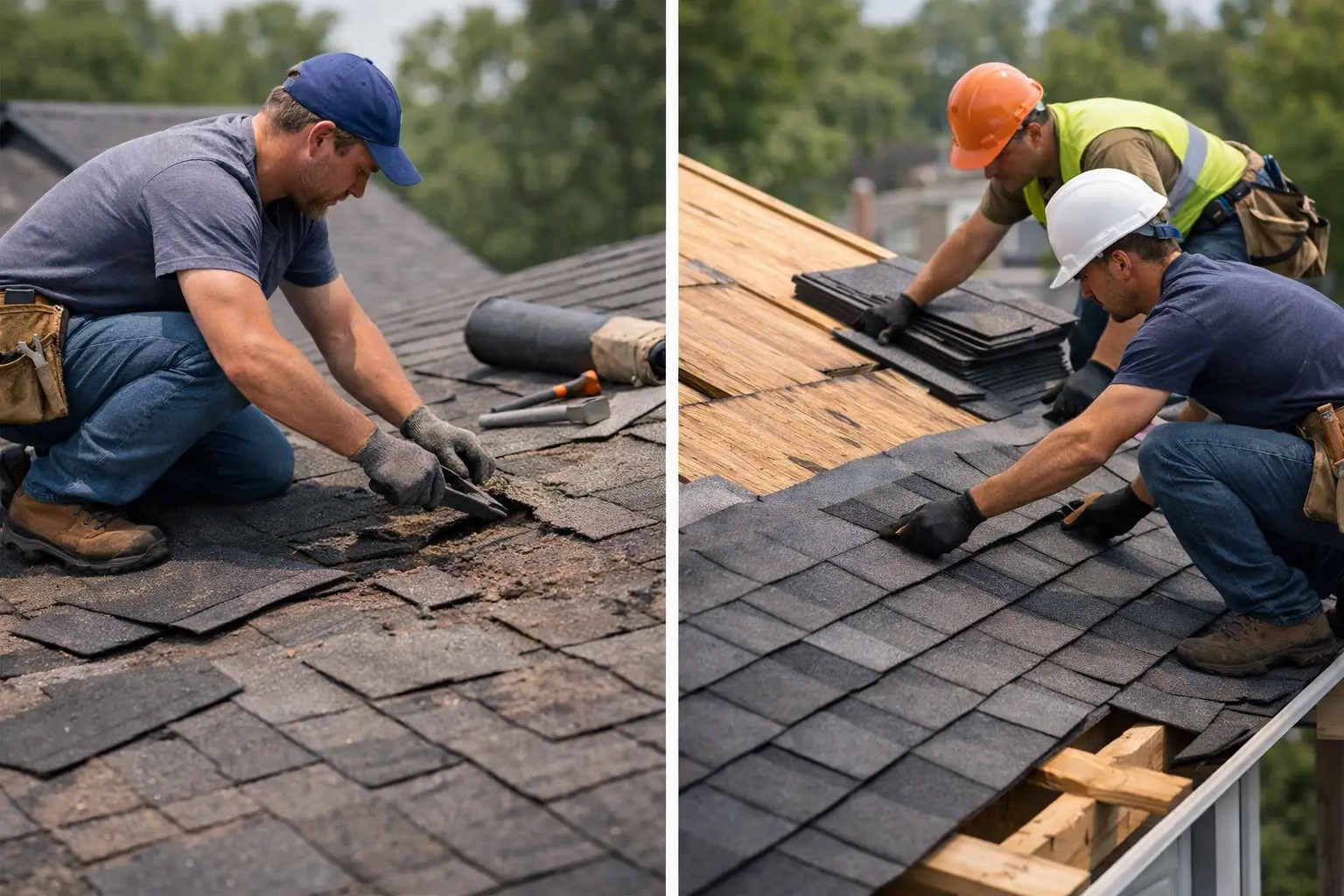
A stain spreading across a bedroom ceiling after a hard coastal rain is not a problem to put off until summer. The question of roof repair vs replacement comes down to more than the visible leak: it is about whether the roof can still reliably protect the structure beneath it. A properly timed repair can preserve a sound roof for years. Waiting too long, or patching a roof that has reached the end of its service life, can turn a manageable issue into damaged insulation, sheathing, ceilings, and interior finishes.
For Vancouver Island homeowners, that decision carries extra weight. Frequent rainfall, wind-driven moisture, moss growth, and salty coastal air can expose small weaknesses quickly. The right answer depends on the roof’s age, the cause and extent of damage, the condition of the underlying materials, and your plans for the home.
When Roof Repair Is the Sensible Choice
A repair is often the practical option when the issue is isolated and the remainder of the roofing system is in good condition. Missing or cracked shingles after a windstorm, a damaged flashing detail around a vent, a loose ridge cap, or a leak near a chimney can frequently be corrected without replacing the entire roof.
The key word is isolated. A professional inspection should confirm that the surrounding shingles remain sound, that the roof deck has not softened from moisture exposure, and that the leak has not travelled further than it appears. Water can enter at one point and show up inside the home several feet away, so the ceiling stain is rarely a reliable map of the source.
Repair makes particular sense when the roof is still relatively young and has substantial life remaining. If quality shingles were installed within the last several years and only a small section has been affected, replacing that section is usually a responsible investment. It keeps material out of the landfill, addresses the immediate vulnerability, and avoids spending on a full replacement before it is necessary.
A well-executed repair should not be a surface patch. It should address the failed component, restore proper water shedding, and integrate new materials carefully with the existing roof. Flashing, underlayment, fasteners, ventilation, and the transition between old and new roofing all matter. The finished work should look tidy, but its primary job is to remain watertight through the next storm.
Signs a Repair May Only Delay Replacement
There is a point where individual repairs stop being good value. Replacing a few shingles can solve a local problem; repeatedly chasing leaks across an aging roof does not solve the larger issue. If defects are appearing in more than one area, the roof is likely giving you a clear signal about its overall condition.
Look beyond the obvious leak. Shingles that are curling, cracking, balding, buckling, or losing large amounts of granules have limited ability to shed water. Widespread moss can hold moisture against the roof surface and hide deterioration. Rusting flashings, deteriorated seals around penetrations, sagging roof lines, and soft areas underfoot are also reasons to investigate further.
Inside the home, recurring stains, peeling paint near exterior walls, damp attic insulation, musty odours, or visible mould can indicate ongoing moisture intrusion. These symptoms do not always mean the entire roof needs replacement, but they do warrant a careful inspection. A small repair on top of compromised decking or wet insulation will not protect the home for long.
Age matters as well. Every roofing material has an expected service range, but the calendar alone does not determine its condition. Installation quality, ventilation, exposure to weather, roof slope, overhanging trees, and maintenance all influence longevity. Still, when a roof is approaching the later stage of its expected life and needs significant work, replacement often provides better long-term value than a series of repairs.
Roof Repair vs Replacement: The Factors That Matter Most
The best decision is based on the roof as a system, not simply the size of the leak. A sound assessment considers how much of the roof is affected, whether moisture has reached the deck, how close the roof is to the end of its service life, and whether repairs can be properly blended into the existing material.
Damage extent and location
Damage limited to a small, accessible section is generally more economical to repair. A few wind-damaged shingles or a failed pipe boot are very different from widespread shingle deterioration across multiple slopes. Problems around valleys, chimneys, skylights, and roof-to-wall connections require particular care because these areas manage concentrated water flow.
If moisture has damaged the roof deck, the work becomes more involved. Localized deck repairs may still support a repair approach, but extensive rot can make replacement the safer route. The roofing surface is only one layer of protection. The structure beneath it must be dry and secure.
Remaining service life
Consider the timing of the expense, not just the invoice for today. Spending modestly to repair a roof with many dependable years left is sensible. Spending repeatedly on a roof that will need replacement in the near future can cost more and leave you with a less consistent result.
This is especially relevant when repairs would require careful colour matching. Even when the same shingle product is available, sun exposure and weathering can make a new section stand out. That does not affect performance, but homeowners planning to sell or improve curb appeal may prefer the uniform finish of a new roof.
Ventilation and hidden conditions
Poor attic ventilation can shorten the life of otherwise good roofing. Excess heat and trapped moisture may contribute to premature shingle wear, condensation, and mould concerns. A replacement is an opportunity to correct ventilation details and update underlayment, flashings, and other components that cannot always be fully addressed through a small repair.
A thorough inspection should also look for hidden conditions. On the coast, rain can work into small gaps over time. What looks like a straightforward shingle issue may reveal damaged plywood, compromised flashing, or inadequate drainage once the roofing is opened. Clear communication about these possibilities helps homeowners budget appropriately and avoid surprises.
The Cost Question: Immediate Price Versus Long-Term Value
Roof repair costs less upfront than full replacement in most cases, and that is often the right reason to choose it. But lower initial cost does not automatically mean lower ownership cost. The value of a repair depends on how long it will extend the roof’s useful life and whether it prevents further water damage.
Replacement is a larger investment because it involves removing existing roofing, inspecting and repairing the deck as needed, installing new protective layers, and completing the roof with compatible components. Done properly, it resets the condition of the entire system and can improve appearance, reliability, and confidence during heavy weather.
It is wise to compare options in practical terms. Ask what a repair will address, what it cannot address, how long the contractor expects it to perform, and whether other areas show early signs of failure. If replacement is recommended, ask which components will be renewed and how the installation is designed for local rain and wind exposure. A clear scope is more useful than a low number without detail.
Why Vancouver Island Weather Changes the Decision
Roofs in this region are expected to handle long wet seasons, wind events, organic growth, and periods of limited drying. Small installation details carry real consequences. Correct flashing laps, properly sealed penetrations, suitable underlayment, adequate ventilation, and clean water paths are not extras. They are part of a roof built to perform in Vancouver Island weather.
Maintenance also helps preserve either choice. Keep gutters clear, trim branches that rub against the roof or shade it heavily, and have new stains or missing shingles checked promptly. Avoid aggressive pressure washing, which can remove protective granules and force water where it does not belong. Moss should be managed with methods appropriate for the roofing material rather than ignored until it becomes established.
Make the Decision With a Full Roof Assessment
A dependable recommendation should not begin with a guess from the driveway. It should be based on a close look at the roofing surface, flashings, valleys, penetrations, attic conditions where accessible, and signs of moisture damage. Photos and a straightforward explanation of the findings give homeowners the information needed to choose confidently.
DryTek approaches roofing work with the same focus on durable materials, precise finishing, and weather-ready details that a home deserves. Whether the right scope is a focused repair or a complete replacement, the goal is not to sell more work than necessary. It is to restore dependable protection and leave the roof finished properly.
If your roof has started showing its age, act while the issue is still clear and contained. A timely inspection can protect your home, your budget, and the peace of mind that should come with hearing rain on the roof.
Leave a Reply