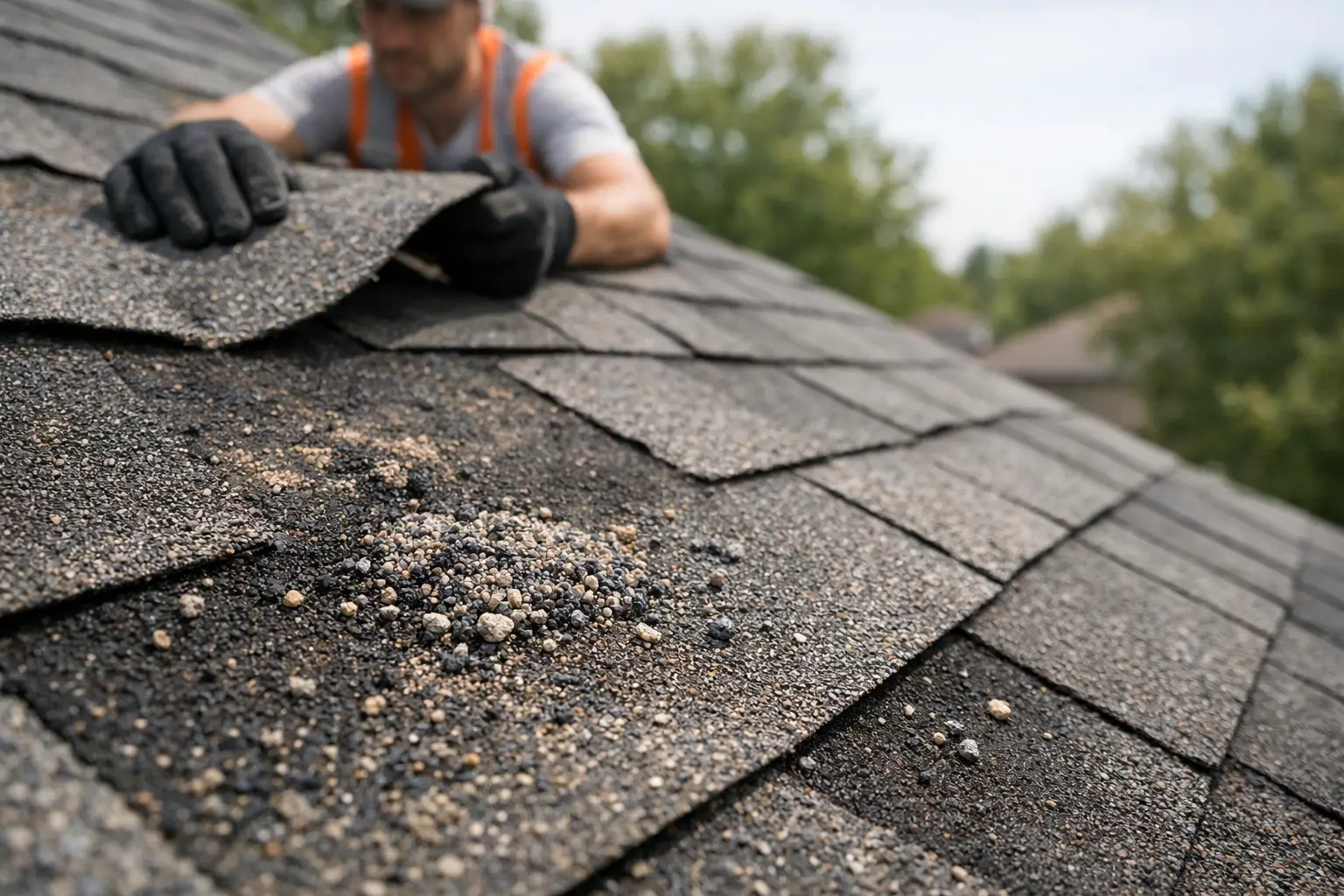
A handful of loose granules in a gutter does not automatically mean a roof is failing. Asphalt shingles naturally shed some of their protective mineral surface over time. The real question is what causes roof granule loss in your case: normal aging, a recent storm, poor ventilation, physical damage, or a roof that is nearing the end of its service life.
Granules are the coarse, sand-like coating on asphalt shingles. They protect the asphalt layer beneath from ultraviolet exposure, add fire resistance, and give the roof its finished colour. When they begin to disappear in noticeable amounts, shingles can become more vulnerable to cracking, heat damage, and moisture intrusion.
For homeowners on Vancouver Island, where extended wet weather, wind, salt air in coastal areas, and moss growth can all affect roof performance, paying attention early can help prevent a small issue from becoming a larger repair.
What Causes Roof Granule Loss?
Roof granule loss can happen for several reasons, and the pattern matters as much as the amount. A few granules spread through the gutters may be normal. Bare, dark patches on shingles or large accumulations of granules after a storm deserve a closer look.
Normal shedding from new shingles
New asphalt shingles can release a small amount of excess granules after installation. Manufacturers apply more granules than necessary during production so the shingle surface is fully covered. Some of that material loosens during shipping, handling, and the first few rainfalls.
This type of shedding is usually temporary and even across the roof. If the shingles look uniformly coated and there are no exposed asphalt areas, it is generally not a concern. A quality installation still matters, since shingles can be scuffed or damaged if they are handled carelessly during installation.
Age and long-term weather exposure
As a roof ages, its granules gradually loosen. Sunlight dries and breaks down the asphalt binder holding the granules in place, while rain, temperature changes, and wind slowly carry them away. This is an expected part of an asphalt shingle roof’s life cycle.
The process can accelerate once shingles become brittle, curl at the edges, or show widespread colour fading. Granule loss does not always mean an immediate replacement is required, but it is a clear sign that the roof should be assessed for remaining service life and vulnerable areas around vents, valleys, and flashing.
Strong wind, hail, and falling debris
Windstorms can lift shingle edges and create friction between overlapping shingles, dislodging granules in the process. Hail can knock granules away in concentrated spots, even when the roof does not appear badly damaged from the ground. Branches scraping across the roof, falling cones, and other debris can cause similar surface wear.
Storm-related damage is often irregular. You may see bruised-looking areas, circular impact marks, creased shingles, missing tabs, or heavier granule buildup in downspouts shortly after severe weather. A professional inspection can distinguish storm damage from ordinary aging and identify whether repairs are appropriate.
Heat buildup and poor attic ventilation
A roof needs to manage heat and moisture from below as well as weather from above. When an attic is poorly ventilated or insulation blocks airflow at the eaves, heat can build up beneath the roof deck. In summer, that heat can prematurely age the asphalt in shingles and weaken the bond that holds granules in place.
Moisture is equally important in coastal British Columbia. Warm, humid indoor air that reaches a cold attic can condense, contributing to damp sheathing, mould, and deterioration over time. Proper intake and exhaust ventilation, along with correctly installed insulation and vapour control, helps protect both the roof structure and the shingle surface.
Moss, algae, and trapped moisture
Moss is common on shaded Vancouver Island roofs. It holds moisture against shingles and can grow beneath their lower edges, lifting them slightly as it spreads. That movement can loosen granules and increase the chance of wind-driven rain getting where it should not.
Algae staining is often more cosmetic, but it can indicate a roof that stays damp for long periods. Leaves, needles, and debris in valleys or behind chimneys create the same problem by slowing drainage. Gentle, roof-safe maintenance is preferable to aggressive cleaning. Pressure washing can strip granules directly from asphalt shingles and shorten their lifespan.
Foot traffic and improper repairs
Walking on a roof is sometimes necessary for inspection or repair, but excessive or careless foot traffic can scuff shingles, especially in hot weather when asphalt softens. Granules can also be lost where ladders, tools, or materials repeatedly contact the roof surface.
Improper repairs create another risk. A mismatched shingle may not seal correctly, exposed nails can lead to leaks, and poorly installed flashing can direct water beneath the roofing system. The visible granule loss may be limited, but the underlying workmanship issue can be more serious.
How to Tell Normal Granule Loss From a Roofing Problem
Start with a ground-level view after cleaning or checking gutters. Granules often resemble coarse black, grey, or coloured sand. A light scattering is common, particularly on a newer roof or after a major rainfall. Thick deposits that return quickly, however, suggest that shingles are deteriorating or have been damaged.
Look for changes on the roof itself without climbing onto it. Warning signs include dark bald spots, exposed fibreglass matting, uneven shingle colour, curled corners, cracked tabs, and areas where shingles appear thin or worn. Check ceilings and attic spaces for water stains, damp insulation, musty odours, or daylight around roof penetrations.
The roof’s age provides useful context. Many asphalt shingle roofs perform well for years, but their actual lifespan depends on material quality, installation details, ventilation, maintenance, and local exposure. A roof facing persistent coastal wind or sitting beneath overhanging trees may wear differently than one in a more sheltered location.
If granule loss is isolated to one slope or around a specific feature, the cause may be local rather than roof-wide. For example, a valley collecting debris, a bathroom fan vent exhausting into the attic, or a branch rubbing the same area can create concentrated wear. This is why a proper assessment should consider the entire roofing system, not just the shingles.
What Homeowners Should Do Next
Avoid sweeping granules off the roof or trying to restore them with coatings. Granules cannot be reattached in a durable way, and surface treatments can hide a problem without fixing its cause. Instead, photograph any visible changes, note when you first noticed them, and monitor the gutters after heavy rain or wind.
Keep gutters and downspouts clear so water can move freely, and remove loose roof debris only when it can be done safely. Trim back branches that contact or overhang the roof where practical. If moss is present, use a method suited to asphalt shingles rather than pressure washing or harsh scraping.
Arrange a professional roof inspection when granule loss is heavy, sudden, patchy, or paired with other signs of wear. An experienced contractor can check shingle condition, flashing, roof penetrations, ventilation, drainage, and the roof deck where accessible. In some cases, a targeted repair will protect the roof for years. In others, widespread loss may indicate that replacement is the more dependable investment.
DryTek approaches roofing concerns with the same attention to detail used on every exterior project: identifying the source of the issue, recommending practical options, and completing work with materials and methods built for Vancouver Island weather.
A roof does not need to look dramatic to need attention. When granules begin collecting where they should not, a timely inspection gives you clarity, protects the structure beneath, and lets you make decisions before water finds the weak spot first.
Leave a Reply