Choosing siding on the West Coast is not a style decision first – it is a weather decision. When homeowners compare vinyl siding vs fiber cement, they are usually trying to balance three things at once: long-term protection, appearance, and the real cost of getting the job done properly. Both materials can work well, but they do not perform the same way, and the right choice depends on your home, your budget, and how long you plan to stay in it.
On Vancouver Island and across coastal BC, siding has to handle rain, moisture, wind, and temperature swings without turning into a maintenance problem. That is why the material itself matters, but installation quality matters just as much. A good product installed poorly can fail early. A well-suited product installed with care will protect the home and keep its finish looking sharp for years.
Vinyl siding vs fiber cement at a glance
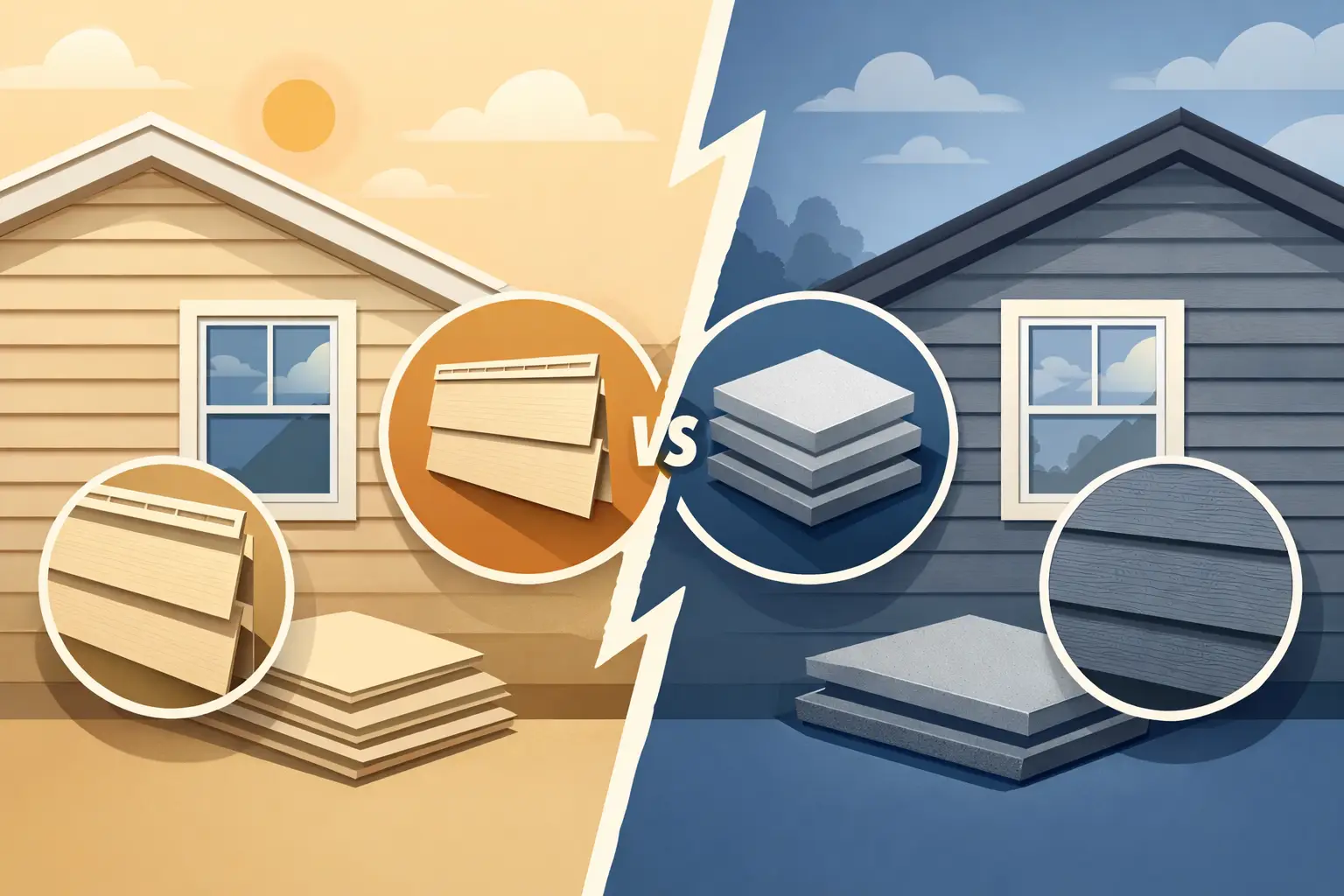
Vinyl siding is a lightweight cladding made from PVC. It is known for being affordable, low maintenance, and widely available in many colours and profiles. For many homeowners, its biggest advantage is straightforward value. It can refresh an exterior without pushing a renovation budget too far.
Fiber cement is a heavier, more rigid siding product made from cement, sand, and cellulose fibres. It is designed to mimic the look of painted wood or more premium exterior finishes while offering strong resistance to moisture, pests, and fire. It usually costs more than vinyl, both in materials and labour, but it also tends to deliver a more solid, high-end finish.
If you want the short version, vinyl is often the budget-friendly option with easier upkeep, while fiber cement is usually the premium performance option with a higher upfront cost. The better choice depends on where you want to compromise and where you do not.
Cost: the first difference most homeowners feel
For most projects, vinyl siding comes in at a lower installed cost than fiber cement. The material is less expensive, easier to transport, and faster to install. That makes it attractive for homeowners who need to replace aging siding without stretching the project into a larger exterior rebuild.
Fiber cement usually costs more because the boards are heavier, cutting is more labour-intensive, and installation requires tighter detailing. In many cases, trim, flashing, fasteners, and finishing work also need a higher level of precision. That extra labour is not just a line item – it is part of what makes the finished product look and perform the way it should.
That said, the cheaper option is not always the better value. If you are planning to stay in your home for a long time, or you want a more substantial exterior appearance, the higher upfront cost of fiber cement may make sense. If you are focused on improving appearance and weather protection while keeping costs controlled, vinyl can be the practical choice.
Durability in wet coastal conditions
This is where the conversation gets more specific. In a coastal climate, siding has to shed water, allow proper drainage, and hold up over time in damp conditions. Both vinyl and fiber cement can perform well when installed correctly over a proper weather-resistant system.
Vinyl does not absorb water, which is one of its strengths. It is not vulnerable to rot, and it does not need painting. However, it can crack from impact in colder temperatures, and lower-quality products may warp or loosen over time if exposed to heat, wind, or poor fastening practices.
Fiber cement is highly durable and handles moisture well when it is installed and finished correctly. It does not rot like wood, and it stands up well to coastal wear. But it is not maintenance-free. Cut edges, joints, and caulking details all need proper attention. If those details are neglected, moisture can still create problems over time.
In other words, neither material is magic. The difference often comes down to build quality. A contractor who understands rain-screen principles, flashing details, and proper finishing will have more impact on performance than a brochure full of claims.
Appearance and curb appeal
If appearance is high on your list, fiber cement usually has the edge. It offers a more solid, refined look and often resembles painted wood siding more convincingly than vinyl. Profiles tend to have sharper lines and less sheen, which can make the whole exterior feel more custom and finished.
Vinyl siding has improved over the years, and there are good-looking products on the market. For many homes, especially where affordability matters, it can still create a clean and attractive exterior. But it generally does not have the same depth, texture, or premium feel as fiber cement.
This matters more on some homes than others. On a modest renovation where the goal is to replace worn siding and improve overall appearance, vinyl may be more than enough. On a custom home, a major exterior upgrade, or a property where architectural detail matters, fiber cement often supports the design better.
Maintenance and long-term upkeep
Vinyl is popular because it asks very little from the homeowner. It does not need repainting, and routine cleaning is usually enough to keep it looking presentable. If low upkeep is one of your top priorities, vinyl has a clear advantage.
Fiber cement requires more attention over time. While the material itself is very durable, factory finishes and paint coatings will eventually need maintenance. Caulking and joints should also be checked periodically, especially in wet climates. That does not make it a poor choice – it just means it is better suited to homeowners who are comfortable treating exterior maintenance as part of protecting the investment.
For some people, that trade-off is easy. They want the look and performance, and they accept the upkeep. For others, the idea of repainting down the road pushes them toward vinyl.
Installation quality matters more with fiber cement
Both materials need proper installation, but fiber cement is less forgiving. Because it is heavier and more rigid, layout, fastening, clearance, flashing, and joint treatment all need to be done carefully. Small mistakes can affect both appearance and performance.
Vinyl also has its own installation rules. It expands and contracts with temperature changes, so it must be hung correctly to allow movement. If it is nailed too tightly or installed without the right trim details, it can buckle or look uneven.
This is where craftsmanship matters. A detail-focused crew will treat siding as part of a complete exterior system, not just a finish layer. That approach is especially important in climates where water management is not optional.
Which material holds up better over time?
If we are talking strictly about physical toughness and long-term structural stability, fiber cement often comes out ahead. It is more impact-resistant in many situations, less likely to flex or rattle, and generally better suited to homeowners who want a siding product with a more substantial feel.
If we are talking about simple, low-hassle ownership, vinyl often wins. It is easier on the budget, easier to maintain, and easier to replace in sections if needed. Not every home needs the heaviest-duty cladding option available.
The better question is not which product is best in general. It is which one makes the most sense for your priorities. If your focus is value, low maintenance, and a clean finished look, vinyl may be the right call. If your focus is durability, curb appeal, and a more premium exterior, fiber cement is often worth serious consideration.
Vinyl siding vs fiber cement for BC homes
For homes in wetter parts of BC, especially coastal areas, the decision should be made with the wall assembly in mind. Good siding alone is not enough. Moisture management behind the siding, proper flashings, correct clearances from roofs and grade, and careful finishing around penetrations all matter.
That is why product selection should never be separated from installation planning. A well-built vinyl system can outperform a poorly installed fiber cement job. Likewise, a properly detailed fiber cement exterior can deliver excellent durability and a strong visual upgrade for years.
At DryTek, that is the practical view we bring to siding work: choose materials that fit the home, the climate, and the homeowner’s expectations, then install them with the level of care the exterior actually needs.
If you are weighing the decision now, start with your priorities instead of the product label. Think about budget, maintenance tolerance, the look you want, and how long you expect the siding to serve you. Once those answers are clear, the right material usually becomes much easier to see.
Leave a Reply