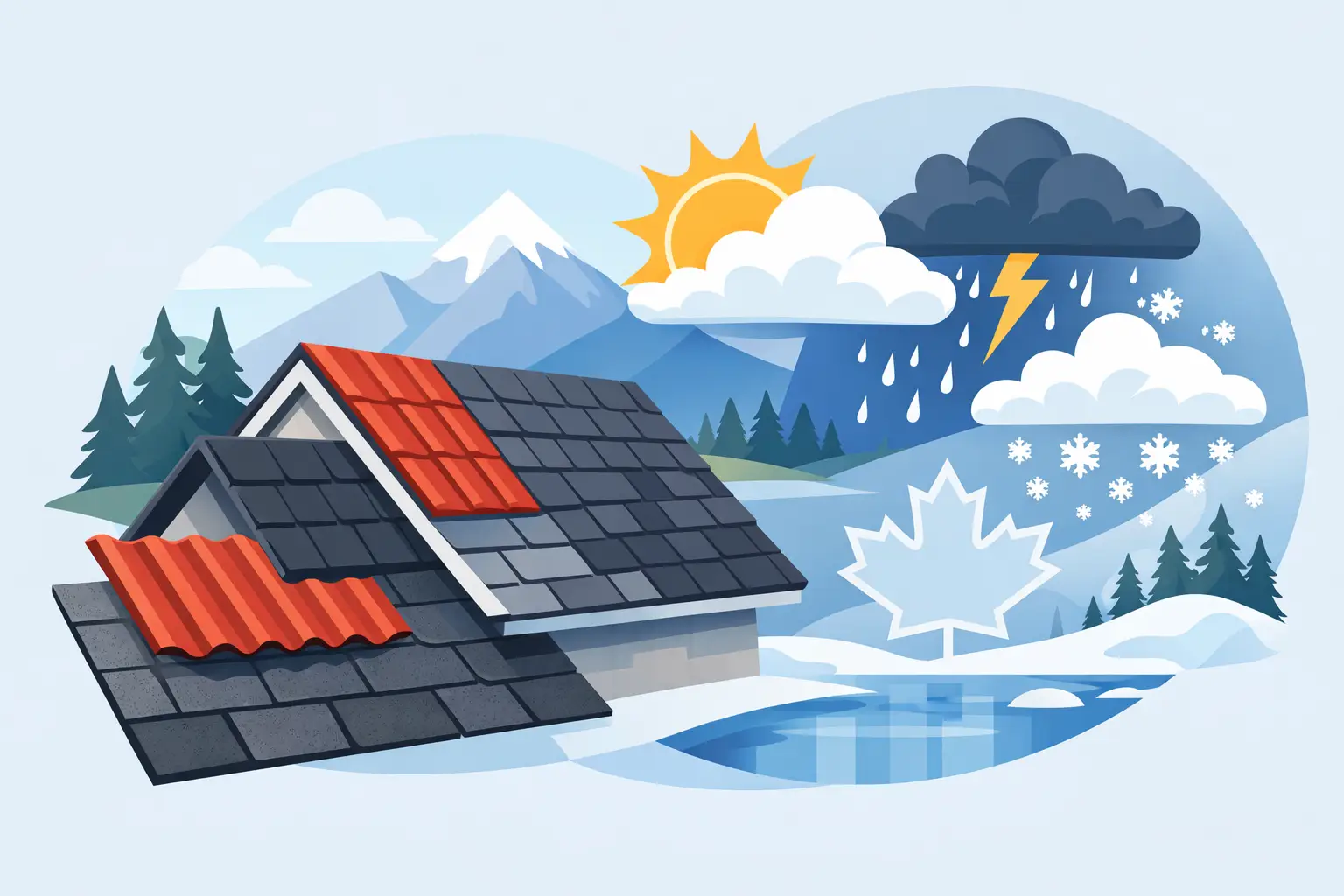
A roof that performs well in Canada is not just about shedding rain. It has to handle freeze-thaw cycles, wet coastal air, strong wind, heavy snow in some regions, and long stretches of damp weather that expose every weak point in the installation. That is why homeowners looking into weather resistant roofing materials Canada options should look beyond appearance and focus on how a roof system behaves over time.
For coastal homes especially, the right roofing material needs to resist moisture intrusion, hold up under wind exposure, and stay stable when temperatures swing. Good product selection matters, but so does the quality of the underlayment, flashing, ventilation, fastening pattern, and finishing details. A great material installed poorly will still become a problem.
What makes roofing materials weather resistant in Canada?
Weather resistance is not one single feature. It is a combination of water shedding, wind performance, impact tolerance, UV resistance, and the ability to handle expansion and contraction without breaking down early.
In many parts of Canada, roofs also need to manage ice and snow loads. On the coast, constant moisture and salt air become bigger concerns than deep snow. That means the best choice is often regional rather than universal. A material that performs well in a dry prairie climate may not be the best fit for a damp coastal property.
Homeowners often focus first on the visible roofing layer, but the full assembly matters just as much. Underlayment protects against water that gets past the outer surface. Flashing around valleys, chimneys, skylights, and wall intersections prevents leaks at vulnerable transitions. Ventilation helps control condensation and temperature buildup. When these parts work together, the roof has a much better chance of lasting as intended.
Best weather resistant roofing materials Canada homeowners consider
Asphalt shingles
Asphalt shingles remain one of the most common roofing choices in Canada because they offer a practical balance of cost, appearance, and performance. Higher-quality architectural shingles are generally a better option than basic three-tab shingles, especially in areas that see frequent rain and wind.
A good architectural shingle roof can perform well when installed with proper underlayment and correct flashing details. Many products are rated for higher wind resistance and improved algae protection, which can be useful in damp climates. The trade-off is lifespan. Asphalt is typically more affordable up front, but it does not last as long as metal, slate, or some specialty systems.
For many homeowners, asphalt makes sense when budget matters and the roof design is straightforward. It is also available in a wide range of colours and profiles, which helps with curb appeal.
Metal roofing
Metal roofing is one of the strongest options for weather exposure, particularly when wind and moisture are ongoing concerns. It sheds water efficiently, resists rot, and generally performs very well over the long term. Properly installed metal roofing can also handle snow shedding effectively, though that may require snow guards depending on the home and site conditions.
On coastal properties, the finish and material type matter. Not all metal roofing products are equal in salty, wet environments. The wrong coating or low-quality fastener can lead to premature corrosion. This is where local experience matters. A contractor should understand what performs well in the specific conditions around your home.
Metal roofing does come at a higher initial cost than asphalt. It can also be noisier during heavy rain if the system is not built properly, though a well-constructed roof assembly often reduces that issue more than people expect.
Cedar shakes and shingles
Cedar has a strong visual appeal and suits many West Coast homes, but it requires a realistic view of maintenance and lifespan. In damp climates, wood roofing faces ongoing exposure to moss, moisture retention, and weathering.
That does not mean cedar is a bad option. It means it is more dependent on maintenance, installation quality, and site conditions. Homes with heavy tree cover, limited sun, and persistent dampness may see faster wear. Homeowners who choose cedar usually do so because they value its appearance and natural character, but they should be prepared for more upkeep than with metal or asphalt.
Synthetic roofing products
Synthetic slate and shake alternatives are becoming more common because they aim to offer the look of premium roofing materials with lower weight and easier maintenance. Some perform very well in varied weather conditions and can resist impact, moisture, and UV exposure.
The key issue with synthetics is product quality. This category includes excellent products and weaker ones. A homeowner should not assume all synthetic roofing performs the same way just because the materials look similar. Long-term track record, warranty support, and installation requirements should all be reviewed carefully.
Clay and concrete tile
Tile roofing is highly durable in the right climate, but it is less common in many Canadian residential applications. Weight is a major factor, and not every home is designed to carry it without structural review. Freeze-thaw conditions can also be hard on lower-grade tile products.
In some cases, tile can be an excellent long-term system. In others, it is simply not the most practical fit. For many homes in wetter coastal areas, the cost and structural considerations make other options more sensible.
Choosing for coastal and wet conditions
If your home deals with frequent rain, wind-driven moisture, moss growth, or salt air, your roofing choice should reflect that. This is one reason weather resistant roofing materials Canada homeowners research online should always be narrowed down by local exposure.
A heavily treed lot creates a different roofing environment than an open, windy property near the water. Roof slope also matters. Some materials perform better on steep-slope roofs, while lower-slope sections may need different treatment or even a different roofing system entirely. Valleys, dormers, skylights, and chimney penetrations all increase the importance of detail work.
On Vancouver Island, for example, a roof has to do more than survive rain. It needs to dry properly between wet periods, resist biological growth, and hold up against constant moisture exposure. That is where expert roofing and siding solutions built for local conditions make a real difference.
Installation matters as much as the material
Homeowners sometimes compare products as if the brand name alone determines the result. In practice, installation quality often decides whether a roof performs for decades or starts causing issues early.
Poorly installed flashing, exposed fasteners in the wrong locations, uneven deck preparation, or ventilation mistakes can shorten the life of even a premium system. The roof may look fine at first, but leaks usually show up at transitions and penetrations, not across the broad field of the material.
That is why craftsmanship matters. Clean lines, proper fastening, careful flashing, and attention to finishing details are not cosmetic extras. They are part of what makes a roof weather resistant.
How to decide what is right for your home
The best roofing material depends on your budget, roof design, maintenance expectations, and local weather exposure. If you want a practical and cost-conscious option, architectural asphalt shingles are often a solid choice. If you want maximum durability and long-term performance, metal may be worth the added investment. If appearance is a major priority and you are comfortable with more upkeep, cedar or a premium synthetic product may suit your goals better.
It also helps to think about how long you plan to stay in the home. A lower upfront cost can make sense in some cases. In others, spending more now for a longer-lasting system reduces future disruption and repair costs.
A good contractor should walk you through those trade-offs clearly. You should expect straightforward advice on what fits your home, not a one-size-fits-all sales pitch.
Signs your current roof may not be up to Canadian weather
If your roof is showing curled shingles, recurring leaks, moss buildup, missing tabs, rusting flashing, or visible sagging, the issue may be more than age alone. Those signs can indicate that the current roofing system is not handling local conditions well.
Sometimes a targeted repair is enough. In other cases, repeated patching only delays a larger replacement. The right decision depends on the roof’s age, condition, and how widespread the weak points have become.
When the time comes to replace a roof, it is worth taking the opportunity to improve the whole assembly rather than simply matching what was there before. Better underlayment, stronger flashing details, upgraded ventilation, and a more suitable material can all improve long-term performance.
A roof should give you confidence when the weather turns, not another reason to check the ceiling after a storm. If you are comparing materials, focus on proven performance, quality craftsmanship, and a system that actually suits your home. That is what gives weather resistance real value over time.
Leave a Reply