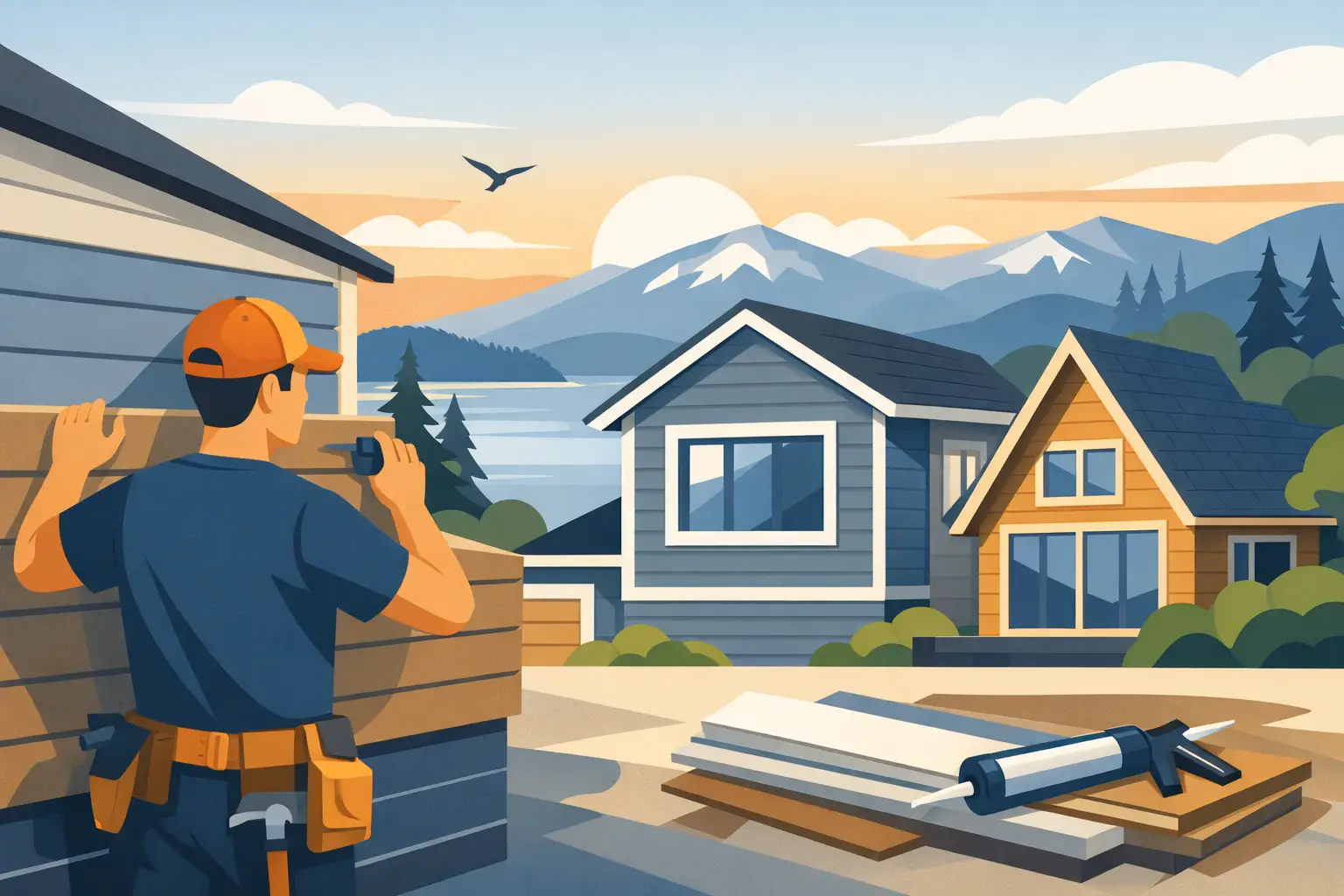
Rain that lingers, salt in the air, shaded walls that stay damp longer than they should – siding replacement Vancouver Island homeowners plan for is not just a cosmetic update. It is a building-envelope decision. When siding starts to fail, the issue is rarely limited to what you can see from the street. Moisture management, flashing details, ventilation, and finish quality all start to matter at once.
For coastal homes, the right siding project should do two things well. It should protect the structure from long-term water exposure, and it should sharpen the look of the home without creating future maintenance problems. That balance is where good workmanship shows.
When siding replacement on Vancouver Island makes sense
Some homes clearly need full replacement. Boards may be swollen, cracked, soft at the lower edges, or separating around trim and penetrations. Paint failure that returns too quickly can also point to substrate or moisture issues rather than a simple finishing problem. If repairs keep showing up in new spots, patchwork may no longer be the economical choice.
Other homes sit in the grey area. The siding may still be attached and mostly intact, but the detailing is outdated, drainage is poor, and weather exposure has started to catch up. In those cases, replacement can prevent more expensive structural repairs later. That matters when a wall has spent years dealing with wind-driven rain.
Age alone does not decide it. Some older exteriors perform well because they were installed properly and maintained consistently. Some newer ones fail early because corners were cut at the beginning. The better question is whether the current system is still protecting the home the way it should.
What coastal weather changes about the job
A siding project in a dry interior climate is not the same as one on the coast. Here, moisture control is part of the core scope, not an extra detail. Material selection matters, but installation details matter just as much.
That starts behind the finished surface. Weather-resistant barriers, flashings, transitions around windows and doors, and proper clearances from roofs, decks, and grade all affect how well the exterior performs. If those details are missed, even a premium siding product can end up underperforming.
Exposure also varies by house. One elevation may take the brunt of rain and sun, while another stays cool and damp for much longer. Tree cover, slope, nearby ocean exposure, and overhang depth all change the wear pattern. A contractor who understands local conditions should look at the whole exterior, not just the damaged face.
Choosing the right material for siding replacement Vancouver Island projects
There is no single best siding for every home. The right choice depends on budget, maintenance expectations, style, and how exposed the property is.
Vinyl remains a practical option for homeowners who want a lower-maintenance exterior at a moderate cost. It can perform well when installed correctly, but it is not forgiving of poor detailing. In stronger sun exposure or with lower-grade products, fading and warping can become concerns over time.
Fiber cement is a common choice for homeowners who want a more solid look and strong durability. It handles coastal conditions well and offers good resistance to rot and pests. The trade-off is weight, installation complexity, and cost. It needs proper cutting, fastening, and finishing to deliver the lifespan people expect.
Engineered wood can be a strong middle ground when homeowners want warmth in the appearance without the upkeep of traditional wood siding. Product quality and installation quality both matter here. If edges, joints, and terminations are not handled properly, the system becomes more vulnerable than it should be.
Natural wood still appeals to homeowners who care deeply about character and architectural fit. On the right house, it can look exceptional. It also asks more from the owner in terms of maintenance, finishing cycles, and inspection. That is not a flaw – it is simply part of the decision.
A good recommendation should account for more than product brochures. It should reflect the house itself, including orientation, trim complexity, and how much maintenance the homeowner realistically wants to take on.
Good siding work is really about the details
Homeowners often compare siding options by colour, profile, or price per square foot. Those matter, but the long-term result usually comes down to the details most people never see once the job is complete.
Starter placement, flashing integration, vent and light penetrations, trim assembly, sealant use, rainscreen approach where required or recommended, and clean tie-ins to soffits and rooflines all affect the finished performance. So does the condition of the wall underneath. If damaged sheathing is covered over instead of replaced, the job may look good on day one and still be headed for trouble.
This is where craftsmanship separates a lasting result from a quick one. At DryTek, that standard is simple: finish the visible work cleanly, but build the hidden parts properly too. Homeowners should expect both.
Repair or replace? It depends on what the wall is telling you
Not every damaged section means the whole home needs new siding. A localised impact crack, a limited area of rot, or a single failed section near a downspout may be repairable if the rest of the system is still sound. In those cases, targeted work can make sense financially.
The challenge is matching old materials and confirming the damage has not travelled farther than expected. Once moisture gets behind the surface, what appears minor can become a larger wall repair. That is why proper inspection matters before anyone promises a simple fix.
Replacement usually becomes the better investment when problems are widespread, previous repairs have not held, or the siding is near the end of its useful life. It also makes sense when homeowners want to improve energy performance, modernise the exterior, or correct detailing issues that have been there from the start.
What to expect during a siding replacement project
A well-run project should feel organised, not chaotic. That begins with a clear site review and a realistic scope. Homeowners should know what material is being installed, what happens if hidden damage is found, how trim and finishing will be handled, and what kind of disruption to expect during the work.
Once removal begins, the wall condition can be assessed properly. This is often when rot, sheathing damage, or older flashing problems become visible. It is not unusual, especially on older homes, and it is one reason experienced crews avoid quoting complex exteriors as though every wall will be perfect underneath.
After repairs to the substrate, the wall assembly is rebuilt with attention to moisture management and clean transitions. Then comes the visible finish work – panels or boards, trim, corners, soffits if included, and all the final detailing that gives the home a complete, intentional look.
The best projects do not just look new. They look resolved. Lines are straight, joints are consistent, and the house feels properly finished from every angle.
How homeowners can choose the right contractor
Price matters, but it should not be the only filter. Siding is one of those trades where the cheapest number can become expensive later if the work behind the surface is rushed.
Ask how the contractor handles wall prep, flashing, and unexpected substrate repairs. Ask what materials they recommend for your exposure and why. Look closely at finish quality in past projects, especially around corners, windows, and transitions. Clean workmanship in those areas usually says more than a wide photo of the whole house.
It also helps to work with a contractor who communicates plainly. Homeowners do not need sales pressure or vague promises. They need honest advice, a clear process, and work that is built for Vancouver Island weather.
A siding replacement is a major exterior upgrade, but it should feel like a smart one. When the material fits the home, the details are handled properly, and the installation is done with care, the result is more than a fresh appearance. It is a stronger, better-protected home that will hold up well through years of coastal weather.
Leave a Reply